

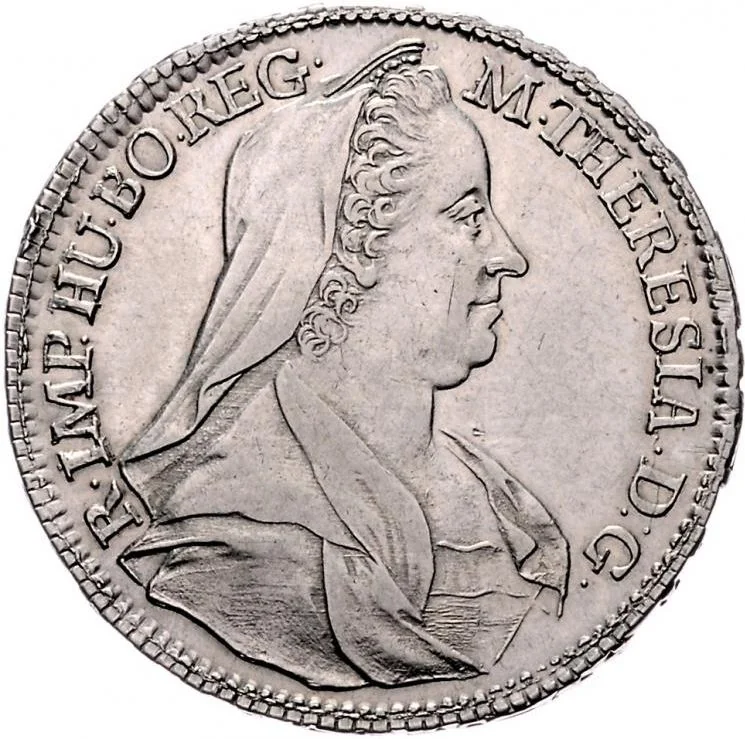
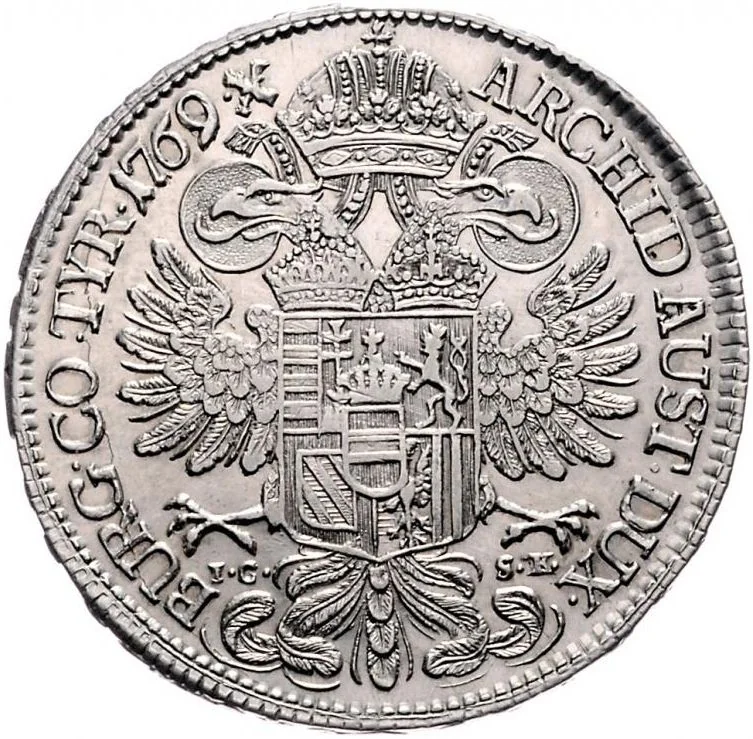
½ Thaler – Austrian Empire
Austria
Context
Years: 1766–1772
Country: Austria 
Issuer: Austrian Empire
Ruler: Maria Theresa
Currency:
(1754—1857)
Demonetized: Yes
Material
References
KM: #Click to copy to clipboard1846
Numista: #159987
Value
Bullion value: $34.54
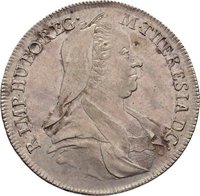
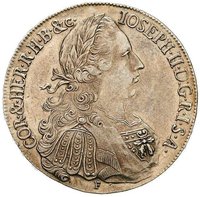
Obverse
Description:
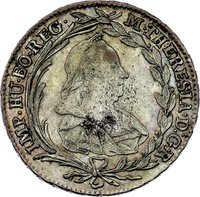
Portrait right, veiled, no shoulder brooch.
Inscription:
M THERESIA D G // R IMP HU BO REG
Script: Latin
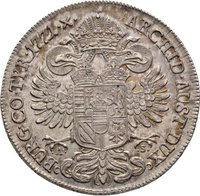
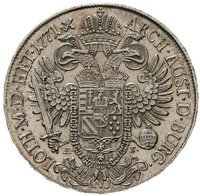
Reverse
Description:
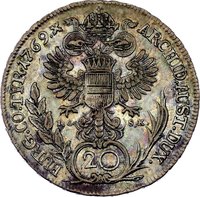
Imperial double-headed eagle with breast shield and crown; mint marks below claws.
Inscription:
ARCHID AUST DUX // BURG·CO·TYR· 1769 ·X
I C S K
I C S K
Script: Latin
Edge
Mints
| Name | Mark |
|---|---|
| Münze Österreich | — |
Mintings
| Year | Mint Mark | Mintage | Quality | Collection |
|---|---|---|---|---|
| 1766 | IC | — | ||
| 1767 | IC | — | ||
| 1768 | IC | — | ||
| 1769 | IC | — | ||
| 1770 | IC | — | ||
| 1771 | IC | — | ||
| 1772 | IC | — |
Historical background
In 1766, the currency situation within the Habsburg Monarchy (often referred to as the Austrian Empire) was characterized by significant complexity and instability, a legacy of the costly Seven Years' War (1756-1763). The state treasury was deeply depleted, and the government, under Empress Maria Theresa and her co-regent Joseph II, had resorted to extensive borrowing and the debasement of coinage to finance the conflict. This resulted in a proliferation of different coins circulating at varying and fluctuating values, including silver Conventionsthalers, Kreuzers, and Guldens, alongside a vast quantity of depreciated paper money known as Bancozettel issued by the Vienna City Bank. The disconnect between the face value of these currencies and their actual metal content or purchasing power created widespread confusion and hindered both domestic commerce and international trade.
Recognizing this crisis, the year 1766 was part of a critical period of monetary reform. The government was actively working to implement the principles of the Conventionsfuß (Convention Standard) of 1753, an agreement with Bavaria aimed at standardizing silver coinage across southern Germany and the Habsburg lands. The goal was to stabilize the currency by defining a fixed silver content for the standard coin, the Conventionsthaler, and its subdivisions. However, the process was gradual and faced practical challenges, as withdrawing old, debased coins from circulation was economically and logistically difficult. Thus, 1766 represents a point of transition, where the authorities were pushing toward greater standardization and sound money, yet the everyday reality for merchants and subjects remained one of navigating a messy and unreliable monetary system.
Consequently, the financial landscape was one of cautious reform amidst enduring disorder. While the state aimed to restore confidence and establish a uniform silver-based currency, the continued circulation of depreciated coins and paper notes meant inflation and uncertainty persisted. This unstable environment underscored the monarchy's broader administrative and fiscal struggles, highlighting the urgent need for the centralized financial reforms that would be more fully pursued by Maria Theresa's successors, particularly her son Joseph II, in the subsequent decades.
Recognizing this crisis, the year 1766 was part of a critical period of monetary reform. The government was actively working to implement the principles of the Conventionsfuß (Convention Standard) of 1753, an agreement with Bavaria aimed at standardizing silver coinage across southern Germany and the Habsburg lands. The goal was to stabilize the currency by defining a fixed silver content for the standard coin, the Conventionsthaler, and its subdivisions. However, the process was gradual and faced practical challenges, as withdrawing old, debased coins from circulation was economically and logistically difficult. Thus, 1766 represents a point of transition, where the authorities were pushing toward greater standardization and sound money, yet the everyday reality for merchants and subjects remained one of navigating a messy and unreliable monetary system.
Consequently, the financial landscape was one of cautious reform amidst enduring disorder. While the state aimed to restore confidence and establish a uniform silver-based currency, the continued circulation of depreciated coins and paper notes meant inflation and uncertainty persisted. This unstable environment underscored the monarchy's broader administrative and fiscal struggles, highlighting the urgent need for the centralized financial reforms that would be more fully pursued by Maria Theresa's successors, particularly her son Joseph II, in the subsequent decades.
✨ Legendary