

1 centime – Belgian Congo
Add to wishlist
Context
Years: 1910–1919
Country: Rwanda and Urundi Belgian Congo
Issuer: Belgian Congo
Ruler: Albert I
Currency:
(1908—1960)
Demonetized: Yes
Total mintage: 2,500,000
Material
Diameter: 18 mm
Weight: 2 g
Shape: Round with a round hole
Composition: Copper
Magnetic: No
Technique: Milled
Alignment: Medal alignment
flip
References
KM: #
Numista: #12176
Obverse
Description:
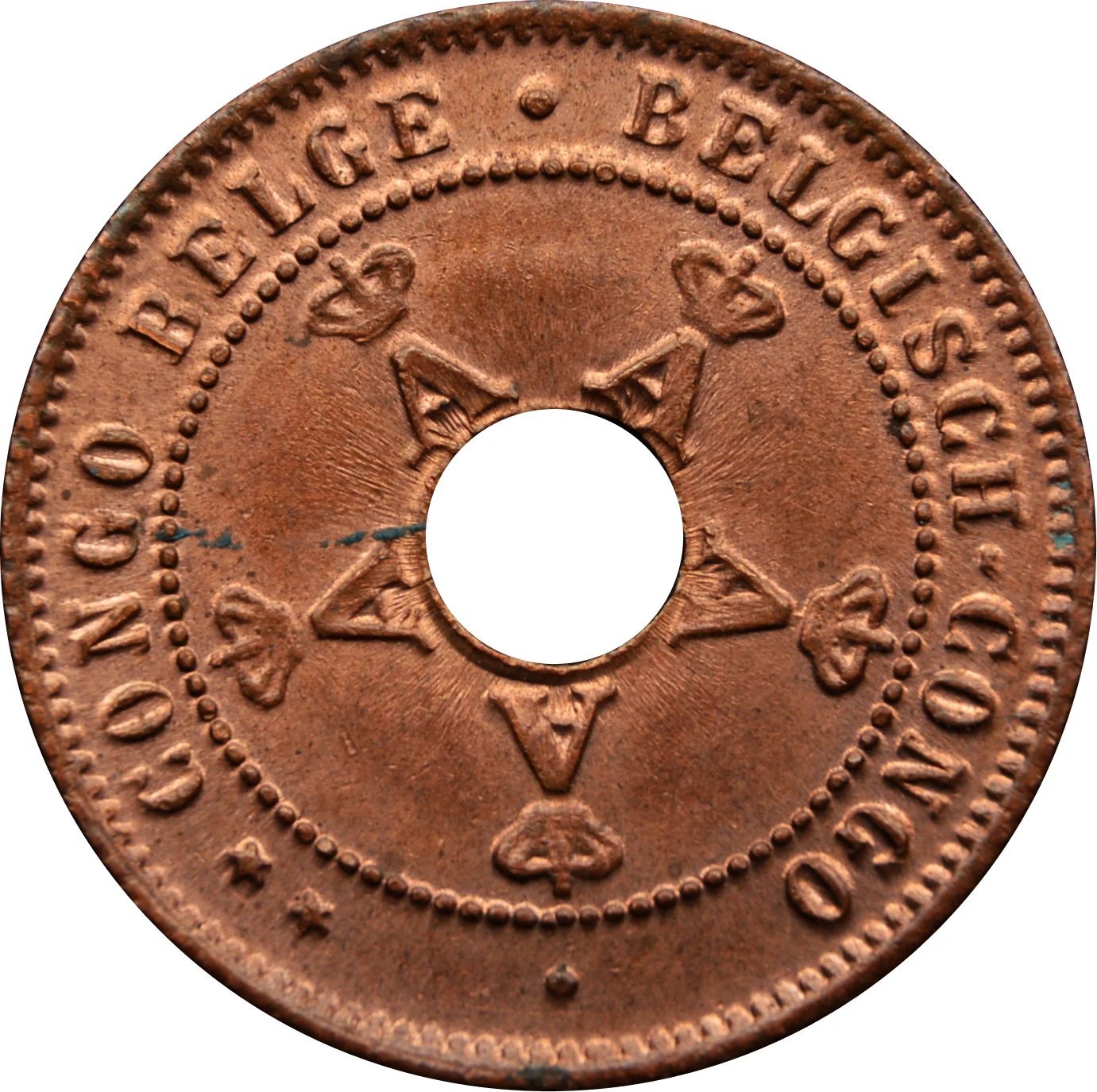
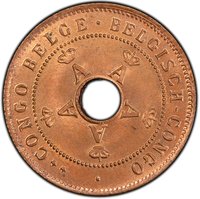
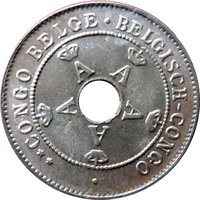
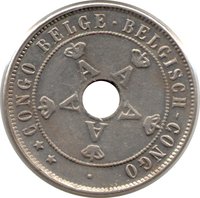
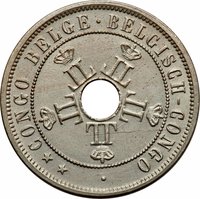
Albert I monograms trace a star. Country name in French and Dutch.
Inscription:
** CONGO BELGE · BELGISCH-CONGO ·
A A A A A
A A A A A
Translation:
BELGIAN CONGO · BELGIAN CONGO ·
Script: Latin
Engraver: Léopold Wiener
Reverse
Description:
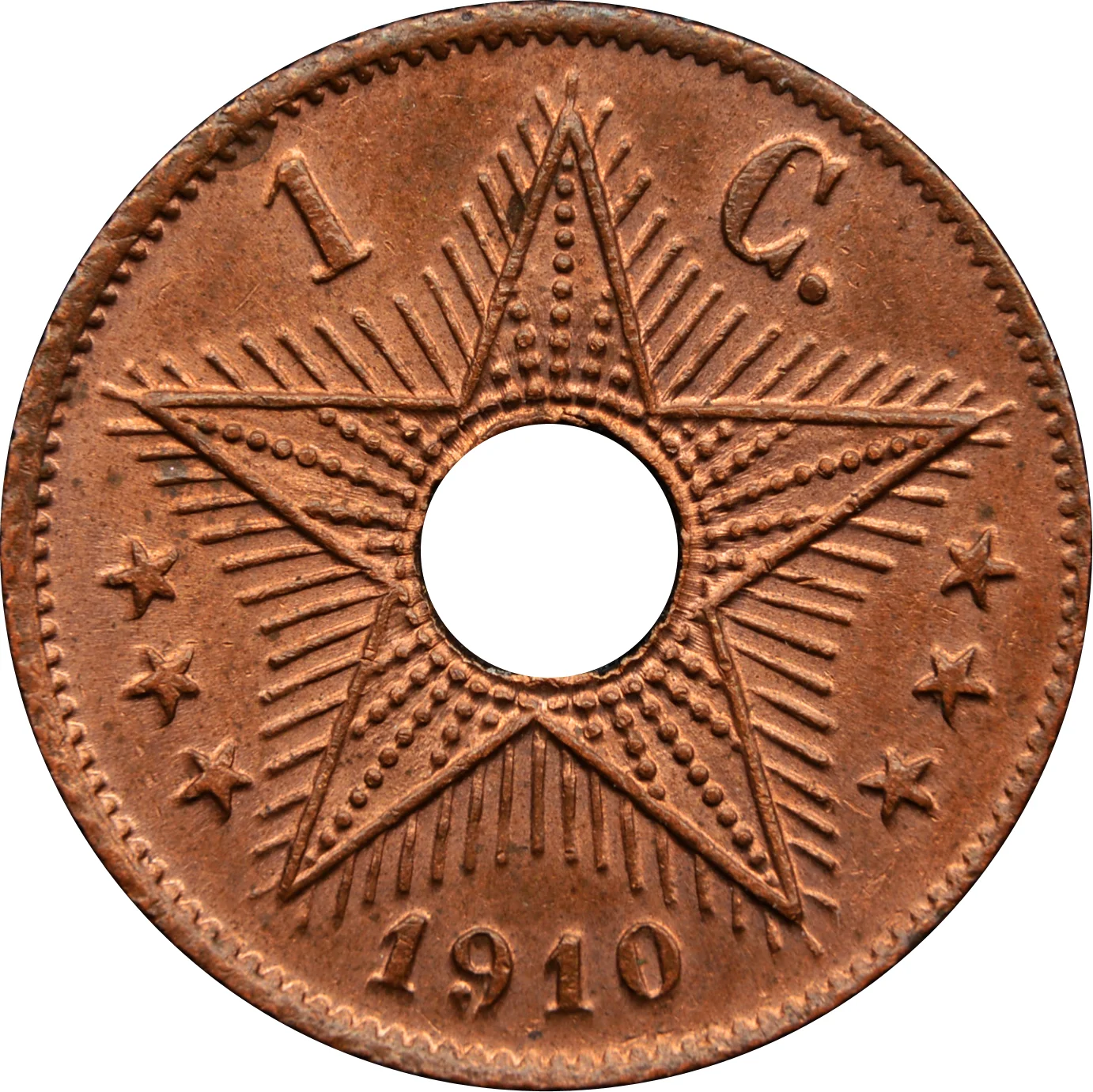
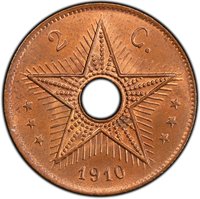
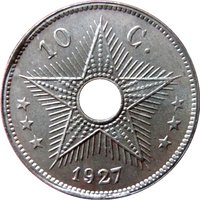
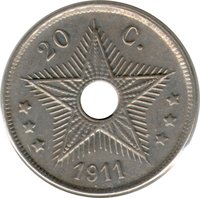
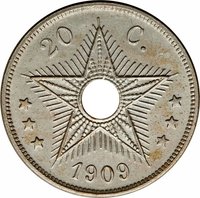
Shining star flanked by three smaller stars on each side.
Inscription:
*** 1 C. ***
1910
1910
Script: Latin
Engraver: Léopold Wiener
Edge
Reeded
Mintings
| Year | Mint Mark | Mintage | Quality | Collection |
|---|---|---|---|---|
| 1910 | — | 2,000,000 | ||
| 1919 | — | 500,000 |
Historical background
In 1910, the currency situation in the Belgian Congo was characterized by a state-controlled monetary system designed to serve the economic and administrative interests of the colonial regime. The official currency was the Congolese franc, which was pegged at par with the Belgian franc and guaranteed by the colonial treasury. This system had been formally established in 1887 to replace the earlier use of various trade goods and foreign coins, creating a unified currency that facilitated taxation, the payment of African labour, and the integration of the colony into the wider Belgian economic sphere.
The monetary landscape was dualistic, with the official franc coexisting with a compulsory and restrictive use of token money for the African population. Most notably, the colonial administration and major concession companies paid African workers partly in bons or metal tokens, which were only redeemable at the company store (comptoir). This practice, combined with a head tax (impôt de capitation) required to be paid in francs, created a coercive cycle that forced Congolese into the wage labour economy to earn the necessary currency, thereby supplying the workforce for the extraction of rubber, minerals, and other resources.
Overall, the 1910 currency system was not a neutral medium of exchange but a key instrument of colonial policy. It ensured financial stability for European enterprises and the state, while simultaneously enforcing economic control and social subordination over the Congolese population. The structure effectively supported the extractive colonial economy by minimizing hard currency costs for companies and administratively channelling labour, reflecting the broader exploitative nature of King Leopold II’s former domain, which had only been formally annexed by Belgium two years earlier, in 1908.
The monetary landscape was dualistic, with the official franc coexisting with a compulsory and restrictive use of token money for the African population. Most notably, the colonial administration and major concession companies paid African workers partly in bons or metal tokens, which were only redeemable at the company store (comptoir). This practice, combined with a head tax (impôt de capitation) required to be paid in francs, created a coercive cycle that forced Congolese into the wage labour economy to earn the necessary currency, thereby supplying the workforce for the extraction of rubber, minerals, and other resources.
Overall, the 1910 currency system was not a neutral medium of exchange but a key instrument of colonial policy. It ensured financial stability for European enterprises and the state, while simultaneously enforcing economic control and social subordination over the Congolese population. The structure effectively supported the extractive colonial economy by minimizing hard currency costs for companies and administratively channelling labour, reflecting the broader exploitative nature of King Leopold II’s former domain, which had only been formally annexed by Belgium two years earlier, in 1908.
🌱 Fairly Common