

½ dinar – Morocco
Add to wishlist
Morocco
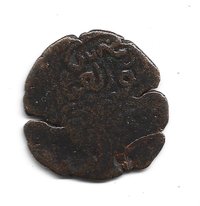
Obverse
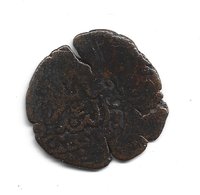
Reverse
Edge
Mintings
| Year | Mint Mark | Mintage | Quality | Collection |
|---|---|---|---|---|
| — | — | — |
Historical background
In 1603, Morocco was in a period of profound political and monetary instability following the death of the powerful Saadi Sultan Ahmad al-Mansur in 1603. His demise triggered a bitter succession war among his sons, fracturing the empire and crippling the central authority's control over the economy and minting. The renowned gold benduqi dinar, a symbol of al-Mansur's wealth from Trans-Saharan trade and his conquest of the Songhai Empire, began to disappear from circulation as the state's gold reserves were seized by rival factions or hoarded. This political fragmentation directly undermined the currency system, as competing regional powers and tribal leaders began issuing their own, often debased, coinage to fund their military campaigns.
The primary currency in daily use was the silver dirham, but its weight and purity became highly irregular. Without a strong central mint, various cities and claimants produced coins of differing standards, leading to confusion and a loss of public trust. The famed qirat system, where 1 gold dinar was theoretically valued at 20 silver dirhams and each dirham was worth 4 copper fulus, broke down. In practice, exchange rates fluctuated wildly based on location and the perceived legitimacy of the coin's issuer. The scarcity of full-weight silver dirhams drove a reliance on older, worn coins and cut fragments of silver (habs al-fidda), which were weighed for each transaction.
This monetary chaos reflected and exacerbated the broader economic distress. The lucrative sugar and trans-Saharan trade routes, which had supplied the bullion for a stable currency, were disrupted by internal conflict and European naval pressure. Consequently, foreign coins, particularly Spanish reales and Ottoman piastres, circulated in port cities, further complicating the monetary landscape. Thus, in 1603, Morocco's currency situation was one of transition from a unified, prestigious system to a fragmented and unreliable one, mirroring the kingdom's descent into the tumultuous era known as the "Saadian anarchy."
The primary currency in daily use was the silver dirham, but its weight and purity became highly irregular. Without a strong central mint, various cities and claimants produced coins of differing standards, leading to confusion and a loss of public trust. The famed qirat system, where 1 gold dinar was theoretically valued at 20 silver dirhams and each dirham was worth 4 copper fulus, broke down. In practice, exchange rates fluctuated wildly based on location and the perceived legitimacy of the coin's issuer. The scarcity of full-weight silver dirhams drove a reliance on older, worn coins and cut fragments of silver (habs al-fidda), which were weighed for each transaction.
This monetary chaos reflected and exacerbated the broader economic distress. The lucrative sugar and trans-Saharan trade routes, which had supplied the bullion for a stable currency, were disrupted by internal conflict and European naval pressure. Consequently, foreign coins, particularly Spanish reales and Ottoman piastres, circulated in port cities, further complicating the monetary landscape. Thus, in 1603, Morocco's currency situation was one of transition from a unified, prestigious system to a fragmented and unreliable one, mirroring the kingdom's descent into the tumultuous era known as the "Saadian anarchy."

✨ Legendary