

¼ Öre – Sweden
Sweden
Context

References
KM: #Click to copy to clipboard110
Numista: #157840
Obverse
Description:
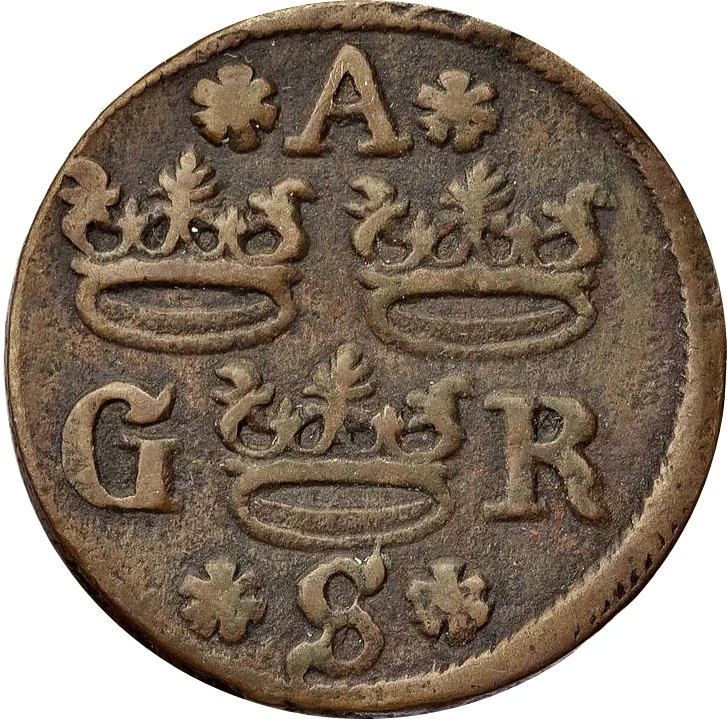
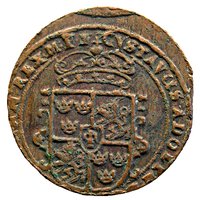
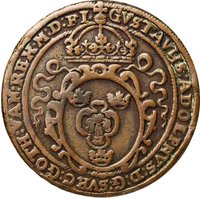
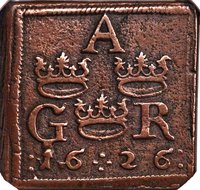
Three crowns flank Gustav II Adolf's monogram with an "S" below.
Inscription:
* A *
G R
* S *
G R
* S *
Script: Latin
Reverse
Description:
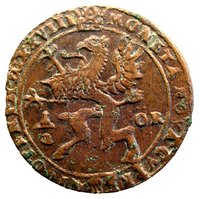
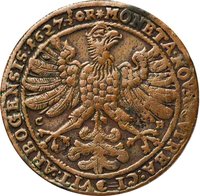
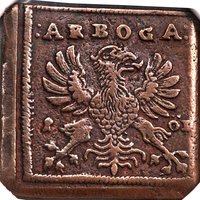
City, value, and date
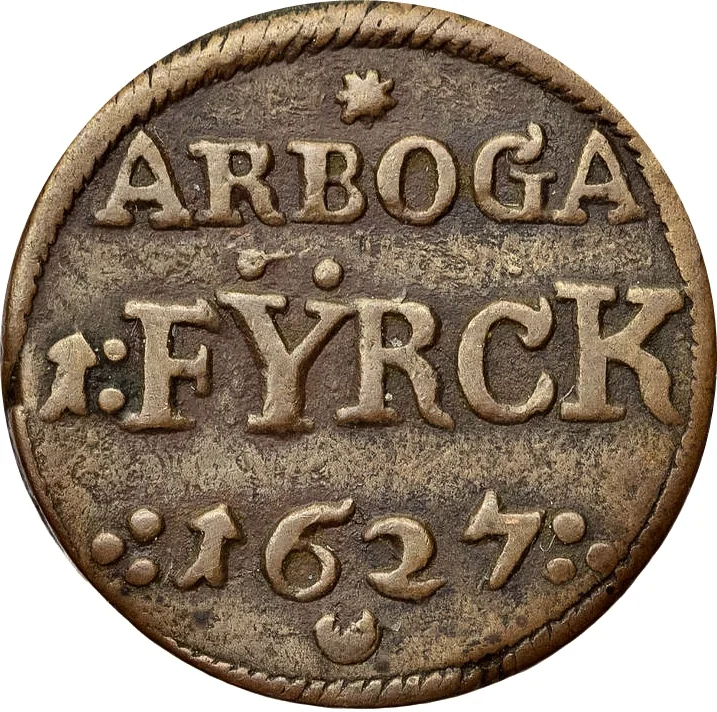
on three lines.
Small open heart below.
on three lines.
Small open heart below.
Inscription:
*
ARBOGA
1 : FŸRCK
·: 1627 :·
ARBOGA
1 : FŸRCK
·: 1627 :·
Script: Latin
Edge
Mints
| Name | Mark |
|---|---|
| Arboga | — |
Mintings
| Year | Mint Mark | Mintage | Quality | Collection |
|---|---|---|---|---|
| 1627 | — | — |
Historical background
In 1627, Sweden was in the midst of the "Stormaktstiden" (the Era of Great Power), actively engaged in the Thirty Years' War under King Gustavus Adolphus. This ambitious foreign policy was astronomically expensive, placing immense strain on the state treasury. The primary financial strategy to fund the military campaigns was the heavy exploitation of Sweden's copper resources, particularly from the great mine at Falun. Copper had effectively become a strategic monetary metal, as Sweden lacked significant domestic silver mines, the traditional basis for European currency.
Consequently, Sweden operated under a unique and cumbersome bimetallic system. The currency consisted of large, cumbersome copper plåtmynt (plate money) – literal rectangular sheets of copper stamped with their denomination – alongside traditional silver coins. The intrinsic value of the copper in the plates was meant to equal their face value, but this made the currency extremely heavy and impractical for daily use; a high-value plate could weigh several kilograms. The system was inherently unstable because the market value of copper fluctuated internationally, often diverging from the fixed legal rate, leading to economic distortions and opportunities for arbitrage.
The situation was one of controlled monetary crisis. The government, constantly in need of liquidity, repeatedly debased the silver coinage (reducing its precious metal content) to mint more coins from the same silver stock, leading to inflation and a loss of public confidence. Furthermore, the reliance on copper exports meant the Swedish economy and its currency were vulnerable to global commodity price shocks. Thus, in 1627, Sweden's currency was not a tool of everyday commerce but a fiscal instrument of war, characterized by physical heaviness, artificial valuations, and inflationary pressures, all managed to sustain the kingdom's military ambitions on the European continent.
Consequently, Sweden operated under a unique and cumbersome bimetallic system. The currency consisted of large, cumbersome copper plåtmynt (plate money) – literal rectangular sheets of copper stamped with their denomination – alongside traditional silver coins. The intrinsic value of the copper in the plates was meant to equal their face value, but this made the currency extremely heavy and impractical for daily use; a high-value plate could weigh several kilograms. The system was inherently unstable because the market value of copper fluctuated internationally, often diverging from the fixed legal rate, leading to economic distortions and opportunities for arbitrage.
The situation was one of controlled monetary crisis. The government, constantly in need of liquidity, repeatedly debased the silver coinage (reducing its precious metal content) to mint more coins from the same silver stock, leading to inflation and a loss of public confidence. Furthermore, the reliance on copper exports meant the Swedish economy and its currency were vulnerable to global commodity price shocks. Thus, in 1627, Sweden's currency was not a tool of everyday commerce but a fiscal instrument of war, characterized by physical heaviness, artificial valuations, and inflationary pressures, all managed to sustain the kingdom's military ambitions on the European continent.
Series: 1627 Sweden circulation coins
💎 Extremely Rare