

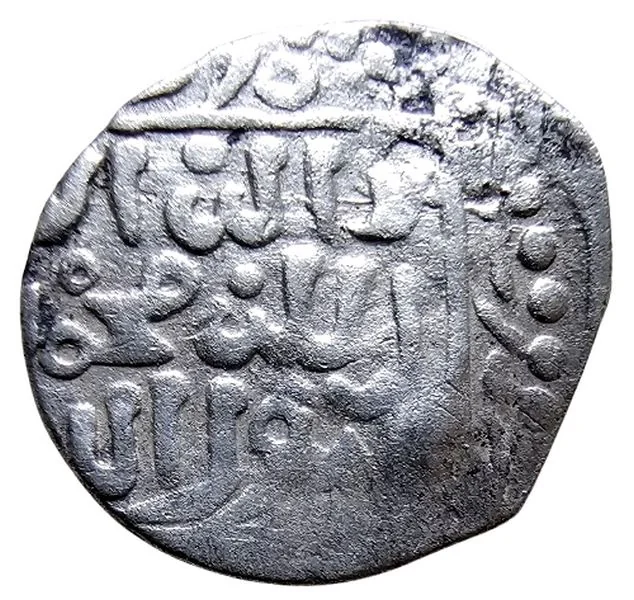
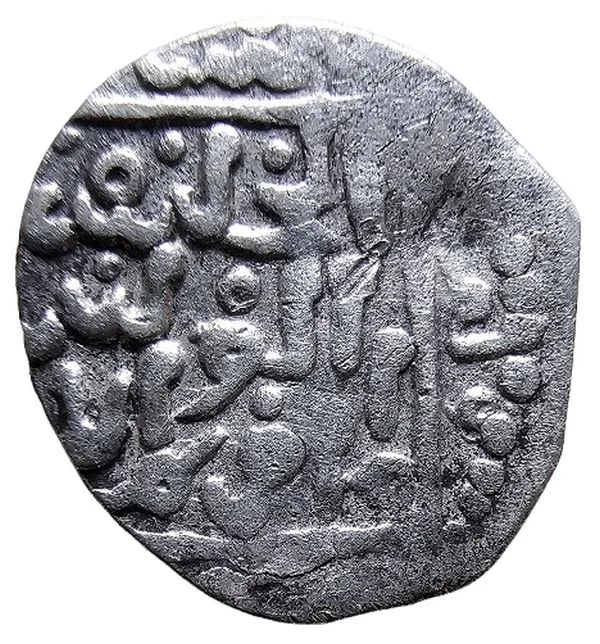
dirham – Morocco
Add to wishlist
Morocco
Context
Material
Diameter: 14.2 mm
Weight: 0.82 g
Silver Weight:: 0.82 g
Shape: Irregular round
Composition: Silver
Magnetic: No
References
KM: #
Numista: #157667
Value
Bullion value: $2.09
Obverse
Reverse
Inscription:
الخليفة
الوليد
ابن زيدان
الوليد
ابن زيدان
Edge
Mintings
| Year | Mint Mark | Mintage | Quality | Collection |
|---|---|---|---|---|
| 1630 | — | — |
Historical background
In 1630, the currency situation in the Saadian Sultanate of Morocco was complex and transitional, reflecting both its powerful regional position and internal economic strains. The country was a major hub in the trans-Saharan gold trade, with gold dust (tibr) and gold coins, particularly the benduqi and the prestigious ashrafi (modeled on the Venetian ducat), serving as the primary high-value units. These coexisted with a plethora of smaller silver and copper coins, such as the silver dirham and the ubiquitous copper falus, which facilitated everyday local trade. This multi-metallic system was inherently unstable, as the fluctuating supply of precious metals from Sudan and the New World, along with frequent debasements, caused constant shifts in exchange rates.
The monetary landscape was further complicated by the heavy circulation of foreign coinage, a testament to Morocco’s deep integration into Mediterranean and Atlantic economies. Spanish reales, Ottoman altuns, and various European silver coins were commonly used in ports and commercial centers, especially by European merchants and corsairs. The Sultanate’s own mints, like those in Marrakech and Fez, struggled to maintain consistent standards, leading to a loss of confidence in official currency. This period also saw the increased use of raw metal by weight (particularly silver in mitqals) for large transactions, bypassing minted coinage altogether.
Ultimately, the currency disarray of 1630 mirrored the broader challenges facing the Saadian state in its later years. While the legendary wealth of Sultan Ahmad al-Mansur (d. 1603) had left a legacy of sophisticated finance, his successors contended with civil war, tribal rebellion, and the economic disruption of the "Moroccan Crisis." The unreliable coinage hindered taxation and state revenue, weakening central authority. Thus, the monetary system was not merely a financial issue but a symptom of the political fragmentation that would culminate in the rise of the new Alaouite dynasty later in the century.
The monetary landscape was further complicated by the heavy circulation of foreign coinage, a testament to Morocco’s deep integration into Mediterranean and Atlantic economies. Spanish reales, Ottoman altuns, and various European silver coins were commonly used in ports and commercial centers, especially by European merchants and corsairs. The Sultanate’s own mints, like those in Marrakech and Fez, struggled to maintain consistent standards, leading to a loss of confidence in official currency. This period also saw the increased use of raw metal by weight (particularly silver in mitqals) for large transactions, bypassing minted coinage altogether.
Ultimately, the currency disarray of 1630 mirrored the broader challenges facing the Saadian state in its later years. While the legendary wealth of Sultan Ahmad al-Mansur (d. 1603) had left a legacy of sophisticated finance, his successors contended with civil war, tribal rebellion, and the economic disruption of the "Moroccan Crisis." The unreliable coinage hindered taxation and state revenue, weakening central authority. Thus, the monetary system was not merely a financial issue but a symptom of the political fragmentation that would culminate in the rise of the new Alaouite dynasty later in the century.

✨ Legendary