

2 öre – Sweden
Add to wishlist
Sweden
Context
Material
References
KM: #
Numista: #157661
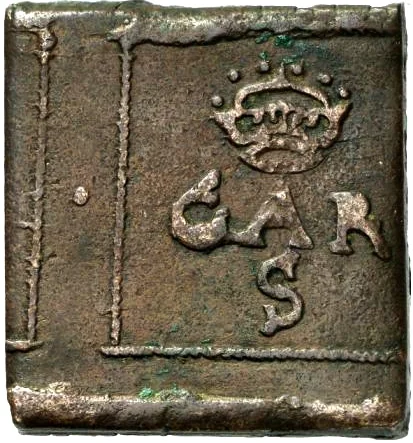
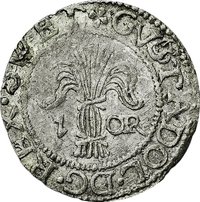
Obverse
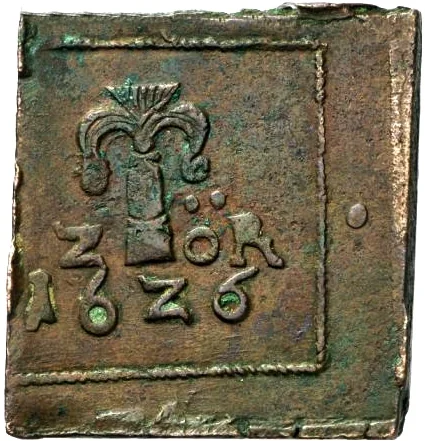
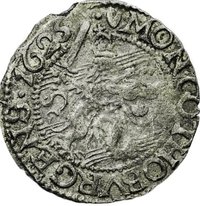
Reverse
Description:
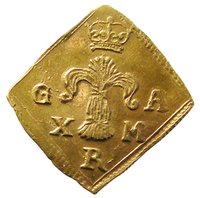
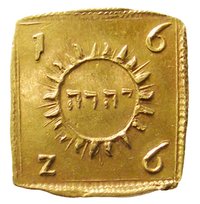
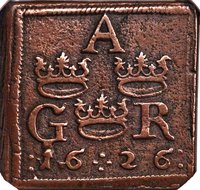
Vasa arms flank value, date below, within square border.
Inscription:
Z ÖR
16Z6
16Z6
Script: Latin
Edge
Mintings
| Year | Mint Mark | Mintage | Quality | Collection |
|---|---|---|---|---|
| 1626 | — | — | ||
| 1627 | — | — |
Historical background
In 1626, Sweden was in the midst of the "Stormaktstiden" (the Era of Great Power), a period of aggressive military expansion under King Gustav II Adolf. This constant warfare placed an immense and continuous strain on the state's finances. The primary currency was the silver riksdaler, but the crown's need to pay troops and suppliers across the Baltic and in Germany far exceeded the silver reserves from domestic mines. Consequently, the government resorted to repeated debasement of the coinage, reducing the silver content in minted coins to create more money from the same bullion stock, a short-term fix that eroded public trust and sparked inflation.
The monetary system was complex and fragmented. Alongside the debased domestic coinage, a multitude of foreign currencies—especially German, Dutch, and Polish coins—circulated freely due to trade and the movement of armies. This created a chaotic environment where exchange rates fluctuated wildly, and merchants and the crown itself had to constantly assess the true intrinsic metal value of coins rather than their face value. The risk of receiving "bad" debased money was high, disrupting commerce and state accounting.
Recognizing the destabilizing effects of this situation, the government had already taken initial steps toward reform. In 1625, just a year earlier, the Riksens Ständers Bank (the Bank of the Estates of the Realm) was established, a precursor to the world's oldest central bank, the Riksbank. Its founding mission was to bring order to the currency chaos and provide the state with a more reliable source of credit beyond simple debasement. Thus, 1626 represents a critical juncture: a year of severe monetary strain caused by war finance, but also a point where institutional foundations were being laid to manage the crisis and support Sweden's imperial ambitions.
The monetary system was complex and fragmented. Alongside the debased domestic coinage, a multitude of foreign currencies—especially German, Dutch, and Polish coins—circulated freely due to trade and the movement of armies. This created a chaotic environment where exchange rates fluctuated wildly, and merchants and the crown itself had to constantly assess the true intrinsic metal value of coins rather than their face value. The risk of receiving "bad" debased money was high, disrupting commerce and state accounting.
Recognizing the destabilizing effects of this situation, the government had already taken initial steps toward reform. In 1625, just a year earlier, the Riksens Ständers Bank (the Bank of the Estates of the Realm) was established, a precursor to the world's oldest central bank, the Riksbank. Its founding mission was to bring order to the currency chaos and provide the state with a more reliable source of credit beyond simple debasement. Thus, 1626 represents a critical juncture: a year of severe monetary strain caused by war finance, but also a point where institutional foundations were being laid to manage the crisis and support Sweden's imperial ambitions.
✨ Legendary