

1 mazuna – Morocco
Add to wishlist
Morocco
Context
References
KM: #
Numista: #157494
Value
Bullion value: $1.79
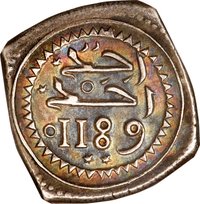
Obverse
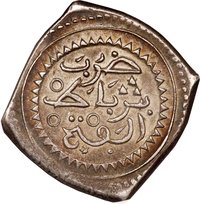
Reverse
Edge
Mintings
| Year | Mint Mark | Mintage | Quality | Collection |
|---|---|---|---|---|
| 1773 | — | — | ||
| 1773 | — | — | ||
| 1774 | — | — | ||
| 1775 | — | — | ||
| 1776 | — | — | ||
| 1779 | — | — | ||
| 1780 | — | — |
Historical background
In 1773, the currency situation in the Moroccan Sultanate under Sultan Mohammed ben Abdallah was characterized by a complex and often unstable bimetallic system, heavily influenced by foreign trade and internal policy. The primary coins in circulation were the silver dirham and the gold benduqi (or benduqi dinar), but their weight, purity, and value were not always standardized across the realm. This period saw a significant influx of foreign coinage, particularly Spanish silver reales (pieces of eight) and Portuguese gold cruzados, which circulated alongside local issues due to their reliable precious metal content and their crucial role in financing international trade, especially with European powers.
The Sultan actively sought to assert monetary sovereignty and control over this chaotic landscape. He established a royal mint (Dar al-Sikka) in Marrakesh and issued new, high-quality coins bearing his name, attempting to centralize minting authority that had been dispersed among various cities and tribes. His reforms aimed to standardize the coinage, restore confidence in the monetary system, and reduce reliance on foreign specie. However, these efforts were constantly challenged by budgetary pressures from military campaigns, the need to pay tribal subsidies, and the sheer volume of foreign coins entering through coastal trade hubs like Essaouira, which he had recently founded.
Consequently, the monetary reality for most Moroccans was one of uncertainty. The coexistence of multiple domestic and foreign coins, coupled with fluctuating exchange rates between gold and silver, complicated daily transactions and commerce. While the Sultan's reforms laid important groundwork for a more unified national currency, the economy in 1773 remained in a transitional phase, caught between traditional systems and the pressures of a globalizing trade network that poured European silver and gold into the country, making full monetary stabilization an elusive goal.
The Sultan actively sought to assert monetary sovereignty and control over this chaotic landscape. He established a royal mint (Dar al-Sikka) in Marrakesh and issued new, high-quality coins bearing his name, attempting to centralize minting authority that had been dispersed among various cities and tribes. His reforms aimed to standardize the coinage, restore confidence in the monetary system, and reduce reliance on foreign specie. However, these efforts were constantly challenged by budgetary pressures from military campaigns, the need to pay tribal subsidies, and the sheer volume of foreign coins entering through coastal trade hubs like Essaouira, which he had recently founded.
Consequently, the monetary reality for most Moroccans was one of uncertainty. The coexistence of multiple domestic and foreign coins, coupled with fluctuating exchange rates between gold and silver, complicated daily transactions and commerce. While the Sultan's reforms laid important groundwork for a more unified national currency, the economy in 1773 remained in a transitional phase, caught between traditional systems and the pressures of a globalizing trade network that poured European silver and gold into the country, making full monetary stabilization an elusive goal.

✨ Legendary