

1 Falus – Morocco
Morocco
Context
Year: 1780
Islamic (Hijri) Year: 1194
Issuer: Morocco 
Ruler: Sidi Muhammad III
Currency:
(1659—1882)
Demonetized: Yes
References
KM: #Click to copy to clipboard30.6
Numista: #157469
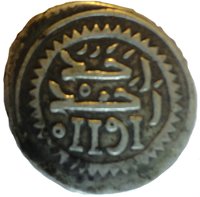
Obverse
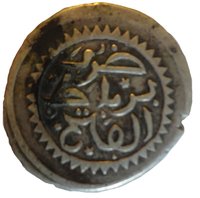
Reverse
Edge
Mintings
| Year | Mint Mark | Mintage | Quality | Collection |
|---|---|---|---|---|
| 1780 | — | — |
Historical background
In 1780, the currency situation in the Kingdom of Morocco was characterized by significant complexity and instability, rooted in both internal governance and external pressures. The Alaouite Sultanate, under Sultan Sidi Muhammad ibn Abdullah (r. 1757-1790), was actively engaged in expanding foreign trade, particularly with European powers like France, Britain, and Spain. This international commerce brought a flood of foreign coins—most notably Spanish silver reales (pieces of eight), Portuguese cruzados, and other European currencies—into circulation alongside a diverse array of domestic coins. The Moroccan state minted its own gold benduqi, silver dirhams, and copper fulus, but their weight, purity, and value were inconsistent, leading to a chaotic monetary environment where exchange rates fluctuated wildly.
The core of the problem lay in the chronic shortage of precious metals, especially silver, within Morocco's own economy. The state's mints often lacked sufficient bullion to produce enough coinage to meet domestic needs, a situation exacerbated by trade imbalances. While exports like sugar, leather, and wax were significant, they did not always offset the cost of imported manufactured goods and textiles, leading to a net outflow of silver. Furthermore, widespread counterfeiting and the practice of clipping precious metal from coins further eroded public trust in the currency. Sultan Sidi Muhammad ibn Abdullah was acutely aware of these issues and had attempted monetary reforms earlier in his reign, but by 1780, the system remained fragmented and unreliable.
This monetary instability had direct consequences for the Sultanate's authority and the daily economy. The government struggled to collect taxes efficiently, as the value of payments was constantly in question, and soldiers and officials were often paid in inconsistent coin. For merchants and the common populace, everyday transactions required cumbersome negotiation and the use of money-changers (sarrafs), who held significant power. Thus, in 1780, Morocco's currency was not a unified national system but a contested marketplace of competing metallic tokens, reflecting a state caught between its traditional structures and the pressures of an integrating Atlantic economy.
The core of the problem lay in the chronic shortage of precious metals, especially silver, within Morocco's own economy. The state's mints often lacked sufficient bullion to produce enough coinage to meet domestic needs, a situation exacerbated by trade imbalances. While exports like sugar, leather, and wax were significant, they did not always offset the cost of imported manufactured goods and textiles, leading to a net outflow of silver. Furthermore, widespread counterfeiting and the practice of clipping precious metal from coins further eroded public trust in the currency. Sultan Sidi Muhammad ibn Abdullah was acutely aware of these issues and had attempted monetary reforms earlier in his reign, but by 1780, the system remained fragmented and unreliable.
This monetary instability had direct consequences for the Sultanate's authority and the daily economy. The government struggled to collect taxes efficiently, as the value of payments was constantly in question, and soldiers and officials were often paid in inconsistent coin. For merchants and the common populace, everyday transactions required cumbersome negotiation and the use of money-changers (sarrafs), who held significant power. Thus, in 1780, Morocco's currency was not a unified national system but a contested marketplace of competing metallic tokens, reflecting a state caught between its traditional structures and the pressures of an integrating Atlantic economy.

✨ Legendary