

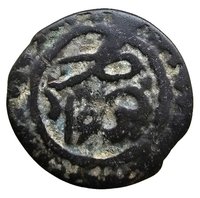
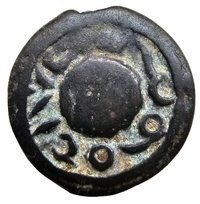
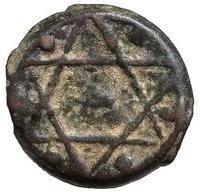
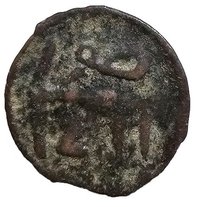
½ dinar – Morocco
Add to wishlist
Morocco
Context
Year: 1795
Islamic (Hijri) Year:: 1209
Issuer: Morocco
Ruler: Moulay Sulayman
Currency:
(1659—1882)
Demonetized: Yes
References
KM: #
Numista: #157279
Value
Bullion value: $269.80
Obverse
Reverse
Edge
Mintings
| Year | Mint Mark | Mintage | Quality | Collection |
|---|---|---|---|---|
| 1795 | — | — |
Historical background
In 1795, the currency situation in the Kingdom of Morocco was characterized by a complex and often unstable bimetallic system, heavily influenced by both internal governance and external pressures. The primary circulating coins were the silver dirham and the gold benduqi or mithqal, whose values fluctuated based on the volatile global market prices for precious metals. This period fell within the reign of Sultan Moulay Slimane (1792–1822), whose conservative and sometimes isolationist policies clashed with the realities of increasing European commercial contact. The state treasury (Bayt al-Mal) struggled with periodic shortages of specie, exacerbated by irregular tax collection from tribal regions and the economic disruption following the devastating Lisbon earthquake of 1755, which had severely damaged Morocco's key trading partner, Portugal.
The monetary landscape was further complicated by a proliferation of foreign coins, a legacy of Morocco's active trade with Europe and the Ottoman world. Spanish reales (pieces of eight), Portuguese cruzados, and other European silver coins circulated widely, especially in port cities like Essaouira, Tangier, and Salé, often preferred for their reliable silver content. This created a de facto dual system where foreign coins were used for foreign trade and large transactions, while locally minted coins served smaller, daily commerce. The Sultanate's own minting was inconsistent, leading to issues of debasement and counterfeiting, which eroded public trust in the domestic currency and fueled inflation for basic goods.
Ultimately, the currency situation reflected the broader challenges of the Alawite state in a transformative era. While the country was not formally colonized, European economic power was increasingly felt, destabilizing traditional monetary structures. Sultan Moulay Slimane's attempts to centralize control and standardize currency were only partially successful, as the economy remained fragmented between the Bled al-Makhzen (lands under government control) and the Bled as-Siba (lands of dissidence). Thus, in 1795, Morocco's monetary system was less a unified national currency and more a fragile mosaic of local and foreign metals, symbolizing a pre-modern economy facing the pressures of a changing global order.
The monetary landscape was further complicated by a proliferation of foreign coins, a legacy of Morocco's active trade with Europe and the Ottoman world. Spanish reales (pieces of eight), Portuguese cruzados, and other European silver coins circulated widely, especially in port cities like Essaouira, Tangier, and Salé, often preferred for their reliable silver content. This created a de facto dual system where foreign coins were used for foreign trade and large transactions, while locally minted coins served smaller, daily commerce. The Sultanate's own minting was inconsistent, leading to issues of debasement and counterfeiting, which eroded public trust in the domestic currency and fueled inflation for basic goods.
Ultimately, the currency situation reflected the broader challenges of the Alawite state in a transformative era. While the country was not formally colonized, European economic power was increasingly felt, destabilizing traditional monetary structures. Sultan Moulay Slimane's attempts to centralize control and standardize currency were only partially successful, as the economy remained fragmented between the Bled al-Makhzen (lands under government control) and the Bled as-Siba (lands of dissidence). Thus, in 1795, Morocco's monetary system was less a unified national currency and more a fragile mosaic of local and foreign metals, symbolizing a pre-modern economy facing the pressures of a changing global order.
✨ Legendary