

1 falus – Morocco
Add to wishlist
Morocco
Context
References
KM: #
Numista: #157219
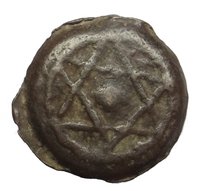
Obverse
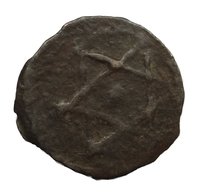
Reverse
Edge
Mintings
| Year | Mint Mark | Mintage | Quality | Collection |
|---|---|---|---|---|
| — | — | — |
Historical background
In 1792, Morocco's currency situation was characterized by a complex and often unstable bimetallic system, heavily influenced by both internal governance and external trade pressures. The primary circulating coins were the silver dirham and the gold benduqi (or benduqi dinar), with their values fluctuating based on the volatile market prices of precious metals. The Alawite Sultan Moulay Yazid, whose tumultuous reign began in 1790, faced significant challenges in maintaining monetary stability. His rule was marked by internal conflict and rebellion, which disrupted state control over the mint houses (dar al-sikka) and led to irregular coinage production and widespread debasement.
Externally, Morocco's currency was deeply entangled with European commerce, particularly through the bustling ports of cities like Essaouira, Tangier, and Salé. Spanish piastres (pieces of eight), Portuguese cruzados, and other European coins circulated widely alongside local issues, used for foreign trade and often preferred for their reliable silver content. This influx of foreign currency, while facilitating trade, further complicated the domestic monetary environment and exposed the economy to external shocks. The sultanate struggled to manage the outflow of full-weight silver coins to Europe in exchange for manufactured goods, a drain that contributed to a scarcity of sound money.
Consequently, the monetary landscape in 1792 was one of fragmentation and uncertainty. The state's fiscal difficulties, exacerbated by Moulay Yazid's brief and violent rule which ended with his death that very year, prevented effective monetary reform. Regional governors and local markets often set their own exchange rates, leading to a lack of uniform value across the realm. This instability reflected the broader political disorder of the period, hindering both domestic commerce and the state's ability to collect consistent revenue, thereby perpetuating a cycle of economic and political fragility.
Externally, Morocco's currency was deeply entangled with European commerce, particularly through the bustling ports of cities like Essaouira, Tangier, and Salé. Spanish piastres (pieces of eight), Portuguese cruzados, and other European coins circulated widely alongside local issues, used for foreign trade and often preferred for their reliable silver content. This influx of foreign currency, while facilitating trade, further complicated the domestic monetary environment and exposed the economy to external shocks. The sultanate struggled to manage the outflow of full-weight silver coins to Europe in exchange for manufactured goods, a drain that contributed to a scarcity of sound money.
Consequently, the monetary landscape in 1792 was one of fragmentation and uncertainty. The state's fiscal difficulties, exacerbated by Moulay Yazid's brief and violent rule which ended with his death that very year, prevented effective monetary reform. Regional governors and local markets often set their own exchange rates, leading to a lack of uniform value across the realm. This instability reflected the broader political disorder of the period, hindering both domestic commerce and the state's ability to collect consistent revenue, thereby perpetuating a cycle of economic and political fragility.
Series: 1792 Morocco circulation coins

✨ Legendary