

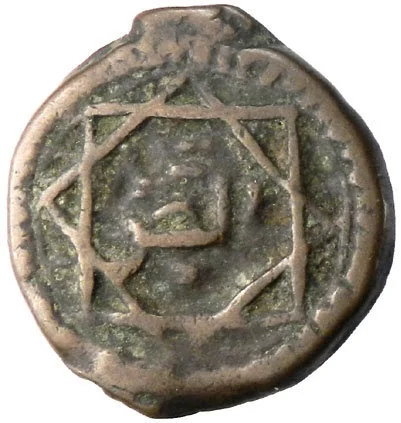
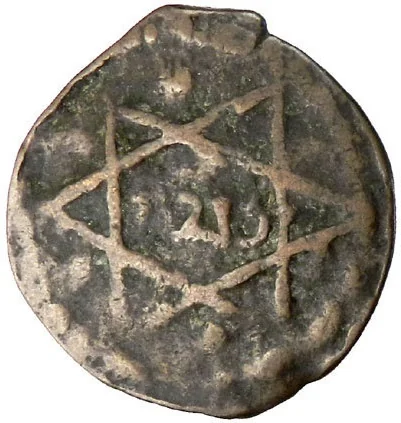
3 Falus – Morocco
Morocco
Context
References
KM: #Click to copy to clipboard100.2
Numista: #157200
Obverse
Reverse
Edge
Mintings
| Year | Mint Mark | Mintage | Quality | Collection |
|---|---|---|---|---|
| 1799 | — | — | ||
| 1800 | — | — | ||
| 1801 | — | — | ||
| 1805 | — | — |
Historical background
In 1799, Morocco's currency situation was characterized by a complex and often unstable bimetallic system, heavily influenced by European commercial pressures and internal fiscal strains. The country circulated a variety of coins: the silver dirham and the gold benduqi (or benduqui) were the primary units, but their values and purity fluctuated significantly. Furthermore, a multitude of older, worn, and foreign coins—especially Spanish pieces of eight (reales), Portuguese cruzados, and other European currencies from thriving coastal trade—circulated alongside them, creating a chaotic exchange environment. The Alawite Sultan Moulay Slimane, ruling from 1792 to 1822, faced the persistent challenge of asserting monetary sovereignty and standardizing this system.
The core problem was a chronic shortage of precious metals, exacerbated by an unfavorable balance of trade. Morocco exported raw materials like wheat, leather, and wax but imported increasing amounts of European manufactured goods, leading to a steady drain of silver and gold from the kingdom. This scarcity was worsened by periods of drought, internal rebellion, and the sultan's own conservative trade policies, which sometimes restricted European contact. Consequently, the government often resorted to debasement—reducing the silver content in coins—to stretch its bullion reserves and meet fiscal obligations, which further eroded public confidence in the currency and spurred inflation in urban markets.
This monetary instability reflected the broader geopolitical and economic pressures of the era. While Morocco maintained its political independence, it was increasingly entangled in the Atlantic and Mediterranean economies. The Napoleonic Wars raging in Europe disrupted traditional trade routes and affected the flow of silver into the Maghreb. Sultan Moulay Slimane’s attempts at reform were intermittent and struggled against deeply entrenched practices. Thus, in 1799, Morocco's currency was not merely a medium of exchange but a visible symptom of a transitional economy caught between its own historic structures and the encroaching demands of a globalizing commercial world.
The core problem was a chronic shortage of precious metals, exacerbated by an unfavorable balance of trade. Morocco exported raw materials like wheat, leather, and wax but imported increasing amounts of European manufactured goods, leading to a steady drain of silver and gold from the kingdom. This scarcity was worsened by periods of drought, internal rebellion, and the sultan's own conservative trade policies, which sometimes restricted European contact. Consequently, the government often resorted to debasement—reducing the silver content in coins—to stretch its bullion reserves and meet fiscal obligations, which further eroded public confidence in the currency and spurred inflation in urban markets.
This monetary instability reflected the broader geopolitical and economic pressures of the era. While Morocco maintained its political independence, it was increasingly entangled in the Atlantic and Mediterranean economies. The Napoleonic Wars raging in Europe disrupted traditional trade routes and affected the flow of silver into the Maghreb. Sultan Moulay Slimane’s attempts at reform were intermittent and struggled against deeply entrenched practices. Thus, in 1799, Morocco's currency was not merely a medium of exchange but a visible symptom of a transitional economy caught between its own historic structures and the encroaching demands of a globalizing commercial world.

✨ Legendary