

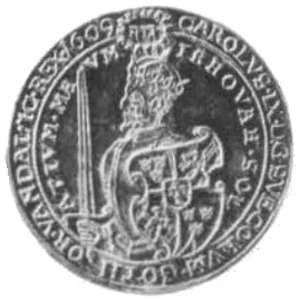


Obverse
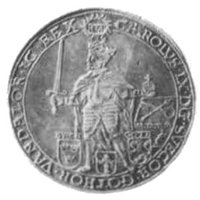
Description:
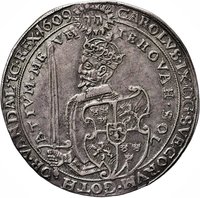
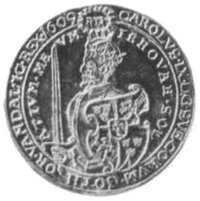
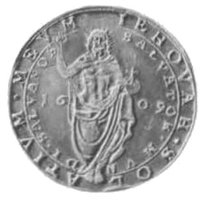
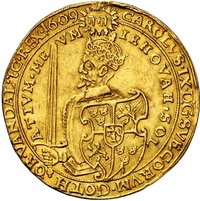
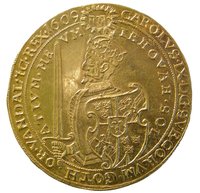
Karl IX half-figure with sword and arms, Hebrew legend and date below.
Script: Latin
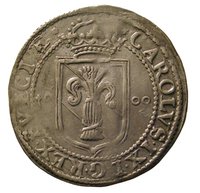
Reverse
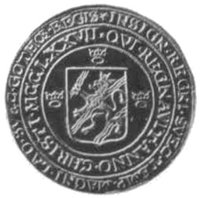
Description:
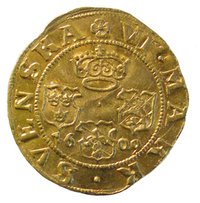
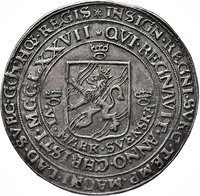
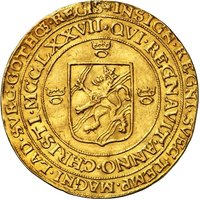
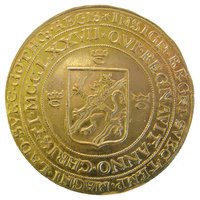
Three crowns on a shield.
Script: Latin
Edge
Mintings
| Year | Mint Mark | Mintage | Quality | Collection |
|---|---|---|---|---|
| 1609 | — | — |
Historical background
In 1609, Sweden was in the midst of a severe monetary crisis, a direct consequence of the ongoing Kalmar War with Denmark-Norway (1611-1613). To finance its military ambitions and the costly maintenance of a standing army, the Swedish state, under King Charles IX, had resorted to rampant coin debasement. The government repeatedly reduced the silver content in coins like the öre and mark while insisting they retain their face value, effectively creating inflation and undermining public trust in the currency. This period saw a chaotic circulation of coins of varying intrinsic worth, including older, purer coins that were hoarded or melted down, and new, inferior ones that people were reluctant to accept.
The situation was exacerbated by Sweden's limited domestic silver reserves. Unlike major European powers, Sweden did not yet possess significant silver mines (the great copper mine at Falun was the primary mineral wealth). To procure silver for minting, the state often had to rely on tariffs and taxes paid in foreign coin, which was then recoined. The debased currency disrupted both internal trade and international commerce, as foreign merchants demanded payment in reliable specie. This created a vicious cycle: war demands drained the treasury, leading to more debasement, which further strained the economy and the war effort itself.
This monetary instability highlighted the urgent need for reform, a task that would fall to Charles IX's successor, Gustavus Adolphus. The crisis of 1609 and the following years laid the groundwork for his later, sweeping financial and administrative reforms. Most importantly, it underscored the necessity for a stable metallic base for the currency, a lesson that would bear fruit with the establishment of the Swedish Riksbank in 1668 and the eventual discovery of rich domestic silver deposits, which later allowed for the production of stable, high-quality coinage.
The situation was exacerbated by Sweden's limited domestic silver reserves. Unlike major European powers, Sweden did not yet possess significant silver mines (the great copper mine at Falun was the primary mineral wealth). To procure silver for minting, the state often had to rely on tariffs and taxes paid in foreign coin, which was then recoined. The debased currency disrupted both internal trade and international commerce, as foreign merchants demanded payment in reliable specie. This created a vicious cycle: war demands drained the treasury, leading to more debasement, which further strained the economy and the war effort itself.
This monetary instability highlighted the urgent need for reform, a task that would fall to Charles IX's successor, Gustavus Adolphus. The crisis of 1609 and the following years laid the groundwork for his later, sweeping financial and administrative reforms. Most importantly, it underscored the necessity for a stable metallic base for the currency, a lesson that would bear fruit with the establishment of the Swedish Riksbank in 1668 and the eventual discovery of rich domestic silver deposits, which later allowed for the production of stable, high-quality coinage.
Series: 1609 Sweden circulation coins
✨ Legendary