

1 Kreuzer – Austrian Empire
Austria
Context
Years: 1760–1765
Country: Austria 
Issuer: Austrian Empire
Ruler: Maria Theresa
Currency:
(1754—1857)
Demonetized: Yes
Total mintage: 55,081,000
Material
References
KM: #Click to copy to clipboard1993
Numista: #15634
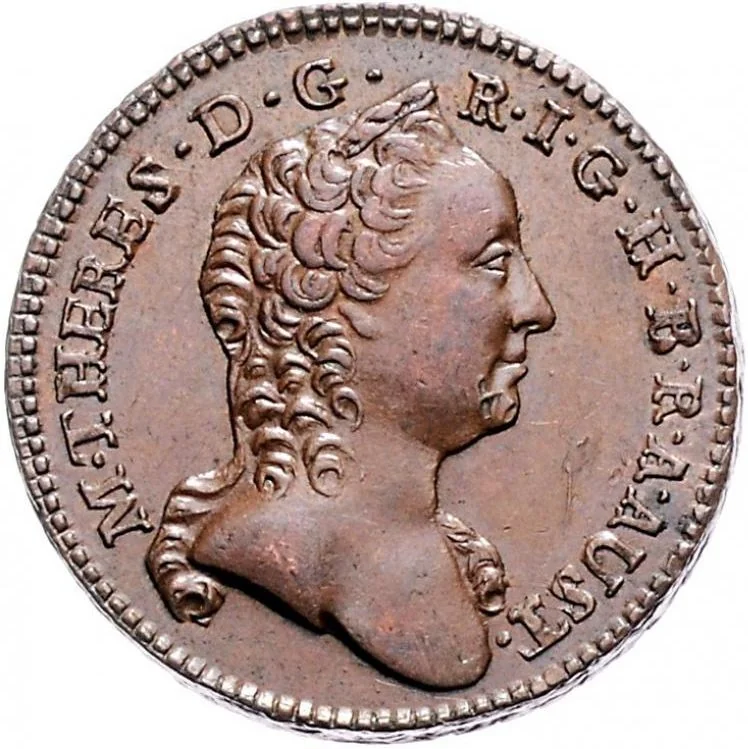
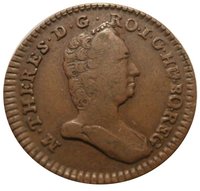
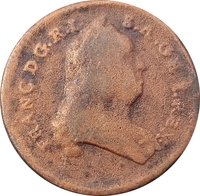
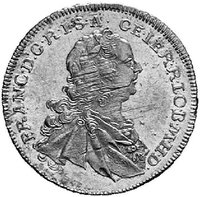
Obverse
Description:
Empress of the Romans, Queen of Germany, Hungary, and Bohemia, Archduchess of Austria.
Inscription:
M.THERES.D.G. R.I.G.H.B.R.A.AUST.
Script: Latin
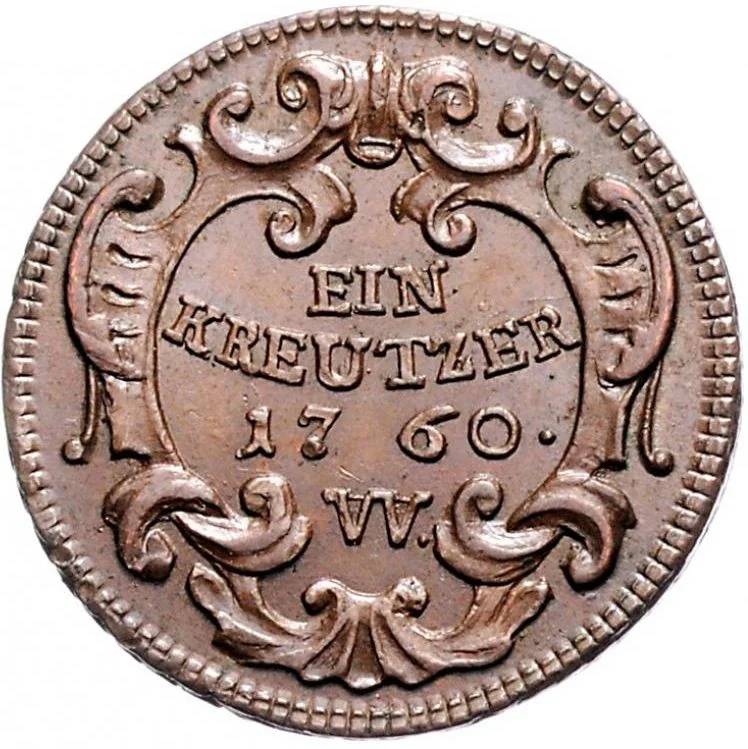
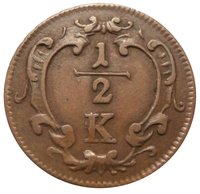
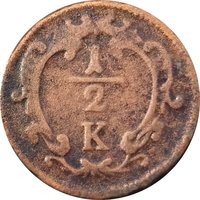
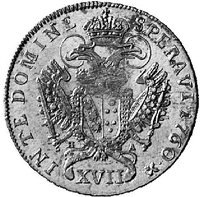
Reverse
Description:
Value, date, mint mark within baroque frame.
Inscription:
EIN
KREUTZER
1760
W
KREUTZER
1760
W
Script: Latin
Edge
Mints
| Name | Mark |
|---|---|
| Alba Iulia | C |
| Graz | G |
| Hall | H |
| Kremnica | K |
| Baia Mare | N B |
| Smolník / Szomolnok / Schmöllnitz | S |
| Münze Österreich | W |
Mintings
Historical background
In 1760, the Habsburg Monarchy, commonly referred to as the Austrian Empire, was grappling with a complex and debased currency system, a direct legacy of the enormous financial strain of the War of the Austrian Succession (1740-1748) and the ongoing Seven Years' War (1756-1763). State finances were perpetually in crisis, and the government, under Empress Maria Theresa, resorted to the common early modern expedient of currency manipulation to pay its bills. This involved reducing the precious metal content in coins while officially maintaining their face value, thereby creating more money from the same amount of silver. The primary unit, the Conventionsthaler, was theoretically a stable silver coin, but its integrity was under constant pressure.
The result was a chaotic monetary landscape with a wide circulation of both debased domestic coinage and a plethora of foreign coins, particularly from the German states. The value of money was unstable and regional, causing significant confusion in trade and daily transactions. Prices rose as the real value of coins fell, creating hardship for the population, especially those on fixed incomes or salaries. This inflationary environment undermined economic confidence and complicated the state's own revenue collection, as the nominal value of taxes collected was worth less in real purchasing power.
Recognizing the severity of the problem, Maria Theresa's government had already begun laying the groundwork for major reform. In 1753, the Empire had co-established the Conventionsmünzfuß (Convention Coin Standard) with Bavaria, which aimed to standardize silver content. The pivotal solution, however, was in preparation: a comprehensive currency recoinage and standardization. This plan would culminate in the great monetary reform of 1762/63, which introduced the new, stable Konventionstaler and its subsidiary Kreuzer, finally providing the Empire with a unified and reliable currency system after the war's end. Thus, 1760 represents the tense final chapter of a period of monetary disorder, immediately preceding a decisive and lasting stabilization.
The result was a chaotic monetary landscape with a wide circulation of both debased domestic coinage and a plethora of foreign coins, particularly from the German states. The value of money was unstable and regional, causing significant confusion in trade and daily transactions. Prices rose as the real value of coins fell, creating hardship for the population, especially those on fixed incomes or salaries. This inflationary environment undermined economic confidence and complicated the state's own revenue collection, as the nominal value of taxes collected was worth less in real purchasing power.
Recognizing the severity of the problem, Maria Theresa's government had already begun laying the groundwork for major reform. In 1753, the Empire had co-established the Conventionsmünzfuß (Convention Coin Standard) with Bavaria, which aimed to standardize silver content. The pivotal solution, however, was in preparation: a comprehensive currency recoinage and standardization. This plan would culminate in the great monetary reform of 1762/63, which introduced the new, stable Konventionstaler and its subsidiary Kreuzer, finally providing the Empire with a unified and reliable currency system after the war's end. Thus, 1760 represents the tense final chapter of a period of monetary disorder, immediately preceding a decisive and lasting stabilization.
🌱 Common