

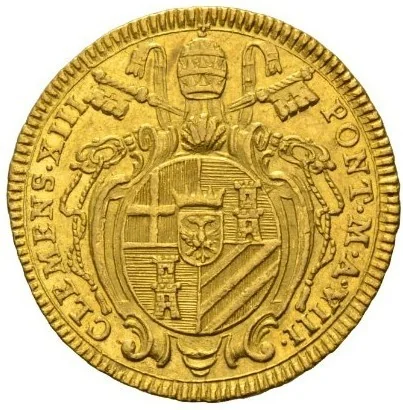
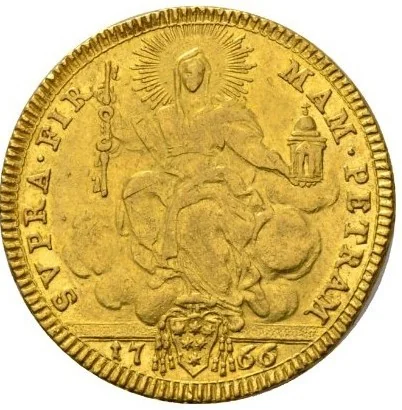
2 Zecchini – Papal States
Vatican City
Context
Years: 1759–1766
Country: Vatican City 
Issuer: Papal States
Ruler: Clement XIII
Currency:
(1534—1835)
Demonetized: Yes
Material
References
KM: #Click to copy to clipboard985
Numista: #106018
Value
Bullion value: $1136.51
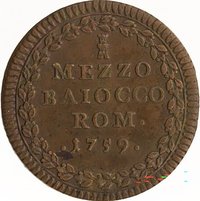
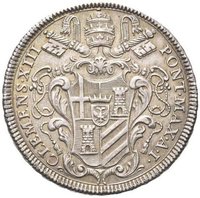
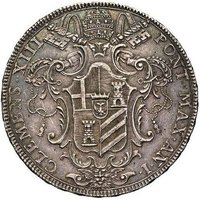
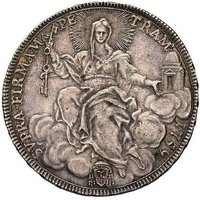
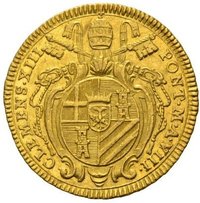
Obverse
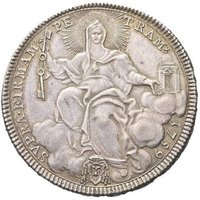
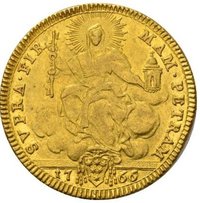
Reverse
Edge
Categories
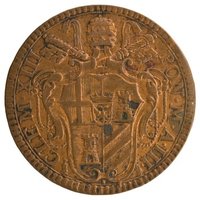
| Symbols> Coat of Arms |
Mintings
| Year | Mint Mark | Mintage | Quality | Collection |
|---|---|---|---|---|
| 1759 | — | — | ||
| 1766 | — | — |
Historical background
In 1759, the Papal States operated under a complex and often chaotic monetary system, characteristic of the fragmented Italian peninsula prior to unification. There was no single, unified Papal currency; instead, the state's coinage circulated alongside a multitude of foreign coins, particularly those from other Italian regions like the Tuscan scudo and coins from Bologna and Ravenna. The primary unit of account was the Papal scudo, divided into 100 baiocchi, but its physical representation in silver (scudo d'argento) often differed in value from the accounting scudo used for pricing and contracts, leading to frequent confusion and arbitrage.
This period fell within the lengthy reign of Pope Clement XIII (1758-1769), who inherited a treasury strained by debt and the costly maintenance of Rome's artistic and architectural patrimony. The Papal States' economy was largely agrarian and static, with limited industrial activity, making it vulnerable to revenue shortfalls. While not a year of major monetary reform, 1759 saw the ongoing consequences of earlier debasements and the persistent challenge of controlling a money supply flooded with heterogeneous coins. The papal mint struggled to maintain the standard and reputation of its own issues amidst this competitive environment.
Furthermore, the monetary situation was intrinsically linked to broader European power politics. The Papal States were under significant political and financial pressure from Catholic monarchies, particularly the Bourbons of France and Spain. This influence would culminate just a few years later in 1769 with the suppression of the Society of Jesus, a demand forced upon Clement XIII by these powers. Thus, the currency disarray of 1759 was not merely an economic issue but a symptom of the Papacy's diminished temporal power and its precarious financial position within the complex geopolitics of mid-18th century Europe.
This period fell within the lengthy reign of Pope Clement XIII (1758-1769), who inherited a treasury strained by debt and the costly maintenance of Rome's artistic and architectural patrimony. The Papal States' economy was largely agrarian and static, with limited industrial activity, making it vulnerable to revenue shortfalls. While not a year of major monetary reform, 1759 saw the ongoing consequences of earlier debasements and the persistent challenge of controlling a money supply flooded with heterogeneous coins. The papal mint struggled to maintain the standard and reputation of its own issues amidst this competitive environment.
Furthermore, the monetary situation was intrinsically linked to broader European power politics. The Papal States were under significant political and financial pressure from Catholic monarchies, particularly the Bourbons of France and Spain. This influence would culminate just a few years later in 1769 with the suppression of the Society of Jesus, a demand forced upon Clement XIII by these powers. Thus, the currency disarray of 1759 was not merely an economic issue but a symptom of the Papacy's diminished temporal power and its precarious financial position within the complex geopolitics of mid-18th century Europe.
✨ Legendary