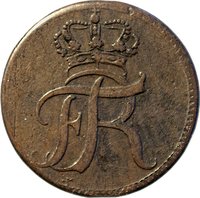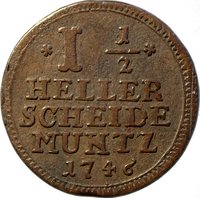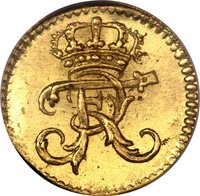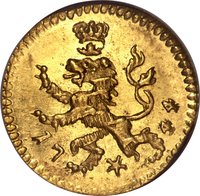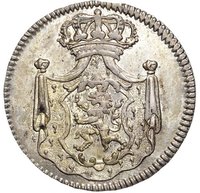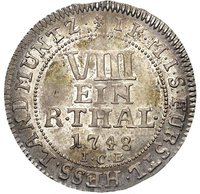
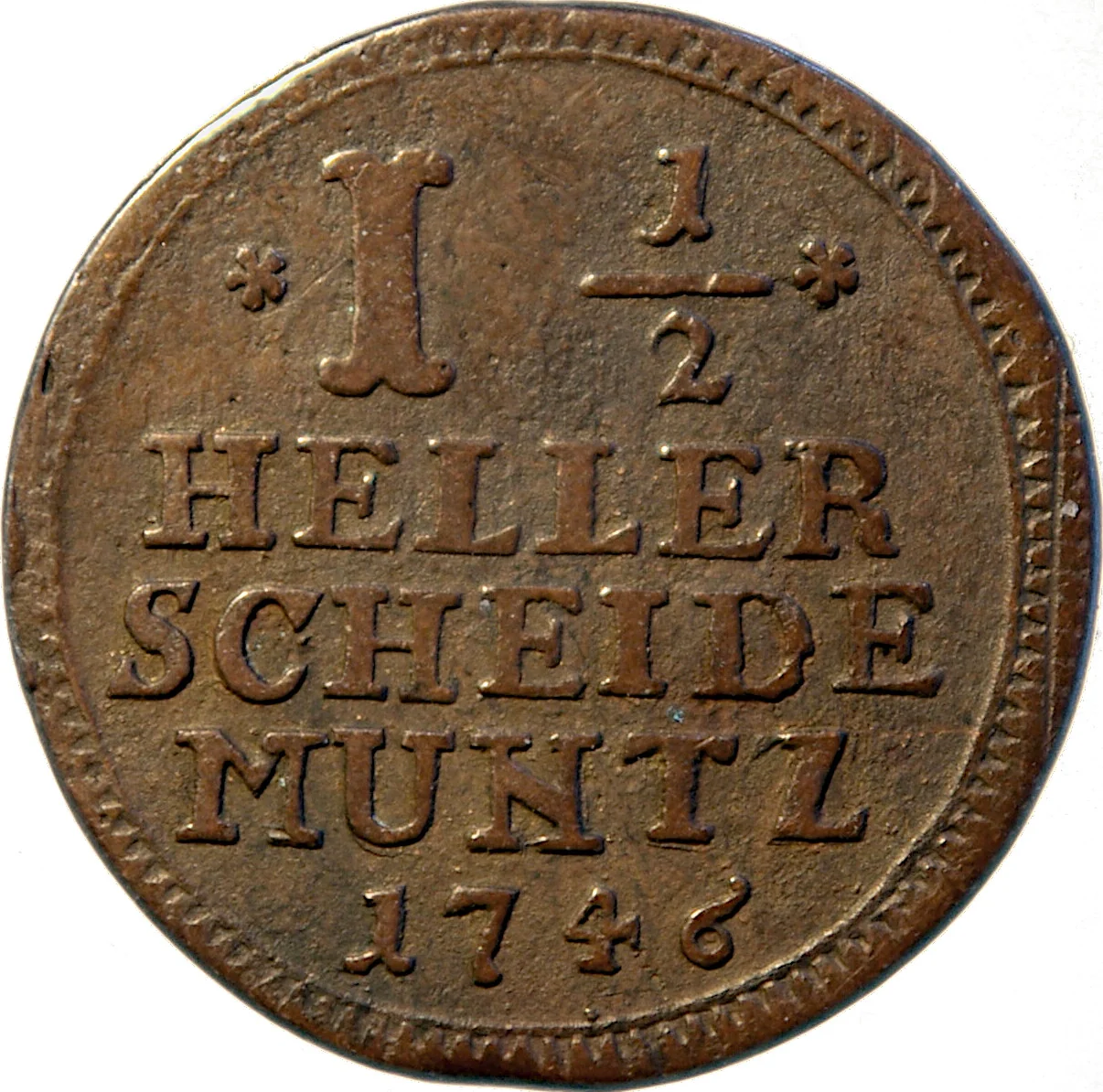
In 1746, the currency situation in the Landgraviate of Hesse-Cassel was one of significant complexity and strain, a legacy of its ruler's military ambitions. Landgrave William VIII, like his predecessors, heavily relied on the profitable practice of hiring out his well-trained troops (
Soldatenhandel) to foreign powers, most notably Great Britain during the War of the Austrian Succession. While this generated substantial foreign subsidy income, the landgrave's extensive military expenditures and the costs of maintaining his court created persistent budget deficits. To cover these shortfalls, the government repeatedly resorted to debasing the coinage, issuing inferior-quality coins with reduced precious metal content while mandating they be accepted at their old, higher face value.
This practice led to a chaotic monetary environment characterized by multiple coinages circulating simultaneously. Older, full-value
Reichsthaler coins were hoarded or exported, while the newer, debased coins flooded the market, causing inflation and a severe loss of public trust. The problem was exacerbated by the presence of currencies from neighboring states and the overarching framework of the Holy Roman Empire's
Reichsmünzfuß (imperial minting standard), which Hesse-Cassel's debasements violated. This created a disconnect between the official accounting in
Reichsthalers and the actual, inferior coins in daily use, disrupting trade and causing hardship for the population.
Consequently, 1746 fell within a period of ongoing monetary instability and ad-hoc fiscal management. The landgrave's government was caught in a cycle of using currency manipulation as a short-term revenue tool, which undermined the economy's long-term health. While the subsidy payments from Britain provided temporary relief, they did not resolve the structural fiscal problems. The situation would eventually demand more systematic reforms, but in 1746, Hesse-Cassel's currency remained a tangled and depreciated instrument of state finance, reflecting the broader tensions between princely ambition, military enterprise, and economic stability in eighteenth-century Germany.