Logo Title
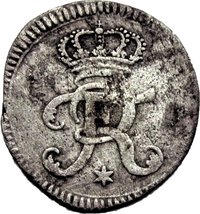
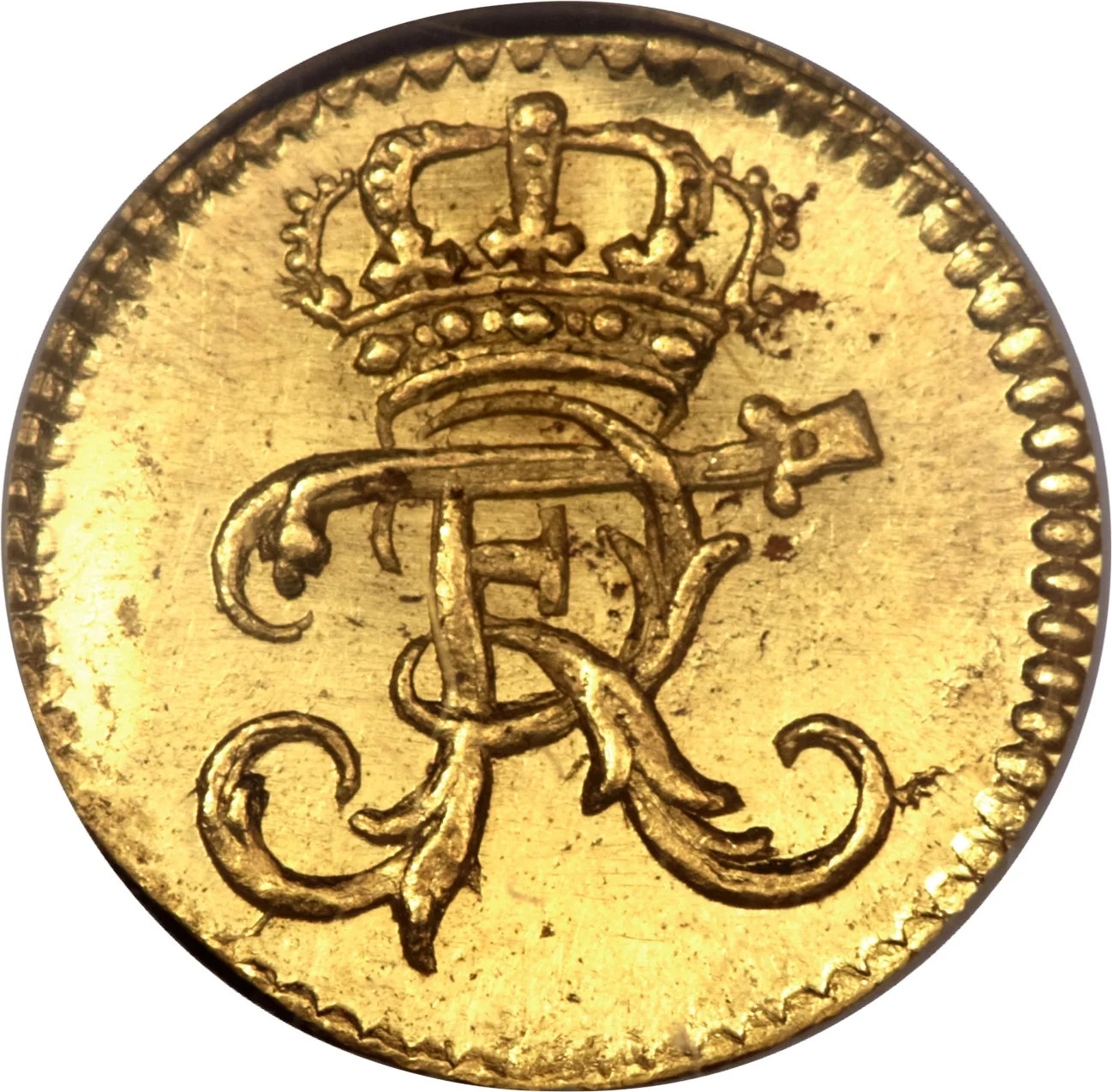
obverse
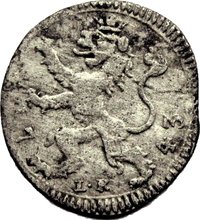
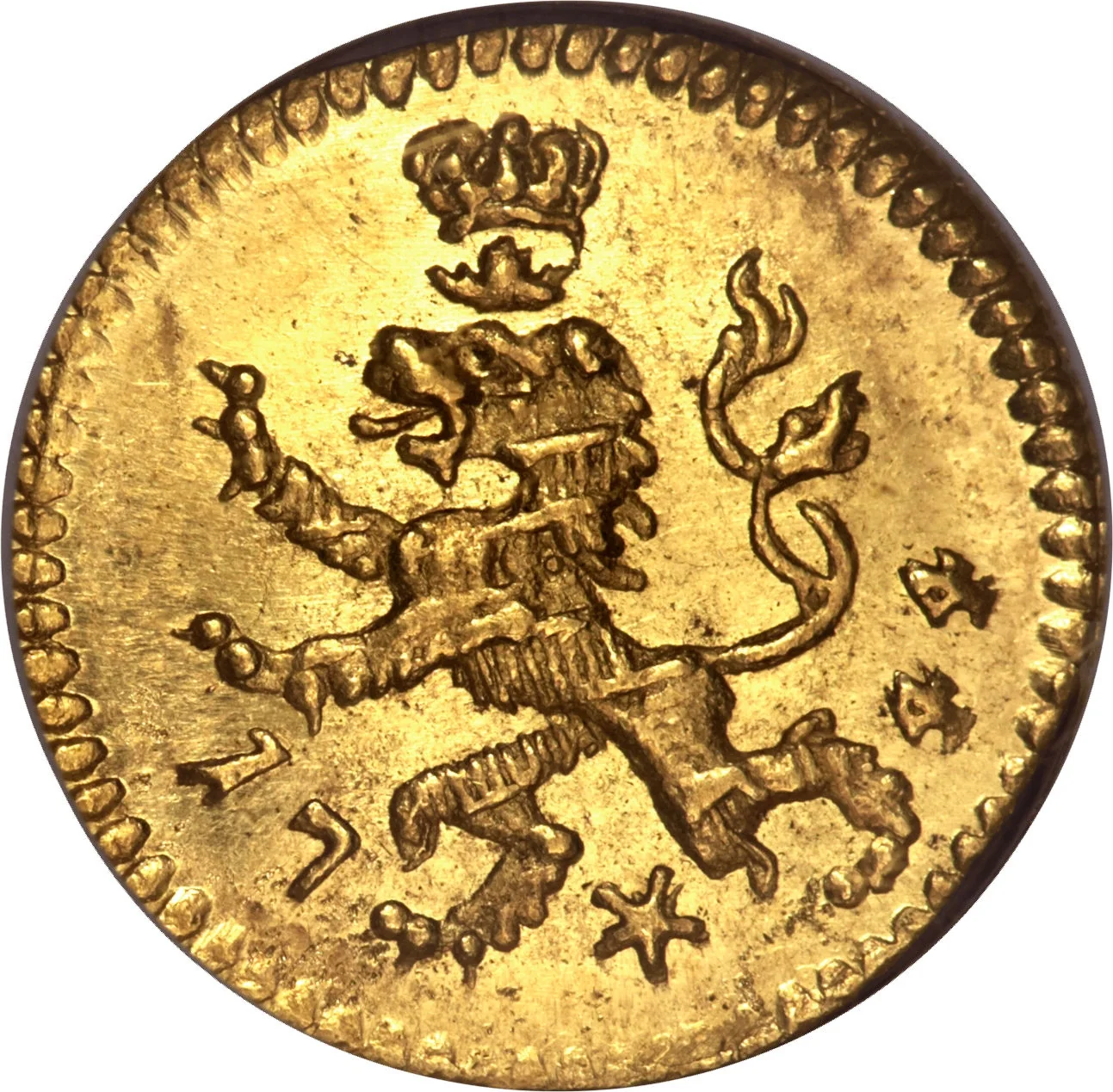
reverse
Heritage Auctions

¼ Ducat – Landgraviate of Hesse-Cassel

Context
Years: 1744–1750
Currency:
Demonetized: Yes
Material
Diameter: 14 mm
Weight: 0.88 g
Gold weight: 0.87 g
Shape: Round
Composition: 98.6% Gold
Magnetic: No
References
KM: #Click to copy to clipboard436
Numista: #31271
Value
Bullion value: $144.67

Obverse

Description:
Crowned initials.
Inscription:
FR

Reverse

Description:
Rampant lion crowned, facing left.
Inscription:
17 * 44
Script: Latin

Edge

Mintings

YearMint MarkMintageQualityCollection
1744
1750

Historical background

In 1744, the currency situation in the Landgraviate of Hesse-Cassel was complex and strained, a legacy of its ruler's ambitious foreign policy. Landgrave William VIII, a committed Protestant ally, maintained a large and modern standing army not for direct territorial conquest, but primarily for hire to wealthier powers, most notably Great Britain. This system of Soldatenhandel (soldier trade) generated crucial foreign subsidies, particularly in British gold, which provided a vital stream of hard currency. However, the immense cost of maintaining a state permanently on a war footing, with an army disproportionate to its population and economy, placed severe pressure on domestic finances and the local monetary system.

The internal circulation was characterized by a bewildering variety of coins. Alongside the Landgraviate's own issued Taler and smaller denominations, there was widespread circulation of coins from neighboring German states and the persistent use of older, debased issues. This proliferation led to chronic problems with exchange rates, valuation confusion, and vulnerability to currency speculation. Furthermore, to cover domestic military and administrative costs, the treasury often resorted to the expedient of issuing Kreditmünzen (credit coins), which were low-value coins made from inferior metals like copper or billon. Their face value was mandated by law but exceeded their intrinsic metal worth, leading to inflation and public distrust.

Consequently, Hesse-Cassel operated a dual monetary system. Internally, a fragile ecosystem of depreciating credit coins and mixed specie fueled local trade and paid troops in garrison. Externally, the state's strength and credit were underpinned by the influx of powerful foreign specie—British gold guineas and subsidies, and payments from the Holy Roman Emperor—earned by its regiments abroad. This dichotomy created economic tension, as the landgrave's lucrative foreign ventures stabilized the state's macro-finances while the domestic economy and common people grappled with the inflationary effects of a debased and chaotic currency.
Legendary