

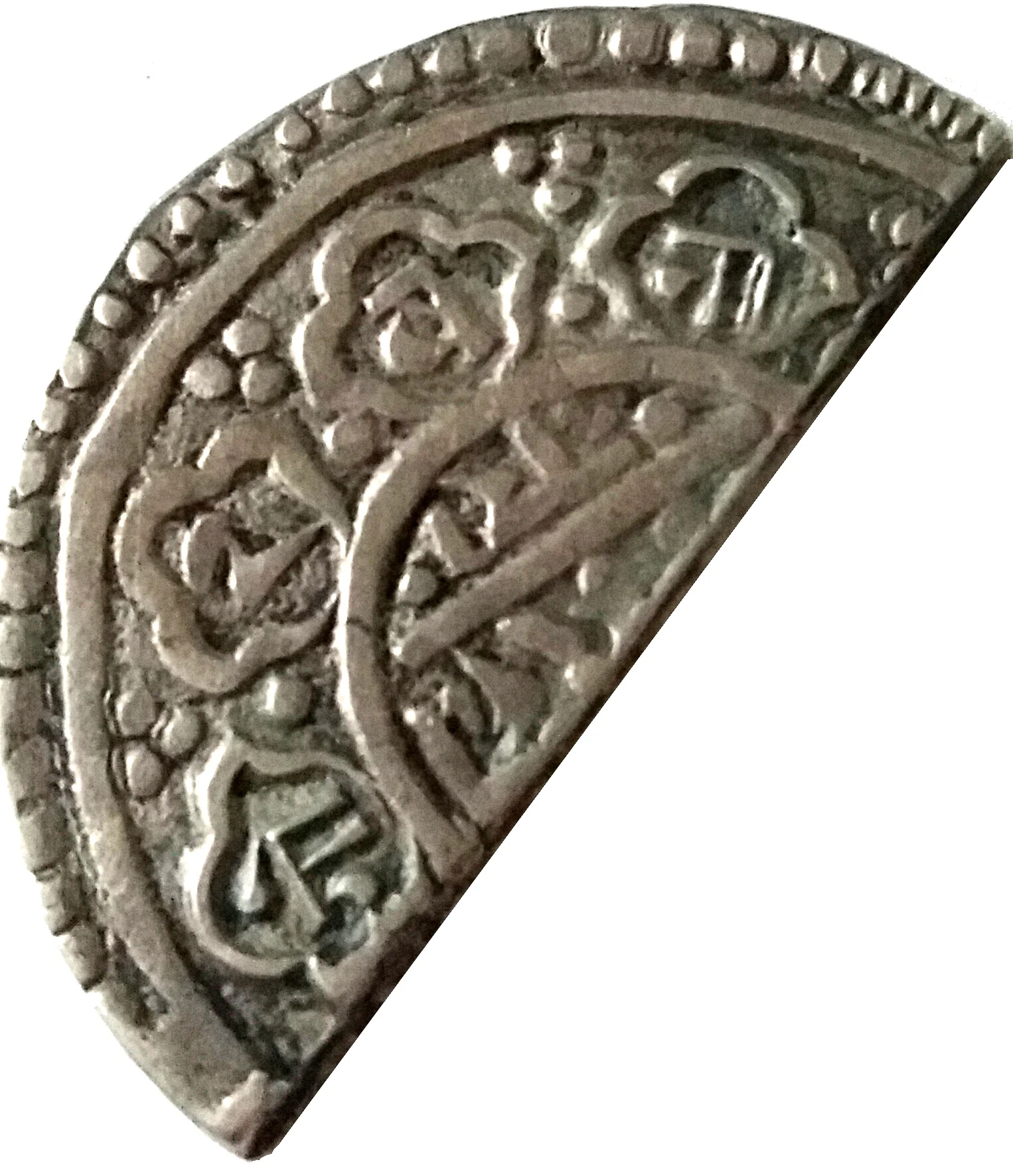
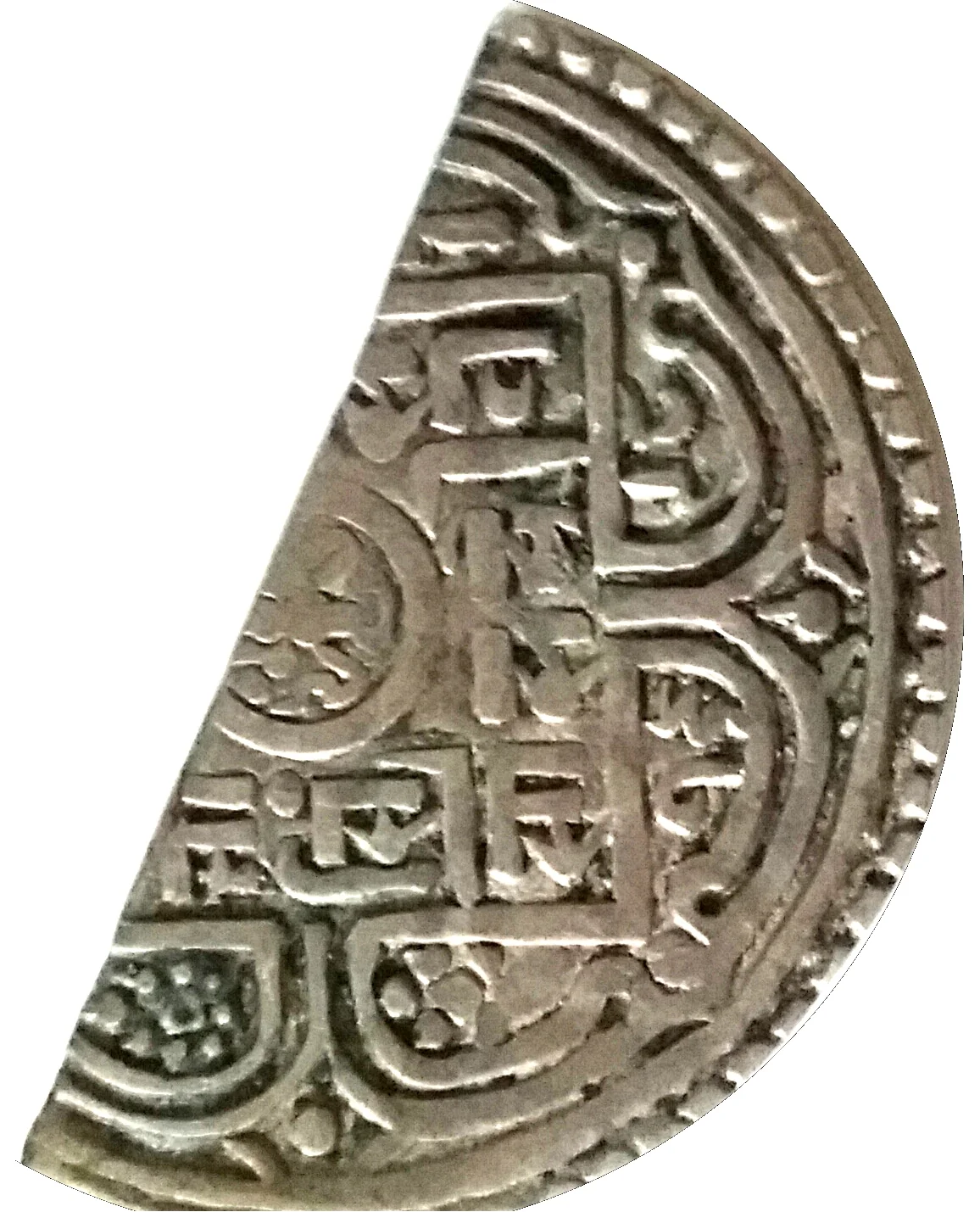
½ mohar – Nepal
Add to wishlist
Nepal
Context
Material
Shape: Half circle
Composition: Silver
Magnetic: No
Alignment: Medal alignment
flip
References
KM: #
Numista: #151849
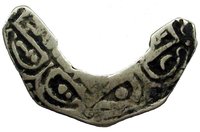
Obverse
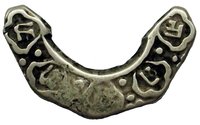
Reverse
Edge
Mintings
| Year | Mint Mark | Mintage | Quality | Collection |
|---|---|---|---|---|
| — | — | — |
Historical background
In 1697, Nepal was not a unified nation but a patchwork of small, independent kingdoms, primarily the Malla confederacy in the Kathmandu Valley (Kathmandu, Patan, and Bhaktapur) and numerous other states in the hills. There was no single, standardized national currency. Instead, economic life was dominated by a combination of indigenous coinage and foreign specie, reflecting the region's position as a vital hub on the trans-Himalayan trade routes between Tibet and India.
The most prominent circulating medium within the valley kingdoms was the silver Mohar, struck by the individual Malla kings. These coins were often crude, hand-struck pieces with intricate symbolic designs, including the king's name, titles, and deities like Shiva or the goddess Kali. Their value and purity could vary between kingdoms. Alongside these, a significant volume of trade was conducted using Indian Mughal Rupees and Tibetan silver Tangkas, which entered through commerce. Barter, particularly for grain and local goods, also remained widespread, especially in rural areas beyond the valley.
This monetary fragmentation mirrored the political disunity of the period. Each ruler's right to mint coinage was a key symbol of sovereignty and a source of seigniorage revenue. The system, while functional for local exchange, was complex for long-distance trade, requiring constant evaluation of different coins' weight and silver content. This situation would persist until the mid-18th century, when the Gorkha king Prithvi Narayan Shah's conquests began the process of political and monetary unification.
The most prominent circulating medium within the valley kingdoms was the silver Mohar, struck by the individual Malla kings. These coins were often crude, hand-struck pieces with intricate symbolic designs, including the king's name, titles, and deities like Shiva or the goddess Kali. Their value and purity could vary between kingdoms. Alongside these, a significant volume of trade was conducted using Indian Mughal Rupees and Tibetan silver Tangkas, which entered through commerce. Barter, particularly for grain and local goods, also remained widespread, especially in rural areas beyond the valley.
This monetary fragmentation mirrored the political disunity of the period. Each ruler's right to mint coinage was a key symbol of sovereignty and a source of seigniorage revenue. The system, while functional for local exchange, was complex for long-distance trade, requiring constant evaluation of different coins' weight and silver content. This situation would persist until the mid-18th century, when the Gorkha king Prithvi Narayan Shah's conquests began the process of political and monetary unification.
✨ Legendary