

1 sho – Nepal
Add to wishlist
Nepal
Material
Diameter: 25 mm
Weight: 1.64 g
Silver Weight:: 1.64 g
Shape: Annular sector
Composition: Silver
Magnetic: No
References
KM: #
Numista: #79077
Value
Bullion value: $4.09
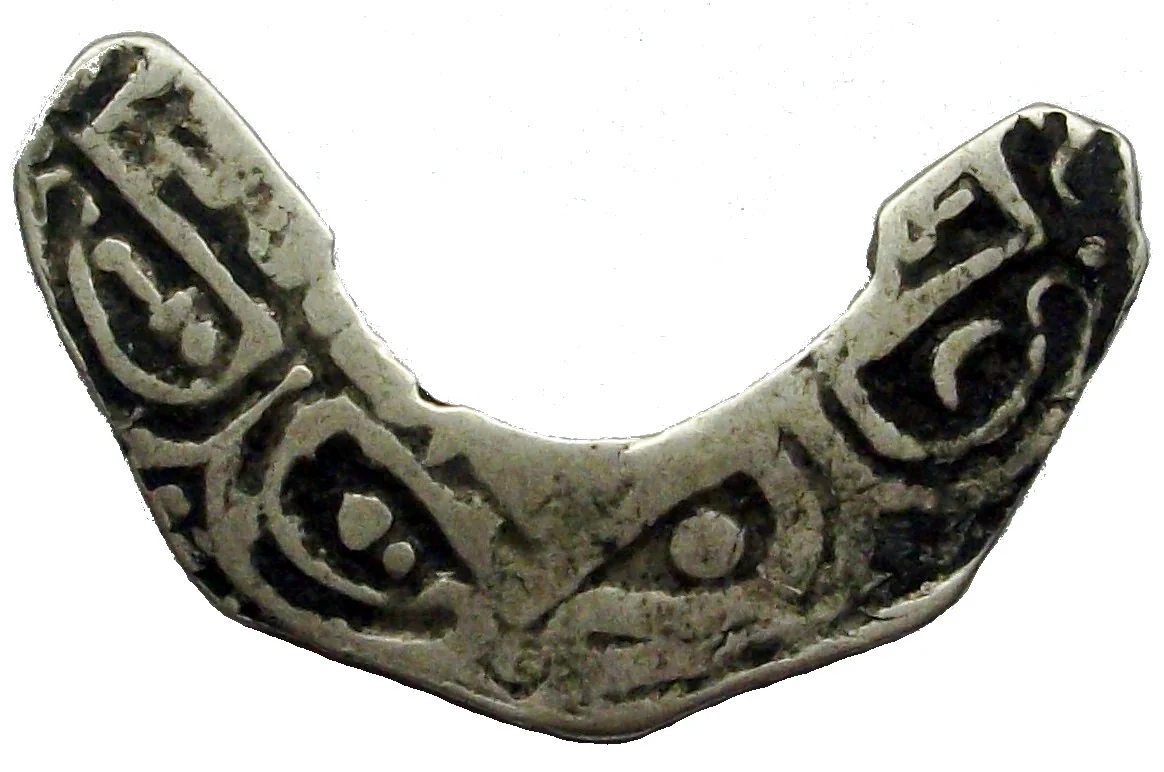
Obverse
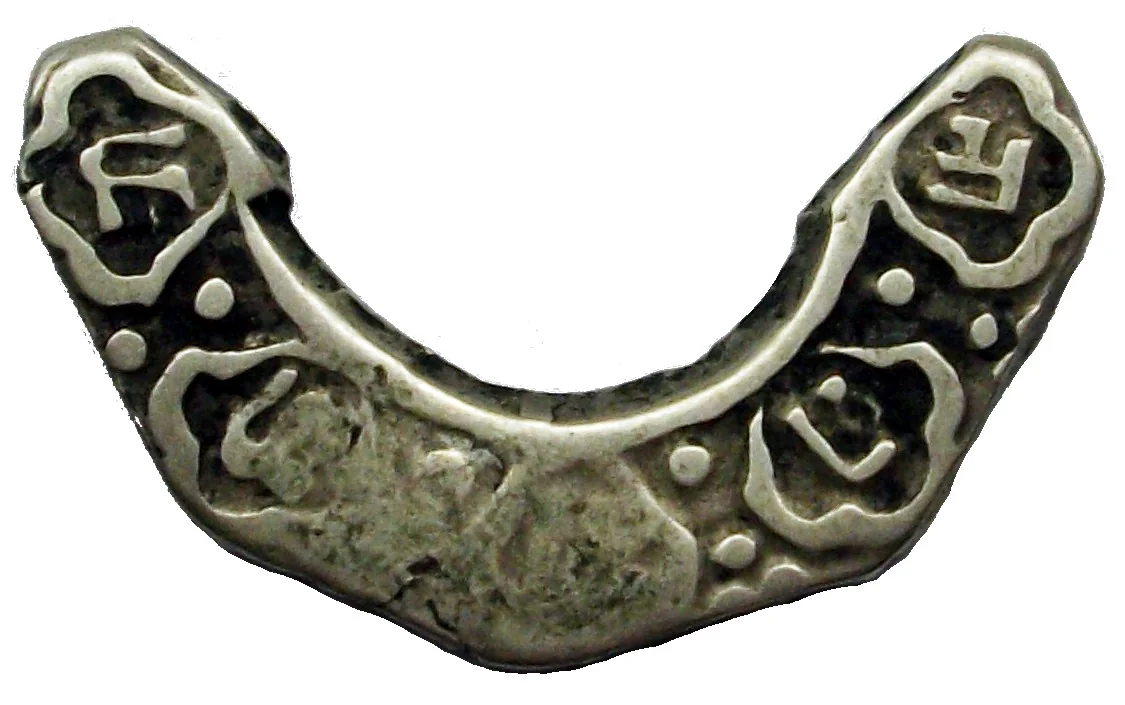
Reverse
Edge
Mintings
| Year | Mint Mark | Mintage | Quality | Collection |
|---|---|---|---|---|
| 1736 | — | — |
Historical background
In 1736, Nepal was not a unified nation but a patchwork of small, independent hill states, primarily the Malla kingdoms of Kathmandu, Patan, and Bhaktapur in the Kathmandu Valley, and numerous others like Gorkha to the west. There was no single, centralized monetary system. Instead, the economy operated on a complex blend of metallic currency, barter, and commodity money, with trade heavily influenced by its powerful neighbors, Tibet to the north and the Mughal Empire (and its successor states) to the south.
The primary circulating currency in the Kathmandu Valley was the Mohar, a silver coin minted by each of the three Malla kings. These coins were often crude, hammer-struck pieces, with weight and purity varying between kingdoms and even between rulers. Their value was intrinsic, based on their silver content. Alongside the Mohar, the most significant external currency was the Tibetan silver Dram (or Tam), which flowed into Nepal due to the vital trans-Himalayan salt and grain trade. Nepali silver coins were also exported to Tibet, where they were melted for bullion, creating a continuous monetary exchange.
Beyond silver, lower-value transactions used copper coins called Dam, and in remote areas or for everyday local trade, barter was commonplace—grains, livestock, and salt served as mediums of exchange. The period was one of monetary fragmentation and competition. The Malla kings viewed coinage as a key sovereign right and source of seigniorage revenue, but the lack of standardization reflected the political disunity of the era. This unstable and decentralized monetary environment would persist until the unification of Nepal under Prithvi Narayan Shah of Gorkha later in the century, who began to impose a uniform currency system across the newly conquered territories.
The primary circulating currency in the Kathmandu Valley was the Mohar, a silver coin minted by each of the three Malla kings. These coins were often crude, hammer-struck pieces, with weight and purity varying between kingdoms and even between rulers. Their value was intrinsic, based on their silver content. Alongside the Mohar, the most significant external currency was the Tibetan silver Dram (or Tam), which flowed into Nepal due to the vital trans-Himalayan salt and grain trade. Nepali silver coins were also exported to Tibet, where they were melted for bullion, creating a continuous monetary exchange.
Beyond silver, lower-value transactions used copper coins called Dam, and in remote areas or for everyday local trade, barter was commonplace—grains, livestock, and salt served as mediums of exchange. The period was one of monetary fragmentation and competition. The Malla kings viewed coinage as a key sovereign right and source of seigniorage revenue, but the lack of standardization reflected the political disunity of the era. This unstable and decentralized monetary environment would persist until the unification of Nepal under Prithvi Narayan Shah of Gorkha later in the century, who began to impose a uniform currency system across the newly conquered territories.

✨ Legendary