

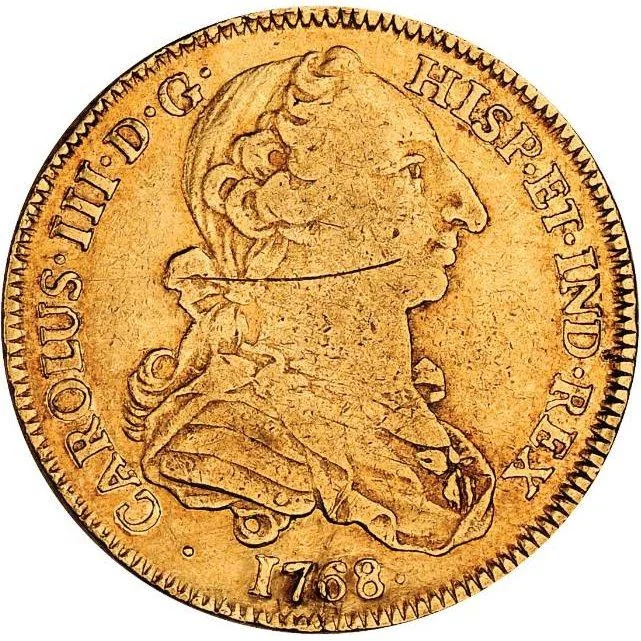
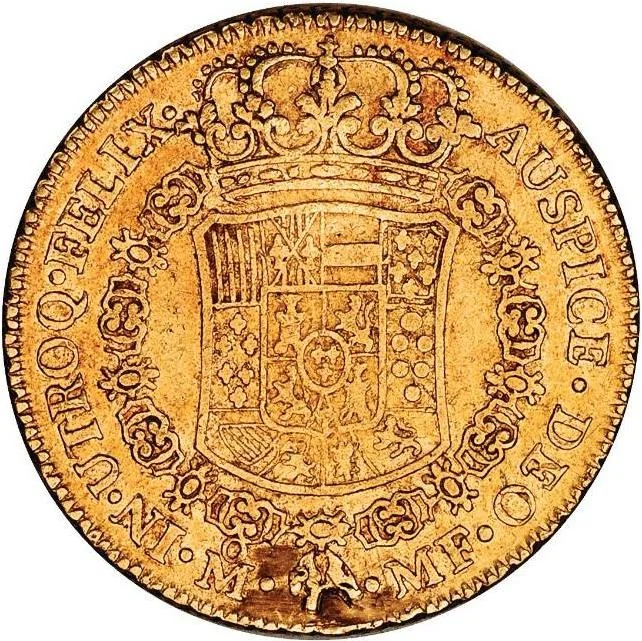
4 Escudos – New Spain
Mexico
Context
Years: 1762–1771
Country: Mexico 
Issuer: New Spain
Ruler: Charles III
Currency:
(1535—1897)
Demonetized: Yes
Material
References
KM: #Click to copy to clipboard141
Numista: #15003
Value
Bullion value: $2068.36
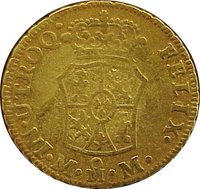
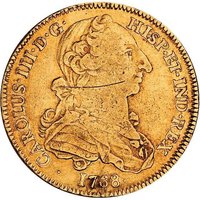
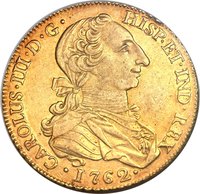
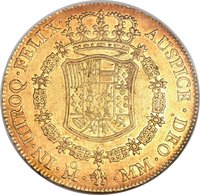
Obverse
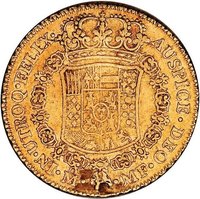
Reverse
Edge
Mintings
| Year | Mint Mark | Mintage | Quality | Collection |
|---|---|---|---|---|
| 1762 | MF | — | ||
| 1763 | MF | — | ||
| 1764 | MF | — | ||
| 1765 | MF | — | ||
| 1766 | MF | — | ||
| 1767 | MF | — | ||
| 1768 | MF | — | ||
| 1769 | MF | — | ||
| 1770 | MF | — | ||
| 1771 | MF | — |
Historical background
In 1762, the currency system of New Spain, the wealthiest viceroyalty of the Spanish Empire, was a complex and often problematic hybrid of official and unofficial mediums of exchange. The official backbone was silver, mined predominantly from rich deposits in regions like Zacatecas and Guanajuato. Silver pesos, or "pieces of eight," were minted at the Mexico City mint and served as the standard for both domestic commerce and, crucially, international trade, flowing across the Pacific to Manila and across the Atlantic to Spain. However, the sheer volume of silver production often outstripped the mint's capacity, leading to a chronic shortage of small-denomination coins for everyday transactions.
This scarcity gave rise to a pervasive and tolerated system of substitute currency. The most common was tlacos—token coins, often made of copper or base metals, issued by merchants, hacienda owners, and even municipal governments. These were essentially credit tokens, redeemable only at the business that issued them, creating localized monetary spheres. Alongside tlacos, cacao beans continued to be used in small-scale indigenous markets, a practice dating to the pre-Hispanic era. This informal system, while filling a critical gap, was fraught with inconsistency, frequent counterfeiting, and the potential for abuse, as workers and consumers were often locked into the economic orbit of the token-issuer.
The year 1762 itself fell within a period of significant imperial strain and reform. Spain's involvement in the global Seven Years' War (known as the French and Indian War in North America) placed enormous financial pressure on the empire. While a major currency reform—the introduction of widely circulating royal copper coinage to standardize small change—was still a decade away (decreed in 1772), the demands of war finance in 1762 heightened the Crown's awareness of the inefficiencies and potential revenue losses within the colonial monetary system. Thus, the currency situation was one of entrenched local practices operating alongside, and sometimes in tension with, an imperial silver standard, all under the growing shadow of Bourbon reforms aimed at increasing central control and fiscal extraction.
This scarcity gave rise to a pervasive and tolerated system of substitute currency. The most common was tlacos—token coins, often made of copper or base metals, issued by merchants, hacienda owners, and even municipal governments. These were essentially credit tokens, redeemable only at the business that issued them, creating localized monetary spheres. Alongside tlacos, cacao beans continued to be used in small-scale indigenous markets, a practice dating to the pre-Hispanic era. This informal system, while filling a critical gap, was fraught with inconsistency, frequent counterfeiting, and the potential for abuse, as workers and consumers were often locked into the economic orbit of the token-issuer.
The year 1762 itself fell within a period of significant imperial strain and reform. Spain's involvement in the global Seven Years' War (known as the French and Indian War in North America) placed enormous financial pressure on the empire. While a major currency reform—the introduction of widely circulating royal copper coinage to standardize small change—was still a decade away (decreed in 1772), the demands of war finance in 1762 heightened the Crown's awareness of the inefficiencies and potential revenue losses within the colonial monetary system. Thus, the currency situation was one of entrenched local practices operating alongside, and sometimes in tension with, an imperial silver standard, all under the growing shadow of Bourbon reforms aimed at increasing central control and fiscal extraction.
Series: 1762 New Spain circulation coins

✨ Legendary