

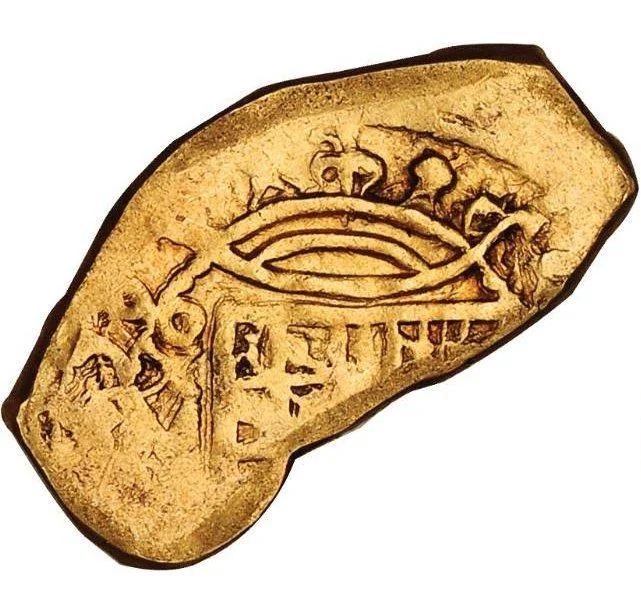
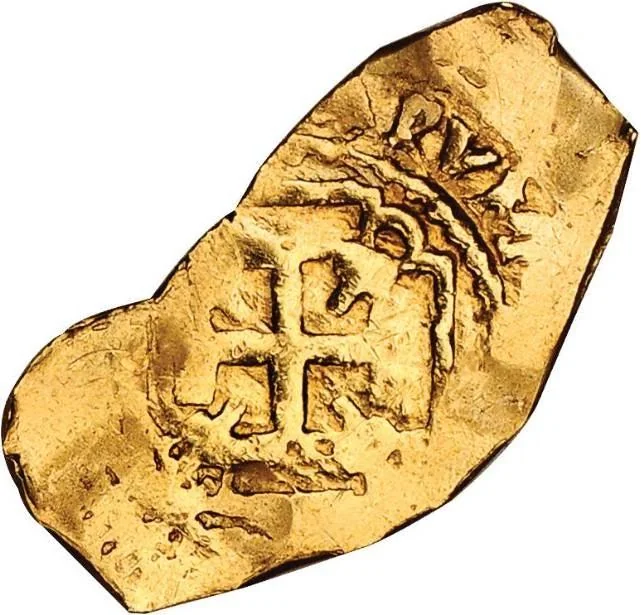
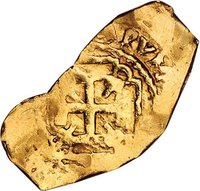
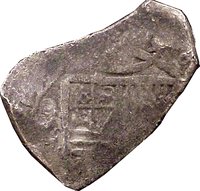
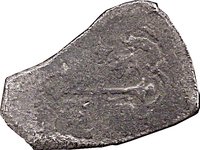
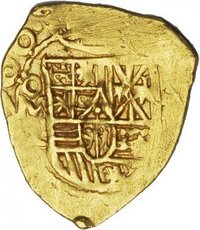
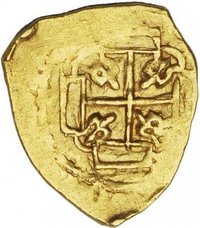
1 Escudo – New Spain
Mexico
Context
Years: 1690–1699
Country: Mexico 
Issuer: New Spain
Ruler: Charles II
Currency:
(1535—1897)
Demonetized: Yes
Material
References
KM: #Click to copy to clipboard50
Numista: #14979
Value
Bullion value: $517.82
Obverse
Reverse
Edge
Mintings
| Year | Mint Mark | Mintage | Quality | Collection |
|---|---|---|---|---|
| 1690 | L | — | ||
| 1691 | L | — | ||
| 1692 | L | — | ||
| 1693 | L | — | ||
| 1694 | L | — | ||
| 1695 | L | — | ||
| 1696 | L | — | ||
| 1697 | L | — | ||
| 1698 | L | — | ||
| 1699 | L | — |
Historical background
By 1690, the currency system of New Spain, the wealthiest viceroyalty of the Spanish Empire, was defined by a persistent and problematic duality. The official economy ran on silver reales, minted from the prodigious output of mines like Zacatecas and Potosí. The crown’s primary concern was the steady flow of this silver, in the form of coins and bullion, across the Atlantic to Spain. The standard coin was the silver real, with eight making a peso (or "piece of eight"), a internationally recognized currency. However, a severe and chronic shortage of these small-denomination coins plagued daily life, making routine transactions difficult for the majority of the population.
This scarcity gave rise to a widespread informal economy based on tlacos and pilones—token currencies often made of copper or even cocoa beans in some regions. Tlacos were essentially credit tokens issued by local merchants or pulquerías, redeemable only at the issuing establishment. While this system facilitated local trade, it was inherently unstable and prone to abuse, as the value was entirely dependent on the issuer's credibility. The Spanish crown viewed these practices with suspicion, as they operated outside royal control and highlighted the state’s failure to provide sufficient small change, but they were a necessary lubricant for the colony's internal markets.
Furthermore, the monetary landscape was being subtly shaped by global forces. The famous "pieces of eight" were increasingly being siphoned away via the Manila Galleon trade to Asia in exchange for luxury goods, while European wars and contraband also diverted silver. Although the great inflationary wave of the "Price Revolution" had subsided, the economy was feeling the long-term effects of decades of silver influx and crown debt. Thus, in 1690, New Spain’s currency was a patchwork system: globally influential silver underpinning imperial power, while locally, a fragile and unofficial token economy sustained the daily survival of its people.
This scarcity gave rise to a widespread informal economy based on tlacos and pilones—token currencies often made of copper or even cocoa beans in some regions. Tlacos were essentially credit tokens issued by local merchants or pulquerías, redeemable only at the issuing establishment. While this system facilitated local trade, it was inherently unstable and prone to abuse, as the value was entirely dependent on the issuer's credibility. The Spanish crown viewed these practices with suspicion, as they operated outside royal control and highlighted the state’s failure to provide sufficient small change, but they were a necessary lubricant for the colony's internal markets.
Furthermore, the monetary landscape was being subtly shaped by global forces. The famous "pieces of eight" were increasingly being siphoned away via the Manila Galleon trade to Asia in exchange for luxury goods, while European wars and contraband also diverted silver. Although the great inflationary wave of the "Price Revolution" had subsided, the economy was feeling the long-term effects of decades of silver influx and crown debt. Thus, in 1690, New Spain’s currency was a patchwork system: globally influential silver underpinning imperial power, while locally, a fragile and unofficial token economy sustained the daily survival of its people.
✨ Legendary