

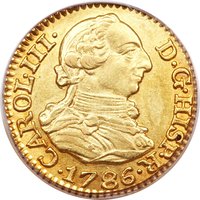
Obverse
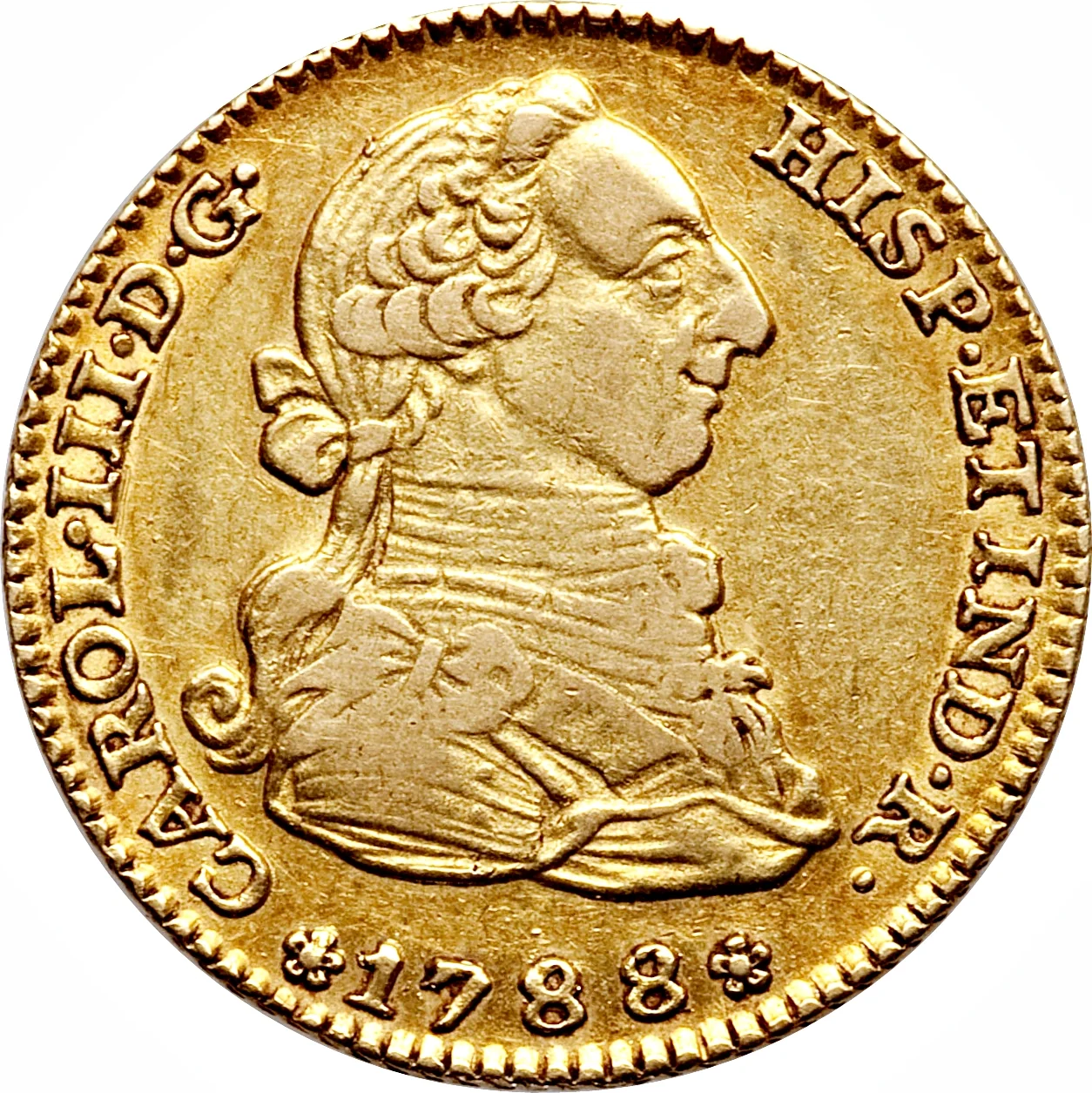
Description:
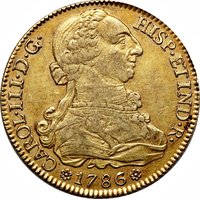
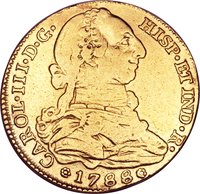
Armored bust of King Charles III facing right.
Inscription:
CAROL · III · D · G · HISP · ET IND · R ·
· 1788 ·
· 1788 ·
Script: Latin
Engraver: Pedro González de Sepúlveda
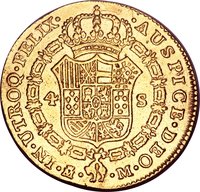
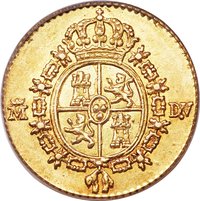
Reverse
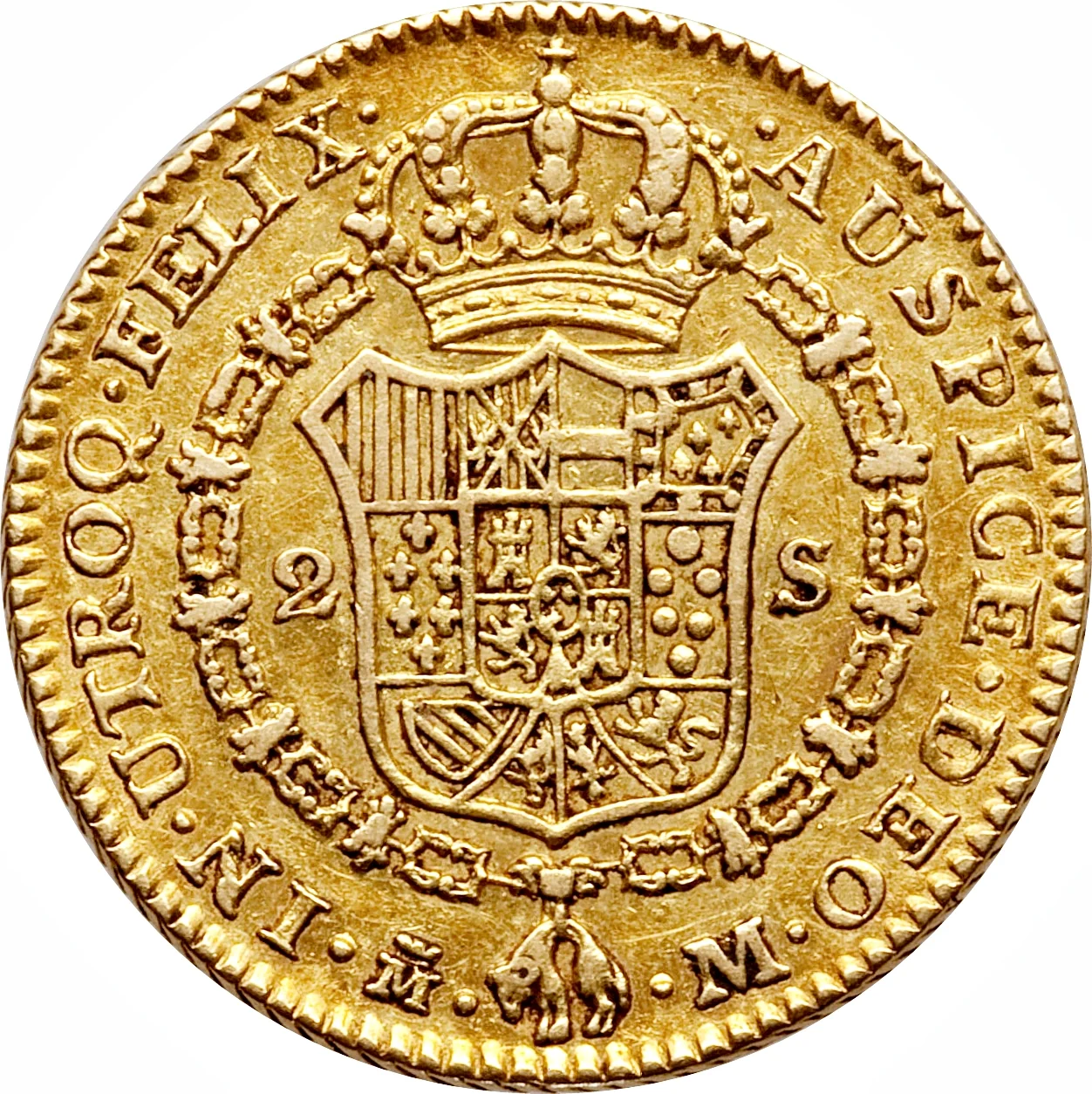
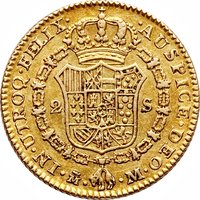
Description:
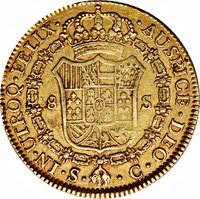
Crowned Spanish coat of arms with the Golden Fleece.
Inscription:
IN · UTROQ · FELIX · · AUSPICE · DEO ·
2 S
·M· ·M·
2 S
·M· ·M·
Script: Latin
Engraver: Pedro González de Sepúlveda
Edge
Slant reeded
Categories
| Symbols> Coat of Arms |
Mints
| Name | Mark |
|---|---|
| Royal Mint of Madrid | (M) |
| Royal Mint of Seville | S |
Mintings
| Year | Mint Mark | Mintage | Quality | Collection |
|---|---|---|---|---|
| 1786 | MDV | — | ||
| 1787 | MDV | — | ||
| 1787 | SCM | — | ||
| 1788 | MM | — | ||
| 1788 | SC | — |
Historical background
In 1786, Spain’s currency system was a complex and fragmented patchwork, reflecting both its global empire and deep-seated domestic economic challenges. The primary unit was the real, with 8 reales making a peso or "piece of eight," a coin famous in international trade. However, the monarchy struggled with a severe shortage of precious metals, particularly silver, which was the lifeblood of its coinage. Decades of costly wars, inefficient taxation, and a sprawling bureaucracy had drained the royal treasury, leading to repeated debasements of coinage and a reliance on issuing copper vellón coins for everyday transactions. This created a problematic bimetallic system where the value of silver and copper coins fluctuated wildly against each other, causing confusion and inflation.
The situation was further complicated by regional autonomy. Different regions minted their own coins, and older, worn, and foreign coins (especially from Spanish America) circulated alongside newer issues, all with varying values. Catalonia, for instance, operated on a different monetary standard based on the lliura. This lack of uniformity hindered domestic commerce and made fiscal administration for the crown exceedingly difficult. Moreover, the influx of silver from the American colonies, while still significant, was no longer sufficient to cover the kingdom's expenses and was often immediately shipped out to pay foreign debts and finance imports, failing to stimulate the domestic economy.
King Charles III's reformist ministers, influenced by Enlightenment ideas, recognized this monetary chaos as a major obstacle to economic modernization. The period saw attempts at stabilization, including efforts to recall and remint debased copper currency and centralize minting authority. However, comprehensive reform remained elusive in 1786. The underlying structural issues—chronic deficit, an archaic tax system, and reliance on colonial silver—meant that the currency system was a symptom of a wider fiscal crisis. This instability would continue to plague Spain, contributing to the severe economic distress that unfolded in the subsequent decades under the weight of the Napoleonic Wars and the loss of its American empires.
The situation was further complicated by regional autonomy. Different regions minted their own coins, and older, worn, and foreign coins (especially from Spanish America) circulated alongside newer issues, all with varying values. Catalonia, for instance, operated on a different monetary standard based on the lliura. This lack of uniformity hindered domestic commerce and made fiscal administration for the crown exceedingly difficult. Moreover, the influx of silver from the American colonies, while still significant, was no longer sufficient to cover the kingdom's expenses and was often immediately shipped out to pay foreign debts and finance imports, failing to stimulate the domestic economy.
King Charles III's reformist ministers, influenced by Enlightenment ideas, recognized this monetary chaos as a major obstacle to economic modernization. The period saw attempts at stabilization, including efforts to recall and remint debased copper currency and centralize minting authority. However, comprehensive reform remained elusive in 1786. The underlying structural issues—chronic deficit, an archaic tax system, and reliance on colonial silver—meant that the currency system was a symptom of a wider fiscal crisis. This instability would continue to plague Spain, contributing to the severe economic distress that unfolded in the subsequent decades under the weight of the Napoleonic Wars and the loss of its American empires.
Series: 1786 Spain circulation coins
💎 Very Rare