

1 speciedaler – Denmark
Add to wishlist
Denmark
Context
Material
References
KM: #
Numista: #148259
Value
Bullion value: $64.75
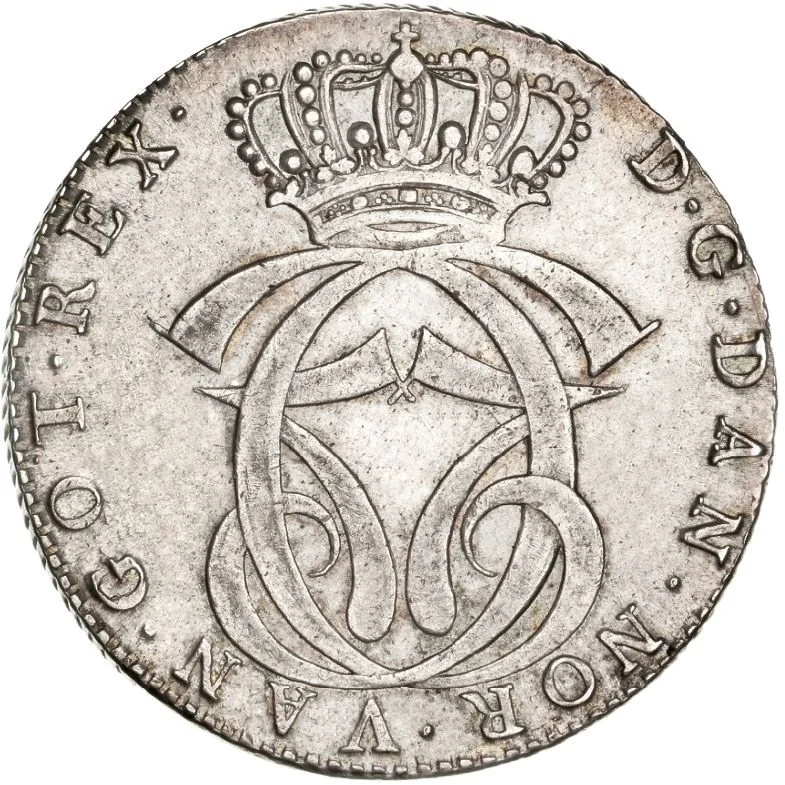
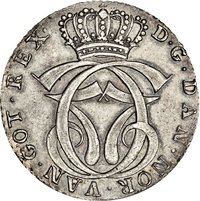
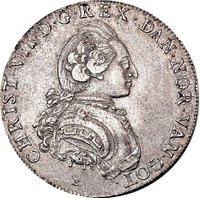
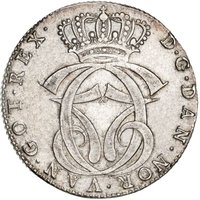
Obverse
Description:
Crowned double monogram. Rim inscription.
Inscription:
C77C
D • G • DAN • NOR • VAN • GOT • REX •
D • G • DAN • NOR • VAN • GOT • REX •
Script: Latin
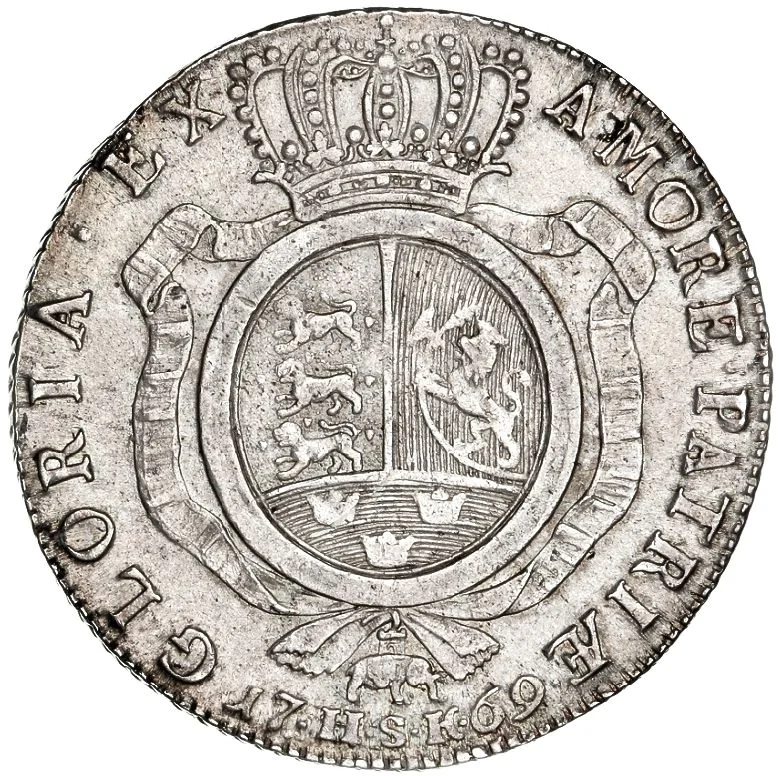
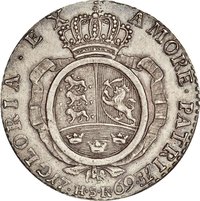
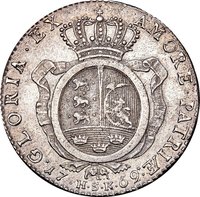
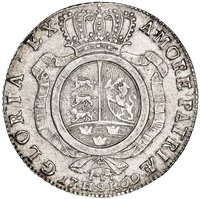
Reverse
Description:
Shield with Danish, Swedish, and Norwegian arms, Order of the Elephant pendant. King's motto on rim. Mintmark below divides date.
Inscription:
GLORIA • EX • AMORE • PATRIÆ •
17.H.S.K.69
17.H.S.K.69
Script: Latin
Edge
Diagonal reeding
Categories
| Symbols> Coat of Arms |
Mintings
| Year | Mint Mark | Mintage | Quality | Collection |
|---|---|---|---|---|
| 1769 | HSK | — |
Historical background
In 1769, Denmark operated under a silver-based monetary system, yet the reality was one of significant complexity and instability. The primary unit was the rigsdaler, subdivided into 96 skilling. However, the kingdom’s currency was not uniform; a bewildering array of older, debased coins from various regions and previous monarchs remained in circulation alongside newer issues. Furthermore, the state’s chronic financial difficulties, exacerbated by wars and economic stagnation, led to repeated debasements—reducing the silver content in coins to generate short-term revenue. This created a climate of distrust, where the value of a coin depended heavily on its minting date and type, complicating everyday trade and hampering commerce.
The situation was further strained by a severe shortage of small-denomination coins, essential for daily transactions among the common populace. This scarcity led to widespread use of fragmented coins and private tokens issued by merchants and towns, creating a fragmented and unreliable monetary environment. The government's attempts to regulate and reform the system were often ineffective or introduced new complications. Notably, the financial strain from Denmark's involvement in the Seven Years' War (1756-1763) had left the treasury depleted, limiting the state's capacity to implement a comprehensive recoinage or restore confidence in the currency.
Against this backdrop, 1769 fell within a period of administrative efforts to address these deep-seated issues. The government, under the influence of reformist ministers, was actively investigating and planning monetary restructuring. This preparatory work would culminate in the major Currency Act of 1771, which introduced a new standard and began the process of unifying the chaotic system. Therefore, the currency situation in 1769 is best understood as the fraught prelude to a significant, though only partially successful, attempt at stabilization and reform.
The situation was further strained by a severe shortage of small-denomination coins, essential for daily transactions among the common populace. This scarcity led to widespread use of fragmented coins and private tokens issued by merchants and towns, creating a fragmented and unreliable monetary environment. The government's attempts to regulate and reform the system were often ineffective or introduced new complications. Notably, the financial strain from Denmark's involvement in the Seven Years' War (1756-1763) had left the treasury depleted, limiting the state's capacity to implement a comprehensive recoinage or restore confidence in the currency.
Against this backdrop, 1769 fell within a period of administrative efforts to address these deep-seated issues. The government, under the influence of reformist ministers, was actively investigating and planning monetary restructuring. This preparatory work would culminate in the major Currency Act of 1771, which introduced a new standard and began the process of unifying the chaotic system. Therefore, the currency situation in 1769 is best understood as the fraught prelude to a significant, though only partially successful, attempt at stabilization and reform.
Series: 1769 Denmark circulation coins
💎 Extremely Rare