Logo Title
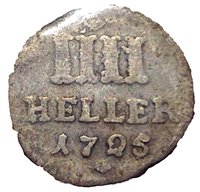
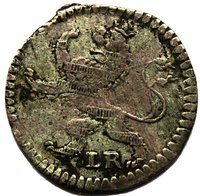
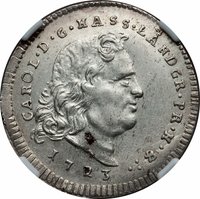
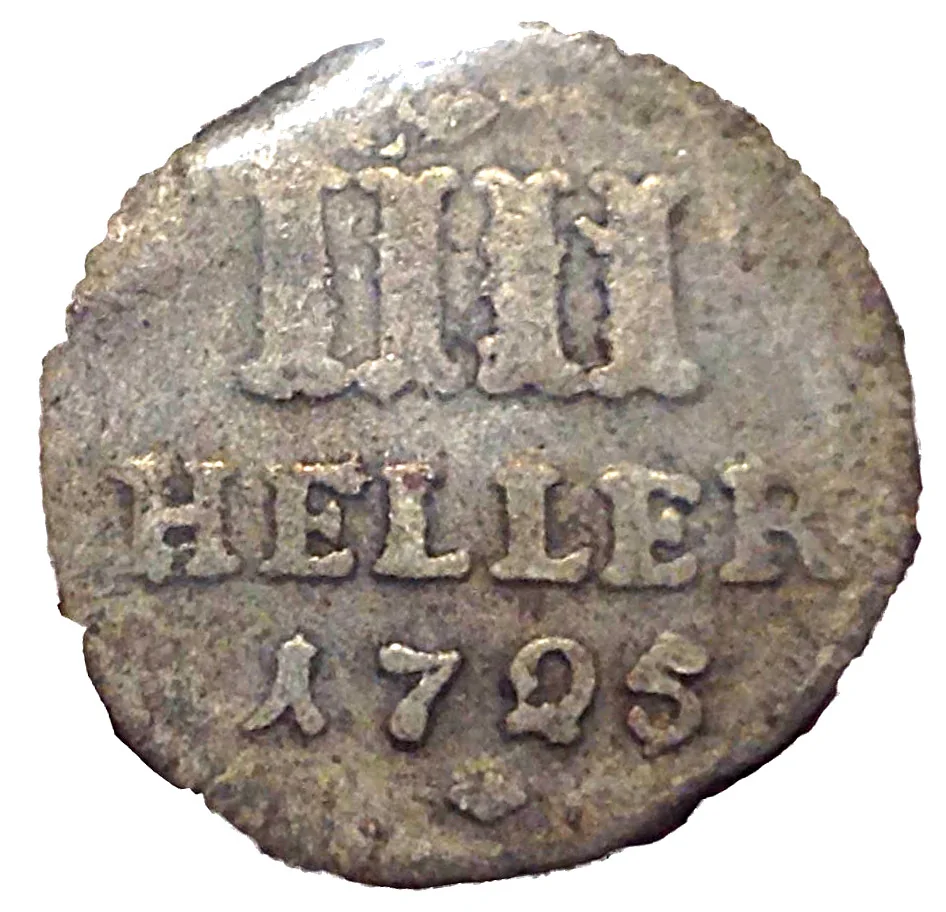
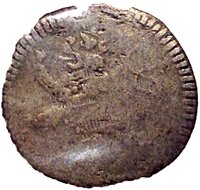
obverse
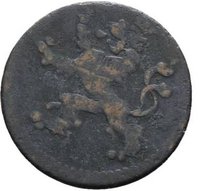
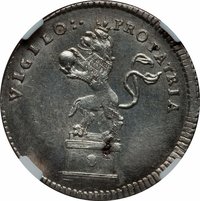
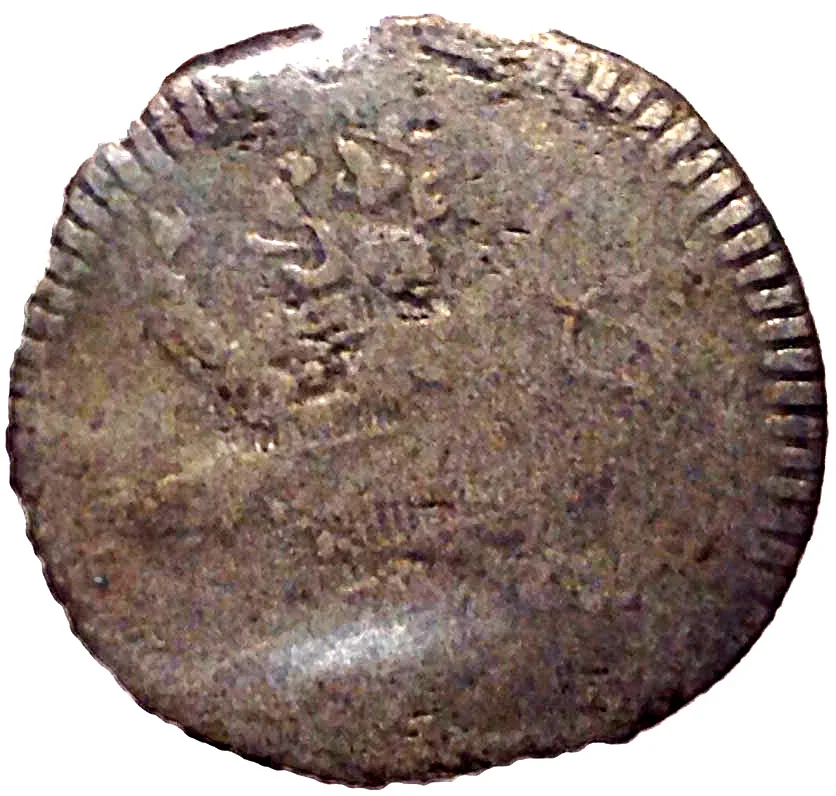
reverse
robertmx CC BY-SA
Context
Years: 1723–1730
Ruler: Charles I
Currency:
Demonetized: Yes
Material
Shape: Round
Composition: Billon
Alignment: Medal alignment
Obverse
OBVERSE ↑
flip
Reverse
REVERSE ↑
References
KM: #Click to copy to clipboard382
Numista: #147756

Obverse

Description:
Crowned lion facing left.

Reverse

Description:
Denomination and date in centered three-line inscription.
Inscription:
·

IIII

HELLER

1725

·

Edge

Mints

NameMark
Kassel

Mintings

YearMint MarkMintageQualityCollection
1723
1724
1725
1726
1727
1728
1729
1730

Historical background

In 1723, the currency situation in the Landgraviate of Hesse-Cassel was complex and challenging, characterized by a fragmented and debased monetary system. The landgraviate did not have a uniform coinage; instead, a multitude of different coins circulated simultaneously. These included older domestic issues, coins from neighboring German states, and international currencies like the Reichsthaler and Gulden, all with fluctuating values. This proliferation was a legacy of the Thirty Years' War and subsequent periods, where rulers had often debased coinage to raise short-term funds, eroding public trust and creating chronic instability for trade and daily transactions.

The reigning Landgrave, Charles I, who assumed power in 1730 but was already influential in 1723, inherited this problematic system from his predecessor, Landgrave Frederick I. The primary economic consequence was a severe hindrance to commerce, as merchants and citizens constantly had to negotiate exchange rates and assess the intrinsic silver content of coins. This uncertainty acted as a drag on the economy and complicated state finances. Furthermore, the landgraviate's participation in the broader Holy Roman Empire meant its monetary policy was partly subject to imperial regulations, like the Reichsmünzordnung (Imperial Coinage Ordinance), which were largely ineffective in practice, adding another layer of bureaucratic complication.

Consequently, the period around 1723 was one of mounting pressure for monetary reform. While a comprehensive recoinage and standardization would only be pursued more vigorously under Charles I's personal rule later, the groundwork for change was being laid. The situation demanded a move toward a stable, unified currency to facilitate economic growth and increase fiscal sovereignty—a necessity that would eventually lead to significant reforms, most notably under Landgrave Frederick II later in the century, who would famously use the landgraviate's sound finances to fund mercenary troops for hire.

Series: 1723 Landgraviate of Hesse-Cassel circulation coins

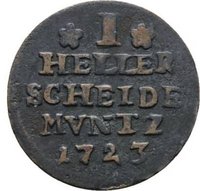
1 Heller obverse
1 Heller reverse
1 Heller
1723-1724
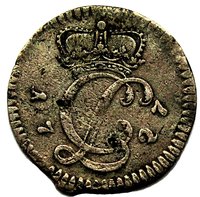
4 Hellers obverse
4 Hellers reverse
4 Hellers
1723-1730
1 Albus obverse
1 Albus reverse
1 Albus
1723-1729
⅛ Thaler obverse
⅛ Thaler reverse
⅛ Thaler
1723
💎 Extremely Rare