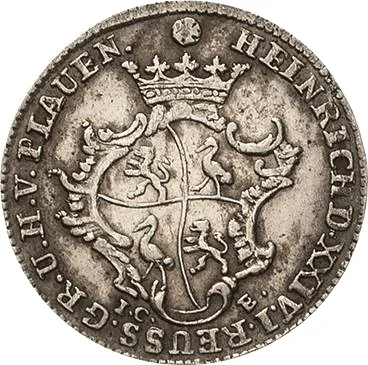
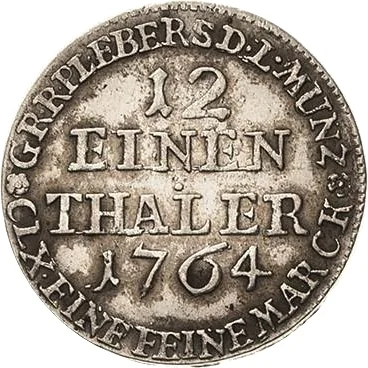
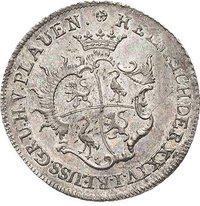
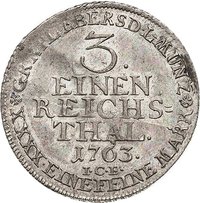
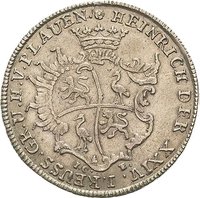
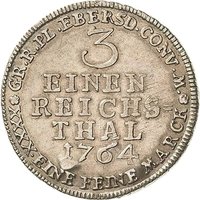
In 1764, the County of Reuss-Ebersdorf, a small Thuringian state within the Holy Roman Empire, operated within a complex and fragmented monetary landscape. Like most German territories of the era, it did not possess the sovereign right to mint its own coins; that privilege was held by the senior line, Reuss-Greiz. Consequently, the county's economy relied on a circulation of externally minted currency. The most important of these was the
Reußischer Gulden (florin), issued by the Reuss elder line, but a multitude of other coins from neighboring Saxon, Prussian, and other German states also circulated, their values often fluctuating based on metallic content and proclamation.
This situation created chronic challenges for trade and administration. The value of money was not strictly decimal but based on the old Carolingian system of pounds, gulden, groschen, and pfennigs, with conversion rates between states being notoriously complicated. Debasement of coinage by various mints and the influx of lower-quality foreign coins further eroded trust and stability. For Count Heinrich XXIV of Reuss-Ebersdorf, managing finances meant constantly assessing and officially "rating" these various coins to define their legal value within his territory, a process essential for collecting taxes and paying debts.
Therefore, the 1764 currency situation was one of inherited dependency and practical disorder. The county lacked monetary sovereignty and was subject to the policies of its senior line and the economic currents of the Empire. This environment necessitated careful fiscal management to navigate the jumble of circulating specie, a task crucial for the economic well-being of the small state, yet offering little control over the broader monetary forces at play.