

1 rupee – Mughal Empire
Add to wishlist
India
Context
Years: 1790–1804
Country: India
Issuer: Mughal Empire
Ruler: Shah Alam II
Currency:
(1540—1842)
Demonetized: Yes
Material
References
KM: #
Numista: #146461
Value
Bullion value: $26.77
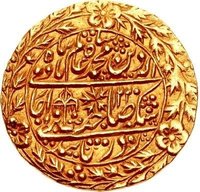
Obverse
Description:
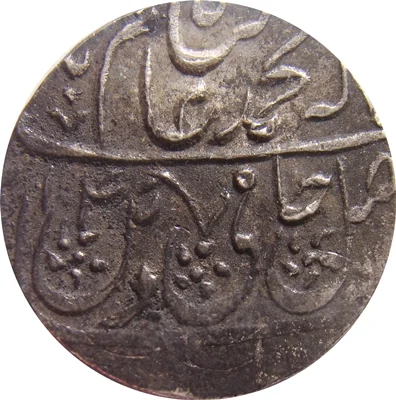
"Saya-e-fazle elah" couplet, AH date, beaded flowers.
Inscription:
sikka zad bar haft kishwar sayaye fazle elah, hami-e-dine mohammad shah alam badshah
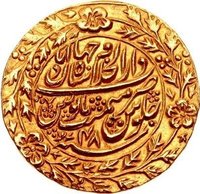
Reverse
Description:
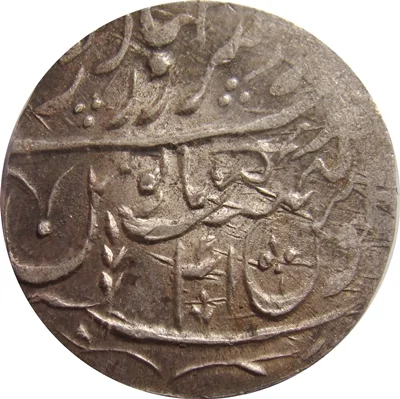
Inscription: "Dar-us-Sarur" (top). Regnal year with vertical spray.
Edge
Mintings
| Year | Mint Mark | Mintage | Quality | Collection |
|---|---|---|---|---|
| 1790 | — | — | ||
| 1791 | — | — | ||
| 1793 | — | — | ||
| 1797 | — | — | ||
| 1798 | — | — | ||
| 1800 | — | — | ||
| 1801 | — | — | ||
| 1802 | — | — | ||
| 1803 | — | — | ||
| 1804 | — | — |
Historical background
By 1790, the Mughal Empire's currency system, once a benchmark of stability and uniformity, was in a state of advanced fragmentation and decline. The imperial authority in Delhi was a shadow of its former self, with effective power diffused among regional successor states like Awadh, Bengal, and Hyderabad, and increasingly threatened by the expanding Maratha Confederacy and the British East India Company. While the emperor still symbolically sanctioned coinage, the right to mint (mint farmans) was widely leased or usurped by these powers, leading to a proliferation of local and often debased currencies. The theoretical standard, the silver rupee, remained the unit of account, but its weight, purity, and design varied significantly from one mint to another, complicating trade and revenue collection.
The monetary landscape was thus a complex mosaic. Major regional capitals like Murshidabad, Lucknow, and Pune struck their own rupees, while the British, from their bases in Calcutta, Madras, and Bombay, issued Sicca Rupees and other coins to finance their trade and military ambitions. Furthermore, older Mughal coins from the reigns of Alamgir (Aurangzeb) and earlier emperors remained in circulation, valued for their higher intrinsic silver content, creating a hierarchy where "current" rupees traded at a discount to "sterling" old ones. This period also saw a severe shortage of small-denomination copper dam coins for daily transactions, causing hardship for common people and further destabilizing local economies.
Underlying this monetary chaos was a critical drain of silver bullion, the lifeblood of the rupee. The empire's traditional surplus from trade had reversed; now, vast amounts of silver were exported to pay for Company imports and as war tributes to the Marathas and others. This bullion famine constrained the ability of any authority to mint high-quality currency in sufficient volume. Consequently, by 1790, the currency situation mirrored the empire's political reality: a hollow center, competing power bases issuing their own money, and the steady, financially sophisticated encroachment of the British East India Company, which would within decades unify the subcontinent's monetary system under its own control.
The monetary landscape was thus a complex mosaic. Major regional capitals like Murshidabad, Lucknow, and Pune struck their own rupees, while the British, from their bases in Calcutta, Madras, and Bombay, issued Sicca Rupees and other coins to finance their trade and military ambitions. Furthermore, older Mughal coins from the reigns of Alamgir (Aurangzeb) and earlier emperors remained in circulation, valued for their higher intrinsic silver content, creating a hierarchy where "current" rupees traded at a discount to "sterling" old ones. This period also saw a severe shortage of small-denomination copper dam coins for daily transactions, causing hardship for common people and further destabilizing local economies.
Underlying this monetary chaos was a critical drain of silver bullion, the lifeblood of the rupee. The empire's traditional surplus from trade had reversed; now, vast amounts of silver were exported to pay for Company imports and as war tributes to the Marathas and others. This bullion famine constrained the ability of any authority to mint high-quality currency in sufficient volume. Consequently, by 1790, the currency situation mirrored the empire's political reality: a hollow center, competing power bases issuing their own money, and the steady, financially sophisticated encroachment of the British East India Company, which would within decades unify the subcontinent's monetary system under its own control.
✨ Legendary