

1 ducat – Denmark
Add to wishlist
Denmark
Context
Material
References
KM: #
Numista: #146448
Value
Bullion value: $516.68
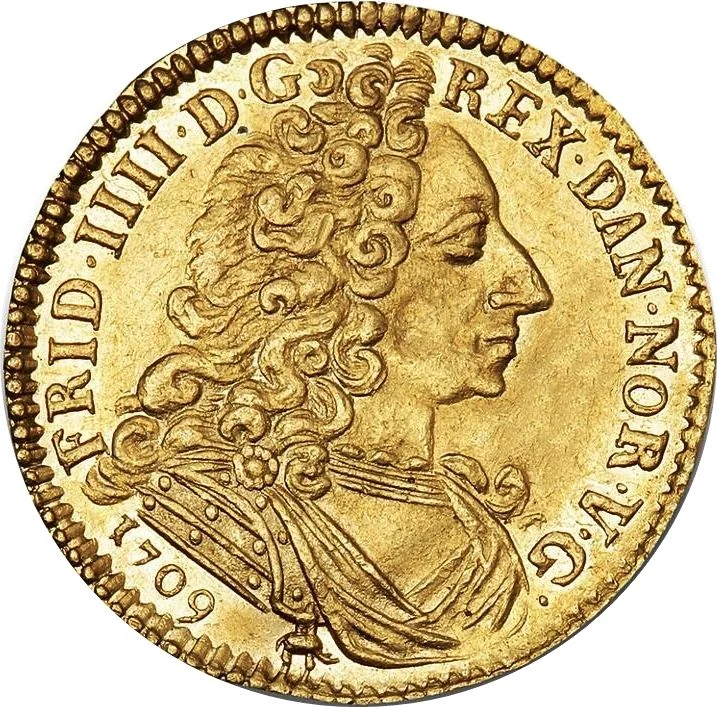
Obverse
Description:
King Frederik IV in profile, wearing a curled wig, armour, a mantle with clasp, and the Order of the Elephant.
Inscription:
FRID • IIII • D • G REX • DAN • NOR • V • G •
1709
1709
Script: Latin
Engraver: Anton Meybusch
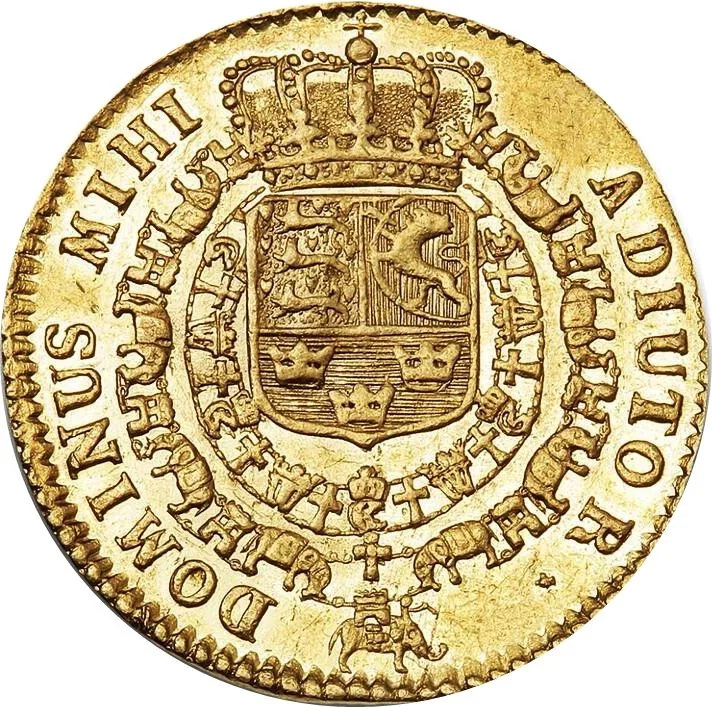
Reverse
Description:
Danish, Swedish, and Norwegian crowned arms on a square shield, above the collars of the Dannebrog and Elephant orders.
Inscription:
DOMINUS MIHI ADIUTOR ᕀ
Script: Latin
Engraver: Anton Meybusch
Edge
Categories
| Symbols> Coat of Arms |
Mints
| Name | Mark |
|---|---|
| Copenhagen | — |
Mintings
| Year | Mint Mark | Mintage | Quality | Collection |
|---|---|---|---|---|
| 1709 | — | — |
Historical background
In 1709, Denmark found itself in a precarious monetary situation, a direct consequence of its prolonged involvement in the Great Northern War (1700-1721). The immense cost of maintaining a large army and navy had drained the royal treasury, leading King Frederick IV and his government to resort to repeated currency debasement. The state systematically reduced the silver content in coins while mandating they retain their face value, a short-term measure to mint more money from existing silver reserves and fund the war effort. This practice, however, severely undermined public trust in the currency.
The result was a classic economic crisis characterized by rampant inflation and a fractured monetary system. "Good" older coins with higher silver content were hoarded or taken out of circulation (Gresham's Law in action), while the new, inferior coins flooded the market, driving up prices for essential goods. This placed a severe burden on the population, particularly peasants and fixed-income earners, leading to widespread hardship and social unrest. The credibility of the state and the stability of commerce were deeply compromised.
Recognizing the unsustainable chaos, the Danish government initiated a significant monetary reform in 1709. The cornerstone was the introduction of a new silver-based currency, the kronet specie, intended to restore stability and confidence. This reform aimed to retire the debased coins and re-establish a fixed, reliable relationship between the currency and its precious metal content. While the war's pressures continued, the 1709 reform marked a critical turning point, laying the foundation for the modern Danish monetary system that would emerge after the war's conclusion.
The result was a classic economic crisis characterized by rampant inflation and a fractured monetary system. "Good" older coins with higher silver content were hoarded or taken out of circulation (Gresham's Law in action), while the new, inferior coins flooded the market, driving up prices for essential goods. This placed a severe burden on the population, particularly peasants and fixed-income earners, leading to widespread hardship and social unrest. The credibility of the state and the stability of commerce were deeply compromised.
Recognizing the unsustainable chaos, the Danish government initiated a significant monetary reform in 1709. The cornerstone was the introduction of a new silver-based currency, the kronet specie, intended to restore stability and confidence. This reform aimed to retire the debased coins and re-establish a fixed, reliable relationship between the currency and its precious metal content. While the war's pressures continued, the 1709 reform marked a critical turning point, laying the foundation for the modern Danish monetary system that would emerge after the war's conclusion.
✨ Legendary