

1 krone – Denmark
Add to wishlist
Denmark
Context
Material
References
KM: #
Numista: #146082
Value
Bullion value: $37.72
Obverse
Description:
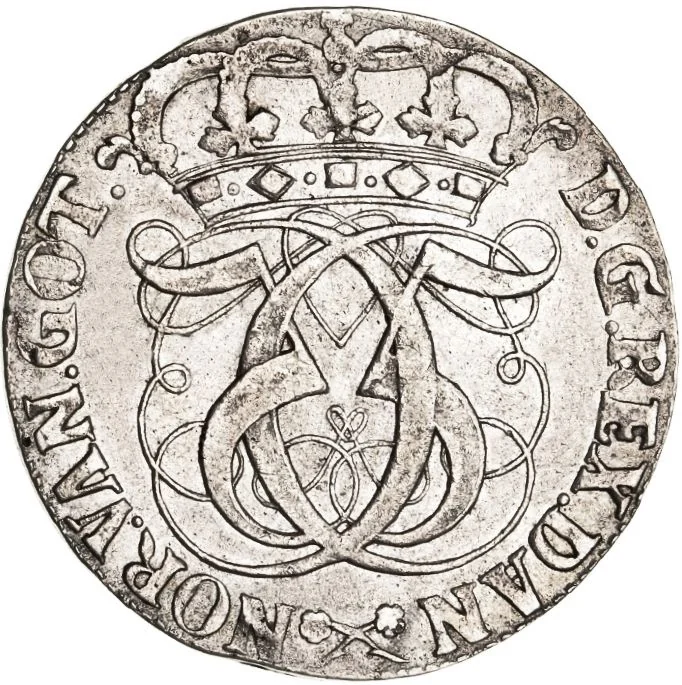
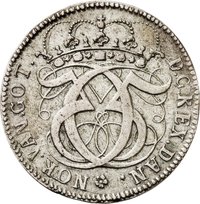
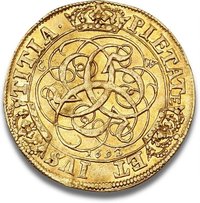
Crown above mirrored, ornate Kings' monograms. Side legends. Crossed flowers below.
Inscription:
5CC5
D. G · REX · DAN · | .NOR · VAN · GOT ·
D. G · REX · DAN · | .NOR · VAN · GOT ·
Script: Latin
Reverse
Description:
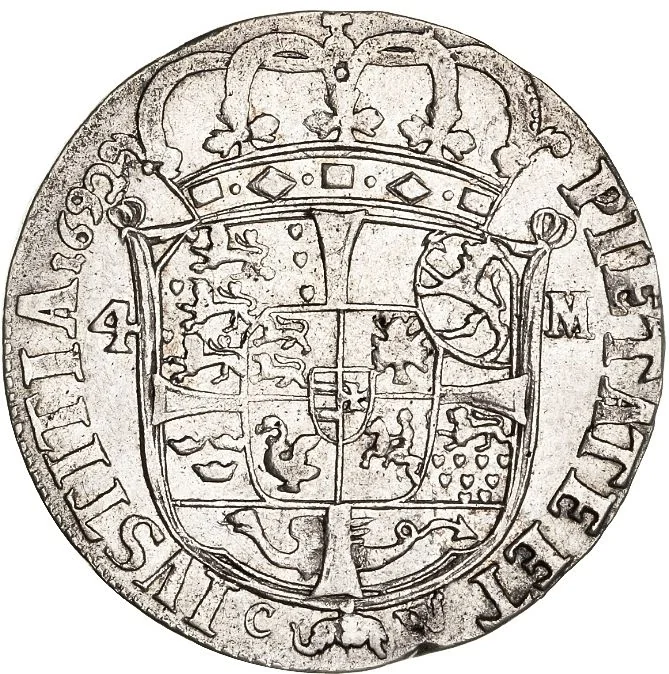
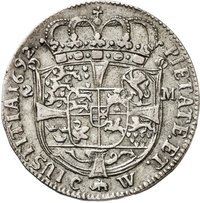
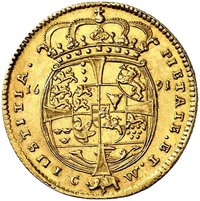
Denmark's crowned coat of arms, flanked by the value, is encircled by the king's motto and date. The Order of Elephant pendant on a thin band divides the mintmark at the bottom.
Inscription:
4 M
PIETATE ET | IUSTITIA 1692
C | W
PIETATE ET | IUSTITIA 1692
C | W
Script: Latin
Edge
Categories
| Symbols> Coat of Arms |
Mints
| Name | Mark |
|---|---|
| Copenhagen | CW |
Mintings
| Year | Mint Mark | Mintage | Quality | Collection |
|---|---|---|---|---|
| 1692 | CW | — |
Historical background
In 1692, Denmark operated under a silver standard, but the currency system was strained and complex. The primary unit was the rigsdaler, subdivided into marks and skilling, yet the reality was a confusing mix of old and new coins circulating simultaneously. Decades of war, particularly the conflicts with Sweden, had depleted the treasury, leading successive monarchs to debase the coinage—reducing its silver content to create more money from the same amount of bullion. This practice, while providing short-term fiscal relief, eroded public trust and caused significant inflation, as the intrinsic value of coins fell below their face value.
The situation was further complicated by the circulation of foreign coins, especially from the German states and the Netherlands, which were often of more reliable fineness. Domestically, the state faced the practical challenge of "bad money driving out good," as described by Gresham's Law. People hoarded older, higher-silver coins or used them for foreign trade, while spending the newer, debased coins domestically. This created a chronic shortage of sound money for everyday commerce, hampering economic activity and causing frustration among merchants and the populace.
King Christian V’s government was aware of these monetary disorders. Efforts at reform were intermittent and often ineffective, as the crown's immediate financial needs usually took precedence. The year 1692 fell within a period where the state's focus was on managing the consequences of past debasements rather than implementing a fundamental overhaul. The unstable currency reflected the broader fiscal challenges of the absolutist Danish state, which would not achieve a more stable and unified monetary system until the major reforms of the mid-18th century.
The situation was further complicated by the circulation of foreign coins, especially from the German states and the Netherlands, which were often of more reliable fineness. Domestically, the state faced the practical challenge of "bad money driving out good," as described by Gresham's Law. People hoarded older, higher-silver coins or used them for foreign trade, while spending the newer, debased coins domestically. This created a chronic shortage of sound money for everyday commerce, hampering economic activity and causing frustration among merchants and the populace.
King Christian V’s government was aware of these monetary disorders. Efforts at reform were intermittent and often ineffective, as the crown's immediate financial needs usually took precedence. The year 1692 fell within a period where the state's focus was on managing the consequences of past debasements rather than implementing a fundamental overhaul. The unstable currency reflected the broader fiscal challenges of the absolutist Danish state, which would not achieve a more stable and unified monetary system until the major reforms of the mid-18th century.
Series: 1692 Denmark circulation coins

✨ Legendary