

1 mark – Denmark
Add to wishlist
Denmark
Context
Material
References
KM: #
Numista: #144933
Value
Bullion value: $9.60
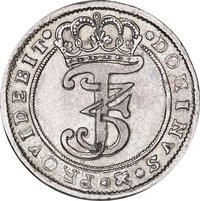
Obverse
Description:
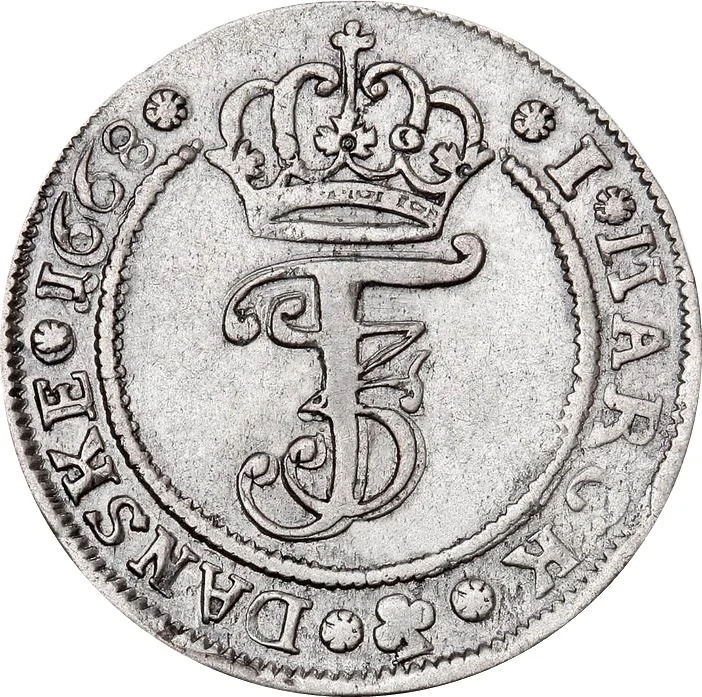
King’s monogram in circle. Value and date around rim. Mintmark breaks value below.
Inscription:
* I * MARCK * ☘ * DANSKE * 1668 *
Script: Latin
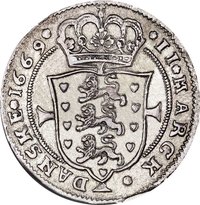
Reverse
Description:
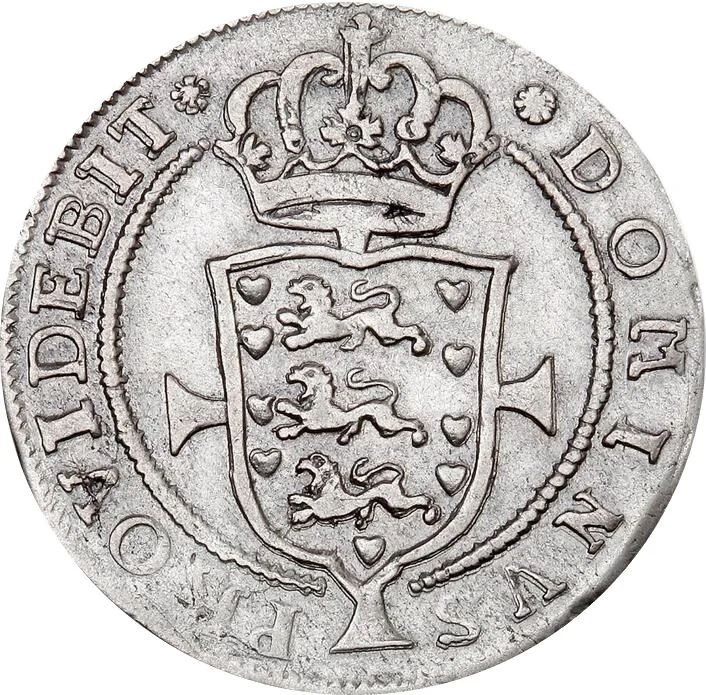
Shield with Danish arms over cross, within beaded circle. King's motto encircles it, reading clockwise from top right.
Inscription:
* DOMINVS | PROVIDEBIT *
Script: Latin
Edge
Mints
| Name | Mark |
|---|---|
| Copenhagen | ☘ |
Mintings
| Year | Mint Mark | Mintage | Quality | Collection |
|---|---|---|---|---|
| 1668 | ☘ | — |
Historical background
In 1668, Denmark operated under a complex and strained monetary system, a legacy of the costly wars and economic policies of the mid-17th century. The official currency was based on the silver rigsdaler, but the state’s chronic need for revenue had led to severe debasement. Successive kings had reduced the silver content in minted coins while ordering them to be accepted at their old, higher face value, a practice that flooded the kingdom with inferior money and eroded public trust. This created a chaotic situation where older, full-weight coins were hoarded or exported, while the newer, debased coins circulated at a discount, causing inflation and hampering trade.
The situation was further complicated by the circulation of numerous foreign coins, particularly German and Dutch, which were often preferred for their reliable silver content. This effectively created a dual system: official state coinage and more trusted foreign currencies used in significant commerce. The Danish state, under the absolute monarchy of King Frederik III (who died in 1670), struggled to assert control. The central bank, the Kurantbanken (established in 1736), did not yet exist, so monetary policy was conducted directly by the crown, primarily through the mint, with often destabilizing results.
Consequently, 1668 represents a point of deep monetary instability within the broader context of Denmark's transition to absolutism (established in 1660-61). The crown’s financial difficulties, exacerbated by the recent wars with Sweden, directly fueled the currency crisis. While efforts at reform were discussed, a comprehensive and successful stabilization of the Danish currency would only begin in the following decades with the introduction of more structured banking and monetary reforms under King Christian V.
The situation was further complicated by the circulation of numerous foreign coins, particularly German and Dutch, which were often preferred for their reliable silver content. This effectively created a dual system: official state coinage and more trusted foreign currencies used in significant commerce. The Danish state, under the absolute monarchy of King Frederik III (who died in 1670), struggled to assert control. The central bank, the Kurantbanken (established in 1736), did not yet exist, so monetary policy was conducted directly by the crown, primarily through the mint, with often destabilizing results.
Consequently, 1668 represents a point of deep monetary instability within the broader context of Denmark's transition to absolutism (established in 1660-61). The crown’s financial difficulties, exacerbated by the recent wars with Sweden, directly fueled the currency crisis. While efforts at reform were discussed, a comprehensive and successful stabilization of the Danish currency would only begin in the following decades with the introduction of more structured banking and monetary reforms under King Christian V.
Series: 1668 Denmark circulation coins
✨ Legendary