

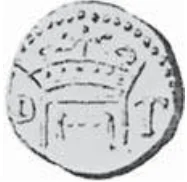
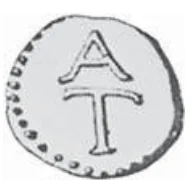
1 tanga – Ceylon
Add to wishlist
Sri Lanka
Context
Material
Diameter: 24 mm
Weight: 2.66 g
Silver Weight:: 2.66 g
Thickness: 1 mm
Shape: Irregular round
Composition: Silver
Magnetic: No
Alignment: Coin alignment
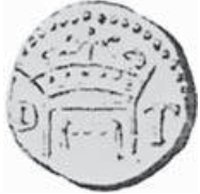
flip
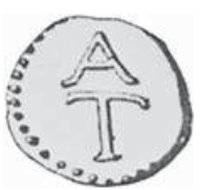
References
KM: #
Numista: #144735
Value
Bullion value: $6.67
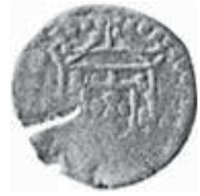
Obverse
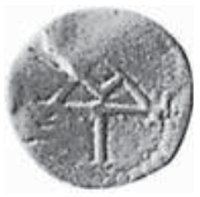
Reverse
Edge
Plain
Mintings
| Year | Mint Mark | Mintage | Quality | Collection |
|---|---|---|---|---|
| — | — | — |
Historical background
In 1598, the island of Ceylon (modern Sri Lanka) was a fragmented and contested territory, with its currency situation reflecting its complex political landscape. The interior Kingdom of Kandy held sway over the central highlands, while the coastal lowlands were divided between the Portuguese, who controlled the lucrative western and southern regions including Colombo, and various independent local rulers. There was no unified monetary system; instead, circulation was a mixture of traditional, regional, and foreign coins, creating a heterogeneous and often confusing economic environment.
The most prominent currency in Portuguese-controlled areas was the Portuguese tangas (or patacas), silver coins that were integral to the wider Indian Ocean trade. However, these coexisted with older, locally produced gold kahavanu coins and low-value copper massas, which remained in use for smaller, everyday transactions, particularly in the interior. Furthermore, due to Ceylon's key position on maritime trade routes, a plethora of foreign coins also circulated, including Venetian ducats, Spanish reals, and various South Indian issues, their values fluctuating based on metallic content and mercantile demand.
This monetary fragmentation posed significant challenges for trade and administration. The Portuguese authorities struggled to impose their currency uniformly, while the Kingdom of Kandy maintained its own traditional systems. The lack of standardisation often forced merchants and peasants alike to rely on the weight and purity of precious metals rather than face value, leading to inefficiency and vulnerability to exploitation. Thus, the currency situation in 1598 Ceylon was a direct reflection of the island's political division and its role as a commercial crossroads, awaiting the coercive force of a single power to impose monetary order.
The most prominent currency in Portuguese-controlled areas was the Portuguese tangas (or patacas), silver coins that were integral to the wider Indian Ocean trade. However, these coexisted with older, locally produced gold kahavanu coins and low-value copper massas, which remained in use for smaller, everyday transactions, particularly in the interior. Furthermore, due to Ceylon's key position on maritime trade routes, a plethora of foreign coins also circulated, including Venetian ducats, Spanish reals, and various South Indian issues, their values fluctuating based on metallic content and mercantile demand.
This monetary fragmentation posed significant challenges for trade and administration. The Portuguese authorities struggled to impose their currency uniformly, while the Kingdom of Kandy maintained its own traditional systems. The lack of standardisation often forced merchants and peasants alike to rely on the weight and purity of precious metals rather than face value, leading to inefficiency and vulnerability to exploitation. Thus, the currency situation in 1598 Ceylon was a direct reflection of the island's political division and its role as a commercial crossroads, awaiting the coercive force of a single power to impose monetary order.


✨ Legendary