

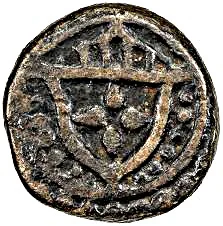
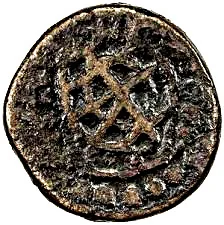
¼ Bazaruco – Ceylon
Sri Lanka
Context
Material
Diameter: 12 mm
Weight: 1.2 g
Thickness: 1 mm
Shape: Irregular round
Composition: Copper
Magnetic: No
Alignment: Coin alignment
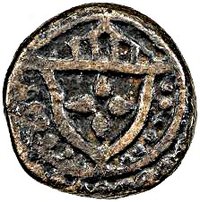
flip
References
KM: #Click to copy to clipboard1
Numista: #144729
Obverse
Description:
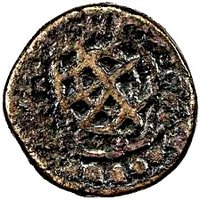
Circle with cross inside
Reverse
Description:
Global sphere.
Edge
Plain
Mintings
| Year | Mint Mark | Mintage | Quality | Collection |
|---|---|---|---|---|
| — | — | — |
Historical background
In 1597, the island of Ceylon (modern Sri Lanka) was a fractured and contested territory, with its currency situation reflecting this complex political landscape. The interior Kingdom of Kandy, under King Vimaladharmasuriya I, maintained its traditional economic systems, likely using small silver kahavanu coins and copper massas for local trade, alongside the widespread practice of barter for everyday transactions. However, the most significant monetary influence came from the coastal regions, which had been under the control of the Portuguese since the mid-16th century. The Portuguese, established in Colombo, Galle, and Jaffna, introduced their own currency, primarily silver cruzados and tostões, into the trade economy.
This created a dual monetary environment. Portuguese coins circulated alongside a variety of older Sinhalese and South Indian issues, as well as other foreign currencies from active Indian Ocean trade, such as Venetian ducats and Mughal rupees. The Portuguese currency was dominant in ports and areas under their direct control, used for taxing the lucrative spice trade (especially cinnamon) and for paying their soldiers and local allies. Yet, its penetration into the Kandyan highlands was limited, where the kingdom’s sovereignty and traditional systems remained largely intact.
Overall, the currency situation was fragmented and transactional, mirroring the island's political division. There was no unified monetary policy, and the value and acceptance of coins depended heavily on geography and who wielded power in a given region. This instability would persist and evolve with the arrival of the Dutch in the early 17th century, who would soon challenge Portuguese dominance and further complicate Ceylon’s monetary history.
This created a dual monetary environment. Portuguese coins circulated alongside a variety of older Sinhalese and South Indian issues, as well as other foreign currencies from active Indian Ocean trade, such as Venetian ducats and Mughal rupees. The Portuguese currency was dominant in ports and areas under their direct control, used for taxing the lucrative spice trade (especially cinnamon) and for paying their soldiers and local allies. Yet, its penetration into the Kandyan highlands was limited, where the kingdom’s sovereignty and traditional systems remained largely intact.
Overall, the currency situation was fragmented and transactional, mirroring the island's political division. There was no unified monetary policy, and the value and acceptance of coins depended heavily on geography and who wielded power in a given region. This instability would persist and evolve with the arrival of the Dutch in the early 17th century, who would soon challenge Portuguese dominance and further complicate Ceylon’s monetary history.
Series: 1597 Ceylon circulation coins






✨ Legendary