

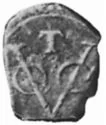
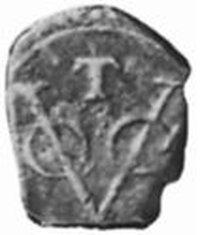
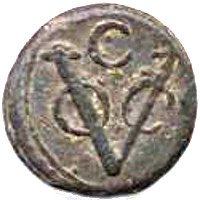
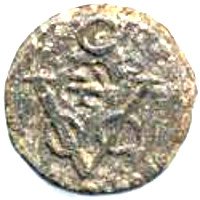
Obverse
Description:
Personalized initials on items
Inscription:
T
VOC
VOC
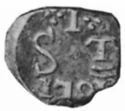
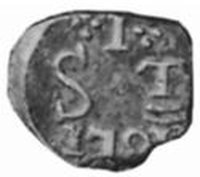
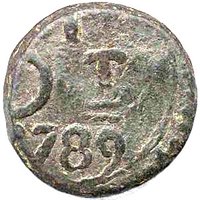
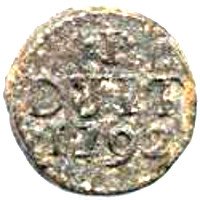
Reverse
Description:
Denomination
Inscription:
1
ST
1790
ST
1790
Edge
Plain
Mintings
| Year | Mint Mark | Mintage | Quality | Collection |
|---|---|---|---|---|
| 1789 | — | — | ||
| 1790 | — | — | ||
| 1791 | — | — | ||
| 1792 | — | — | ||
| 1793 | — | — |
Historical background
In 1789, Ceylon (present-day Sri Lanka) was under the administration of the Dutch East India Company (VOC), which controlled the maritime provinces, while the Kingdom of Kandy held the interior highlands. The island's currency situation was complex and fragmented, reflecting its dual political control and its role as a hub in Indian Ocean trade networks. The primary circulating medium was a mixture of physical coins, including Dutch rijksdaalders and stuivers, various Indian gold pagodas and silver fanams, Portuguese-era coins, and even Spanish American silver dollars (pieces of eight). This proliferation created a chaotic system of multiple exchange rates and valuations that hampered commerce.
The VOC attempted to impose order by officially valuing foreign coins in terms of its own monetary unit, the Ceylon rijksdaalder, but market rates often differed. A critical and chronic problem was the persistent outflow of full-weight silver coins to the Indian mainland, where they were valued higher, leaving the colony perpetually short of quality specie. This led to the circulation of heavily worn, clipped, and counterfeit coins, further eroding trust in the medium of exchange. The economy also relied heavily on physical commodities like cinnamon and areca nut for larger transactions, underscoring the insufficiency of the coinage system.
This unstable monetary environment significantly hindered the VOC's commercial operations and tax collection, as revenue (land taxes, trade duties, and head taxes) was often collected in unreliable coin or in kind. The situation would change dramatically just seven years later, in 1796, when the British captured the Dutch possessions. The new British administration immediately recognized the monetary chaos as a major obstacle to economic control and began a concerted effort to standardize the currency, a process that would define the island's financial system for the next century.
The VOC attempted to impose order by officially valuing foreign coins in terms of its own monetary unit, the Ceylon rijksdaalder, but market rates often differed. A critical and chronic problem was the persistent outflow of full-weight silver coins to the Indian mainland, where they were valued higher, leaving the colony perpetually short of quality specie. This led to the circulation of heavily worn, clipped, and counterfeit coins, further eroding trust in the medium of exchange. The economy also relied heavily on physical commodities like cinnamon and areca nut for larger transactions, underscoring the insufficiency of the coinage system.
This unstable monetary environment significantly hindered the VOC's commercial operations and tax collection, as revenue (land taxes, trade duties, and head taxes) was often collected in unreliable coin or in kind. The situation would change dramatically just seven years later, in 1796, when the British captured the Dutch possessions. The new British administration immediately recognized the monetary chaos as a major obstacle to economic control and began a concerted effort to standardize the currency, a process that would define the island's financial system for the next century.
✨ Legendary