

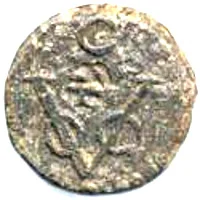
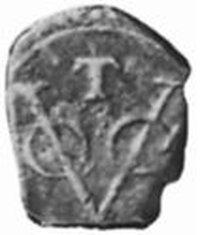
Obverse
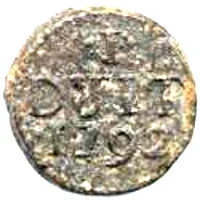
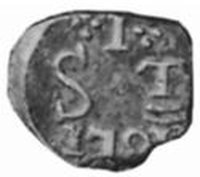
Reverse
Edge
Plain
Mintings
| Year | Mint Mark | Mintage | Quality | Collection |
|---|---|---|---|---|
| 1792 | — | — | ||
| 1793 | — | — |
Historical background
In 1792, Ceylon (present-day Sri Lanka) was under the administration of the Dutch East India Company (VOC), but its colonial control was increasingly precarious. The island's monetary system was a complex and inefficient patchwork, reflecting both its strategic position on Indian Ocean trade routes and the VOC's declining power. The primary circulating coins were Dutch silver rijksdaalders and ducatons, alongside a variety of other European, Indian, and indigenous coins, leading to chronic confusion over exchange rates and values in daily transactions.
A significant feature of the currency situation was the widespread use of "coin substitutes" due to a persistent shortage of official specie. The VOC issued kreditiefbrieven (credit letters or paper notes), but these were not fully trusted and often traded at a discount. More commonly, physical commodities served as money, especially in inland trade; the most notable example was the leechi (or lari), a rod of pure silver of a specific weight, which was often cut into pieces for smaller transactions. This reliance on bullion and barter highlighted the failure of the VOC to impose a unified and sufficient monetary system.
This unstable financial environment occurred on the brink of major geopolitical change. By 1792, the French Revolutionary Wars were impacting Europe, and the British, already a rival power in India, were poised to challenge Dutch control. The monetary disarray in Ceylon was both a symptom and a cause of the VOC's weakening grip, contributing to local economic friction and leaving the colony ill-prepared for the British invasion that would commence in 1795 and ultimately end Dutch rule on the island.
A significant feature of the currency situation was the widespread use of "coin substitutes" due to a persistent shortage of official specie. The VOC issued kreditiefbrieven (credit letters or paper notes), but these were not fully trusted and often traded at a discount. More commonly, physical commodities served as money, especially in inland trade; the most notable example was the leechi (or lari), a rod of pure silver of a specific weight, which was often cut into pieces for smaller transactions. This reliance on bullion and barter highlighted the failure of the VOC to impose a unified and sufficient monetary system.
This unstable financial environment occurred on the brink of major geopolitical change. By 1792, the French Revolutionary Wars were impacting Europe, and the British, already a rival power in India, were poised to challenge Dutch control. The monetary disarray in Ceylon was both a symptom and a cause of the VOC's weakening grip, contributing to local economic friction and leaving the colony ill-prepared for the British invasion that would commence in 1795 and ultimately end Dutch rule on the island.
✨ Legendary