

1 Speciedaler – Denmark
Denmark
Context

Material
References
KM: #Click to copy to clipboard168
Numista: #143386
Value
Bullion value: $74.81
Obverse
Description:
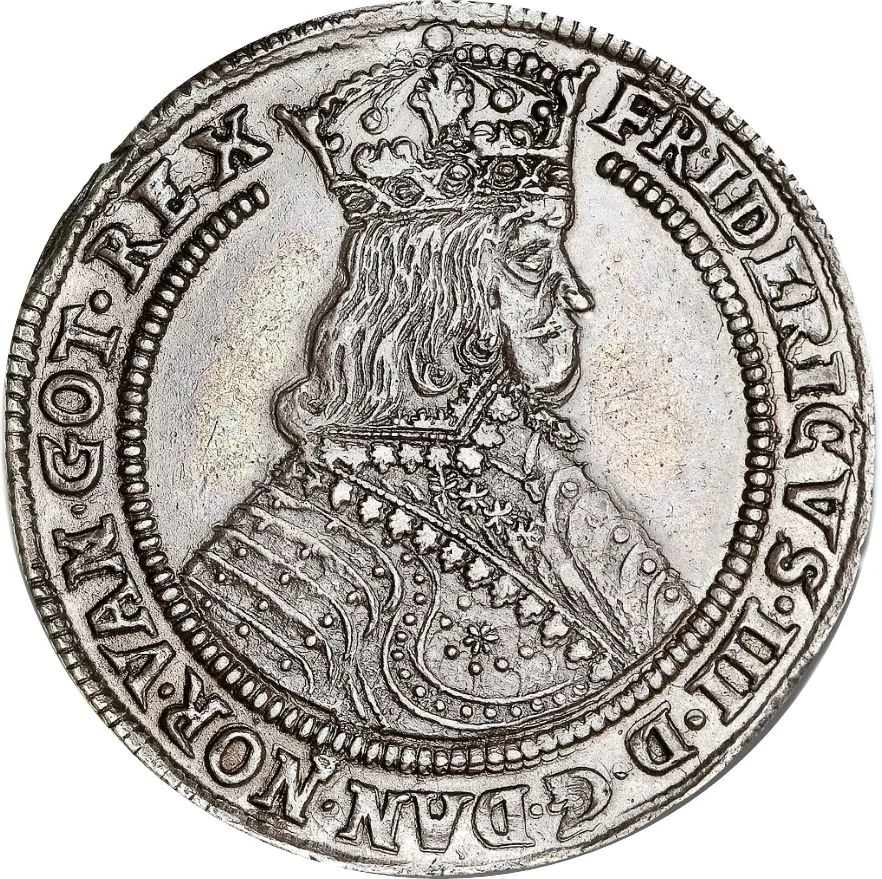
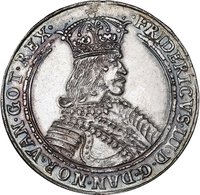
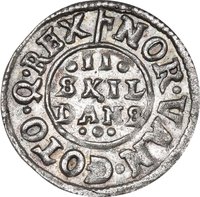
Armored bust of King Frederik III facing right, within a beaded circle. Legend surrounds.
Inscription:
FRIDERICVS · III · D · G · DAN · NOR · VAN · GOT · REX
Script: Latin
Reverse
Description:
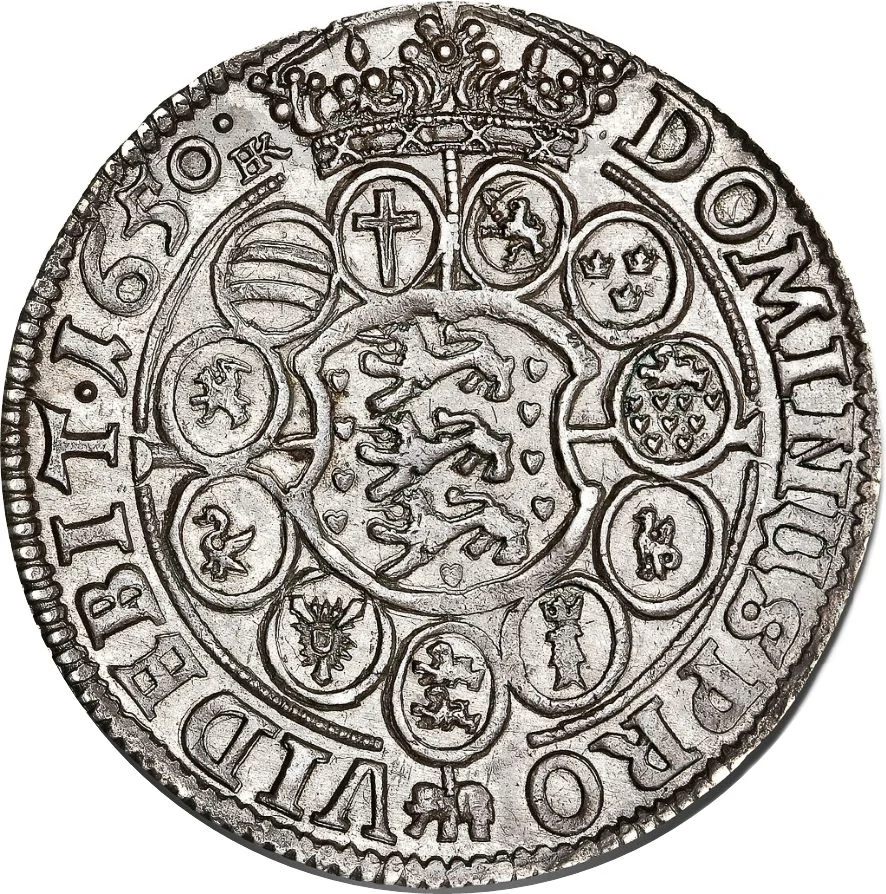
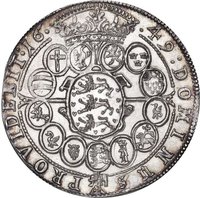
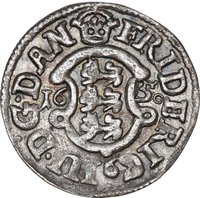
Oval Danish shield with crown above, featuring a central cross encircled by eleven territorial shields. The Order of the Elephant pendant hangs below, with the royal motto, date, and mintmark around the outer edge.
Inscription:
DOMINVS | PROVIDEBIT 1650 HK
Script: Latin
Edge
Mints
| Name | Mark |
|---|---|
| Copenhagen | HK |
Historical background
In 1649, Denmark’s currency system was in a state of profound crisis and transition, deeply entangled with the economic and political aftermath of the Thirty Years' War. The kingdom, which then included Norway and parts of modern-day Sweden and Germany, had financed its military involvement through heavy borrowing and, most destructively, through the severe debasement of its coinage. Kings Christian IV and his successor, Frederik III, repeatedly reduced the silver content in coins like the skilling and mark, leading to a classic vicious cycle: the mint produced increasingly worthless coins to fund the state, which in turn caused rampant inflation, a collapse in public trust, and the hoarding of older, purer coins.
This monetary chaos created a dual-currency reality where "good" pre-debasement coins circulated by weight and at a premium, while new "light" coins were accepted only at a steep discount. The situation crippled trade, both domestic and international, as merchants struggled with unstable values and foreign currencies refused Danish money. The social impact was severe, hitting wage earners and those on fixed incomes hardest, while benefiting debtors who could repay loans in devalued currency. The state’s credit was ruined, and the economy was dangerously unstable.
Recognizing the threat to royal authority and economic recovery, the new absolutist monarchy of Frederik III (established in 1660) would soon make currency reform a paramount priority. Thus, 1649 stands as a low point, a year deep within a period of monetary disorder that directly set the stage for the sweeping reforms of the 1660s. These later reforms would introduce a stable, state-guaranteed silver standard, aiming to restore confidence and centralize financial control under the Crown, marking the end of this turbulent chapter.
This monetary chaos created a dual-currency reality where "good" pre-debasement coins circulated by weight and at a premium, while new "light" coins were accepted only at a steep discount. The situation crippled trade, both domestic and international, as merchants struggled with unstable values and foreign currencies refused Danish money. The social impact was severe, hitting wage earners and those on fixed incomes hardest, while benefiting debtors who could repay loans in devalued currency. The state’s credit was ruined, and the economy was dangerously unstable.
Recognizing the threat to royal authority and economic recovery, the new absolutist monarchy of Frederik III (established in 1660) would soon make currency reform a paramount priority. Thus, 1649 stands as a low point, a year deep within a period of monetary disorder that directly set the stage for the sweeping reforms of the 1660s. These later reforms would introduce a stable, state-guaranteed silver standard, aiming to restore confidence and centralize financial control under the Crown, marking the end of this turbulent chapter.
✨ Legendary