

2 skilling – Denmark
Add to wishlist
Denmark
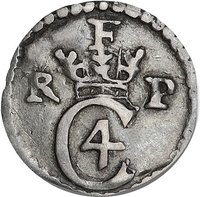
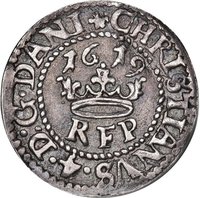
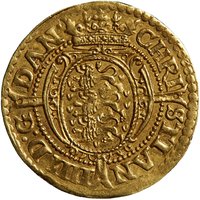
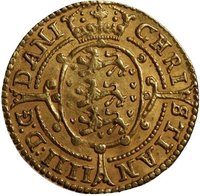
Obverse
Description:
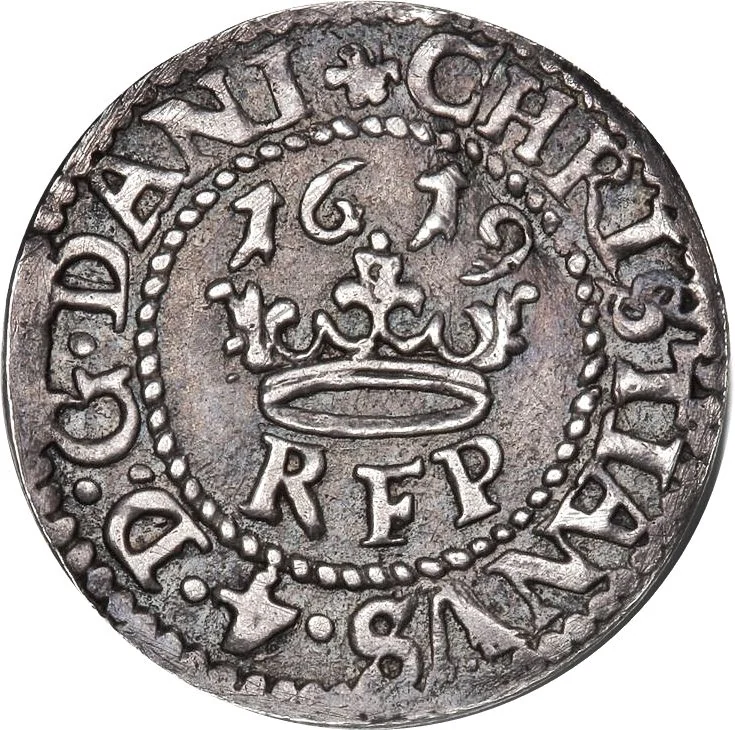
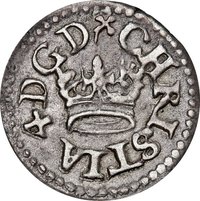
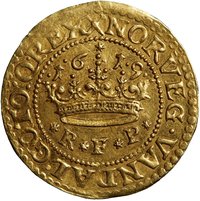
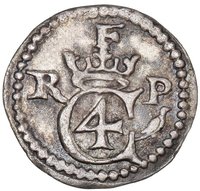
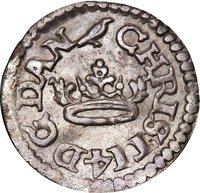
Crown over "RFP" inside beaded circle. Legend outside. Date may appear above crown (Type I).
Inscription:
1619
.R.F.P. (= REGNA FIRMAT PIETAS)
CHRISTIANVS . 4 . D:G . DANI +
.R.F.P. (= REGNA FIRMAT PIETAS)
CHRISTIANVS . 4 . D:G . DANI +
Script: Latin
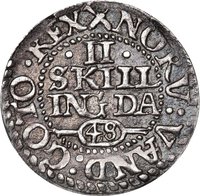
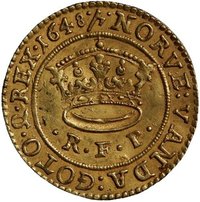
Reverse
Description:
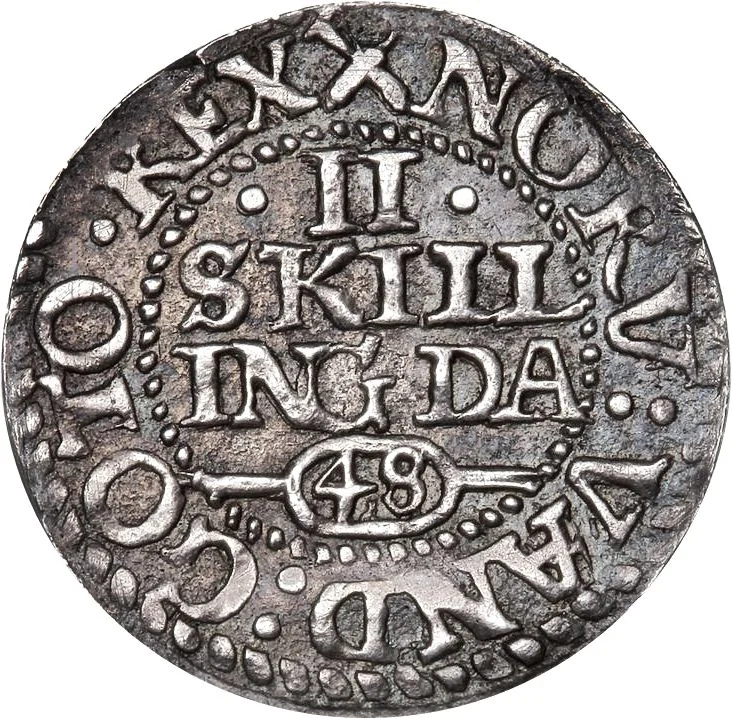
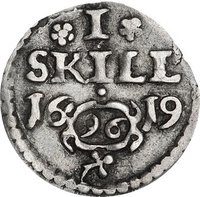
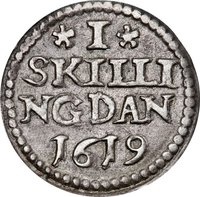
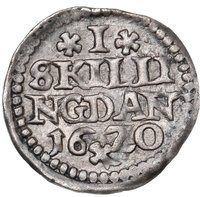
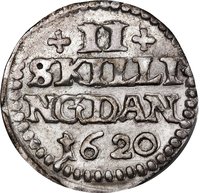
Three lines of lettered value over an oval containing the coin's fractional value; all within a beaded circle. Legend around the rim, with mintmark at end (Type II places date before mintmark).
Inscription:
.II.
SKILL
ING.DA
(48)
NORV:VAND:GOTO:REX (mm)
SKILL
ING.DA
(48)
NORV:VAND:GOTO:REX (mm)
Script: Latin
Edge
Mints
| Name | Mark |
|---|---|
| Copenhagen | ☘ |
Mintings
| Year | Mint Mark | Mintage | Quality | Collection |
|---|---|---|---|---|
| 1619 | c | — | ||
| 1619 | ☘ | — |
Historical background
In 1619, Denmark found itself in a precarious monetary situation, caught between the legacy of past debasements and the pressures of contemporary European warfare. The early 17th century was a period of significant currency instability across the continent, driven by the Thirty Years' War and the manipulation of coinage to fund state expenditures. Denmark, under King Christian IV, was no exception. The king's ambitious projects—including costly wars with Sweden and extensive building programs—had strained the treasury, leading to a history of reducing the silver content in coins to create more currency from the same bullion reserves, a practice that eroded public trust and the currency's real value.
The specific crisis of 1619 was a direct consequence of a failed monetary reform attempted just three years prior. In 1616, Christian IV had introduced the "Christian IV daler," a new, high-quality silver coin intended to restore confidence and stabilize the currency. However, this reform proved unsustainable. The state lacked sufficient silver reserves to maintain the new standard, and the temptation to revert to debasement to meet ongoing war expenses was overwhelming. By 1619, the situation had deteriorated, with the government likely preparing for or already engaging in a renewed reduction of silver content, effectively devaluing the currency and causing inflation. This created a chaotic environment where older, purer coins were hoarded or melted down, while newer, weaker coins circulated at a discount.
This monetary instability had severe economic and social consequences. Merchants and the public faced uncertainty in everyday transactions, with fluctuating exchange rates between different coin types harming domestic trade and complicating international commerce. The debasement acted as a hidden tax, reducing the purchasing power of ordinary people and leading to widespread discontent. The currency troubles of 1619 thus exemplify the fiscal challenges of an absolutist monarchy engaged in geopolitical struggles, where short-term financial expedients undermined long-term economic stability and placed a heavy burden on the Danish population.
The specific crisis of 1619 was a direct consequence of a failed monetary reform attempted just three years prior. In 1616, Christian IV had introduced the "Christian IV daler," a new, high-quality silver coin intended to restore confidence and stabilize the currency. However, this reform proved unsustainable. The state lacked sufficient silver reserves to maintain the new standard, and the temptation to revert to debasement to meet ongoing war expenses was overwhelming. By 1619, the situation had deteriorated, with the government likely preparing for or already engaging in a renewed reduction of silver content, effectively devaluing the currency and causing inflation. This created a chaotic environment where older, purer coins were hoarded or melted down, while newer, weaker coins circulated at a discount.
This monetary instability had severe economic and social consequences. Merchants and the public faced uncertainty in everyday transactions, with fluctuating exchange rates between different coin types harming domestic trade and complicating international commerce. The debasement acted as a hidden tax, reducing the purchasing power of ordinary people and leading to widespread discontent. The currency troubles of 1619 thus exemplify the fiscal challenges of an absolutist monarchy engaged in geopolitical struggles, where short-term financial expedients undermined long-term economic stability and placed a heavy burden on the Danish population.
Series: 1619 Denmark circulation coins
✨ Legendary