

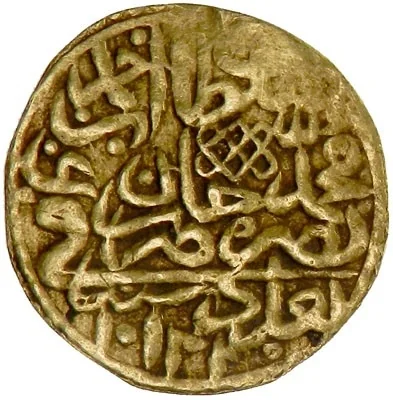
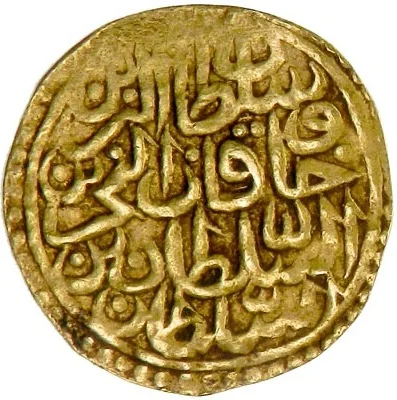
Sultani – Baghdad Eyalet
Iraq
Context
Year: 1604
Islamic (Hijri) Year: 1012
Country: Iraq 
Issuer: Baghdad Eyalet
Ruler: Ahmed I
Currency:
(1535—1688)
Demonetized: Yes
Material
References
KM: #Click to copy to clipboard9
Numista: #142478
Value
Bullion value: $559.94
Mintings
| Year | Mint Mark | Mintage | Quality | Collection |
|---|---|---|---|---|
| 1604 | — | — |
Historical background
In 1604, the currency situation in Baghdad Eyalet was characterized by instability and complexity, reflecting the broader fiscal strains of the Ottoman Empire. The primary silver coin was the akçe, but its value had been severely eroded by decades of debasement, a process where the silver content was reduced to fund military campaigns and state expenses. This chronic inflation, known as the "Price Revolution," disrupted local markets and long-distance trade, creating a disconnect between official accounting in akçe and the actual market value of goods and services.
Alongside the debased akçe, a multitude of other coins circulated in Baghdad's bustling markets, a legacy of its position as a major trade nexus. European silver dollars, particularly Spanish reales and later Dutch leeuwendaalders (known as esedi in Ottoman lands), flowed in via trade routes and were highly valued for their consistent silver purity. Regional currencies, like the Persian abbasi, also circulated freely. This created a multi-currency environment where merchants and money changers (sarrafs) constantly negotiated exchange rates, adding layers of complexity to commerce.
The Ottoman central government struggled to impose monetary order from Istanbul. Attempts at reform, such as the introduction of the heavier para, were only partially successful. In practice, the financial administration in Baghdad operated with significant autonomy, often collecting taxes in kind or in stable foreign silver to hedge against the akçe's instability. Thus, the currency landscape was one of pragmatic adaptation, where the theoretical supremacy of the Ottoman coinage coexisted with the practical reliance on more stable foreign and regional specie to facilitate the eyalet's vital economic life.
Alongside the debased akçe, a multitude of other coins circulated in Baghdad's bustling markets, a legacy of its position as a major trade nexus. European silver dollars, particularly Spanish reales and later Dutch leeuwendaalders (known as esedi in Ottoman lands), flowed in via trade routes and were highly valued for their consistent silver purity. Regional currencies, like the Persian abbasi, also circulated freely. This created a multi-currency environment where merchants and money changers (sarrafs) constantly negotiated exchange rates, adding layers of complexity to commerce.
The Ottoman central government struggled to impose monetary order from Istanbul. Attempts at reform, such as the introduction of the heavier para, were only partially successful. In practice, the financial administration in Baghdad operated with significant autonomy, often collecting taxes in kind or in stable foreign silver to hedge against the akçe's instability. Thus, the currency landscape was one of pragmatic adaptation, where the theoretical supremacy of the Ottoman coinage coexisted with the practical reliance on more stable foreign and regional specie to facilitate the eyalet's vital economic life.

✨ Legendary