

Mangir – Baghdad Eyalet
Iraq
Context
Year: 1617
Country: Iraq 
Issuer: Baghdad Eyalet
Ruler: Mustafa I
Currency:
(1535—1688)
Demonetized: Yes
Material
References
KM: #Click to copy to clipboard10
Numista: #142477
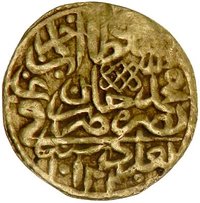
Obverse
Description:
Toughra
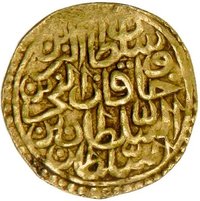
Reverse
Description:
Mint's ornamental name.
Edge
Mintings
| Year | Mint Mark | Mintage | Quality | Collection |
|---|---|---|---|---|
| 1617 | — | — |
Historical background
In 1617, the currency situation in Baghdad Eyalet, a crucial Ottoman province, was characterized by significant instability and complexity, largely stemming from its position on the frontier with the rival Safavid Empire. The Ottoman central treasury, frequently strained by prolonged military campaigns, often resorted to currency debasement, reducing the silver content of the primary unit, the akçe. This chronic devaluation, combined with the flood of lower-quality Persian shahi coins from across the border due to trade and conflict, created a chaotic monetary environment in Baghdad's bustling markets. Merchants and officials had to constantly evaluate and negotiate the worth of mixed and degraded coinage, undermining both local commerce and the efficiency of tax collection.
The provincial economy operated on a dual system. While the debased Ottoman coinage was officially mandated, older, higher-quality coins and foreign currencies, especially the Spanish silver real (entering via Persian Gulf trade), circulated widely due to their reliable intrinsic value. This effectively created a hierarchy of money, where transactions for valuable goods or long-distance trade were often conducted in stable foreign silver, while smaller, everyday purchases used the increasingly worthless akçe. The local authorities in Baghdad, distant from Istanbul's direct control, faced constant challenges in enforcing monetary decrees and maintaining fiscal order amidst this reality.
Ultimately, the currency turmoil of 1617 was a symptom of broader imperial strains. It reflected the financial pressures of sustaining a distant garrison province against a powerful adversary, the limitations of central Ottoman monetary policy over vast distances, and Baghdad's inevitable integration into regional, rather than purely imperial, economic networks. This instability eroded public trust in the currency, increased the cost of maintaining the military frontier, and highlighted the growing economic challenges that would contribute to the wider "Price Revolution" and fiscal crises within the 17th-century Ottoman Empire.
The provincial economy operated on a dual system. While the debased Ottoman coinage was officially mandated, older, higher-quality coins and foreign currencies, especially the Spanish silver real (entering via Persian Gulf trade), circulated widely due to their reliable intrinsic value. This effectively created a hierarchy of money, where transactions for valuable goods or long-distance trade were often conducted in stable foreign silver, while smaller, everyday purchases used the increasingly worthless akçe. The local authorities in Baghdad, distant from Istanbul's direct control, faced constant challenges in enforcing monetary decrees and maintaining fiscal order amidst this reality.
Ultimately, the currency turmoil of 1617 was a symptom of broader imperial strains. It reflected the financial pressures of sustaining a distant garrison province against a powerful adversary, the limitations of central Ottoman monetary policy over vast distances, and Baghdad's inevitable integration into regional, rather than purely imperial, economic networks. This instability eroded public trust in the currency, increased the cost of maintaining the military frontier, and highlighted the growing economic challenges that would contribute to the wider "Price Revolution" and fiscal crises within the 17th-century Ottoman Empire.

✨ Legendary