

Sultani – Baghdad Eyalet
Iraq
Context
Year: 1634
Islamic (Hijri) Year: 1043
Country: Iraq 
Issuer: Baghdad Eyalet
Ruler: Murad IV
Currency:
(1535—1688)
Demonetized: Yes
Material
References
KM: #Click to copy to clipboard17
Numista: #142474
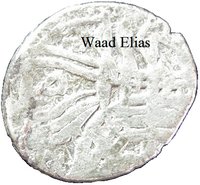
Obverse
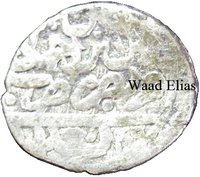
Reverse
Edge
Mintings
| Year | Mint Mark | Mintage | Quality | Collection |
|---|---|---|---|---|
| 1634 | — | — |
Historical background
In 1634, the currency situation in Baghdad Eyalet, a critical province of the Ottoman Empire, was defined by systemic instability and the clash of multiple monetary systems. The primary official currency was the Ottoman silver akçe, but its value had been severely eroded by decades of debasement, where the state reduced the silver content of coins to fund its frequent military campaigns. This chronic inflation created widespread economic uncertainty, disrupting trade and tax collection. Furthermore, the provincial economy was deeply integrated into wider regional networks, meaning that powerful foreign silver coins, particularly the Spanish real de a ocho (piece of eight) and the Safavid Persian silver abbasi, circulated widely alongside Ottoman issues, often preferred for their reliable silver content.
This monetary fragmentation was exacerbated by Baghdad’s unique political status. The eyalet had only been reconquered from Safavid Persia by Sultan Murad IV in 1638, meaning that in 1634, the region was still a war zone and not under stable Ottoman control. During this period of conflict and transition, Persian coinage likely remained in heavy use, and the Ottoman state’s ability to impose its own monetary authority was limited. Local transactions often relied on a mix of worn and clipped coins of varying origins, leading to complex and contentious exchange rates that changed frequently, hampering commerce.
Consequently, the currency environment was one of practical complexity and hardship. Merchants, soldiers, and officials had to navigate a confusing bazaar where the value of coinage was not simply its face value but its weight, metal purity, and origin. This situation placed a premium on money changers (sarrafs) who played a vital role in assessing and exchanging this heterogeneous mix of specie. For the common population, the instability translated into unpredictable prices and a de facto tax on their purchasing power, reflecting the broader administrative and fiscal strains of the Ottoman Empire in the early 17th century, even in a strategically vital province like Baghdad.
This monetary fragmentation was exacerbated by Baghdad’s unique political status. The eyalet had only been reconquered from Safavid Persia by Sultan Murad IV in 1638, meaning that in 1634, the region was still a war zone and not under stable Ottoman control. During this period of conflict and transition, Persian coinage likely remained in heavy use, and the Ottoman state’s ability to impose its own monetary authority was limited. Local transactions often relied on a mix of worn and clipped coins of varying origins, leading to complex and contentious exchange rates that changed frequently, hampering commerce.
Consequently, the currency environment was one of practical complexity and hardship. Merchants, soldiers, and officials had to navigate a confusing bazaar where the value of coinage was not simply its face value but its weight, metal purity, and origin. This situation placed a premium on money changers (sarrafs) who played a vital role in assessing and exchanging this heterogeneous mix of specie. For the common population, the instability translated into unpredictable prices and a de facto tax on their purchasing power, reflecting the broader administrative and fiscal strains of the Ottoman Empire in the early 17th century, even in a strategically vital province like Baghdad.

✨ Legendary