

mangir – Baghdad Eyalet
Add to wishlist
Iraq
Context
Year: 1641
Islamic (Hijri) Year:: 1050
Country: Iraq
Issuer: Baghdad Eyalet
Ruler: Ibrahim I
Currency:
(1535—1688)
Demonetized: Yes
Material
References
KM: #
Numista: #142470
Obverse
Description:
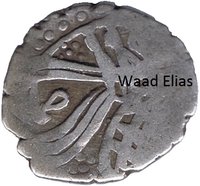
Solomon's signet ring.
Reverse
Edge
Mintings
| Year | Mint Mark | Mintage | Quality | Collection |
|---|---|---|---|---|
| 1641 | — | — |
Historical background
In 1641, the currency situation in Baghdad Eyalet, a strategic Ottoman province, was characterized by instability and the complex interplay of local and imperial monetary systems. The primary unit of account was the akçe, a small silver coin that was the backbone of the empire's finances. However, decades of debasement had severely eroded its value, leading to chronic price inflation and complicating tax collection and soldier pay. Alongside the akçe, the larger silver kuruş (piastre) and various foreign coins, particularly the Spanish real (known as the riyal guruş), circulated widely due to international trade, creating a multi-currency environment.
This monetary confusion was exacerbated by Baghdad's unique status. As a distant frontier eyalet, often under loose central control and recently recaptured from the Safavids in 1638, local authorities exercised significant autonomy. The provincial governor had considerable leeway in managing the mint, leading to irregular coinage standards. Furthermore, the economy relied heavily on ancient trade routes and tribal networks, where payment in kind and older, trusted coins often held more practical value than the unstable official currency issued from Istanbul or the local mint.
Consequently, the currency situation reflected broader imperial strains and local realities. The Ottoman central treasury, grappling with its own fiscal crises, struggled to impose uniform monetary policy in Baghdad. This resulted in a fragile economy where merchants, soldiers, and officials constantly negotiated the worth of different coins, undermining efficient administration and commerce. The monetary disorder of 1641 was thus a symptom of both the empire's systemic fiscal decay and the eyalet's contested and semi-autonomous position on the Persian frontier.
This monetary confusion was exacerbated by Baghdad's unique status. As a distant frontier eyalet, often under loose central control and recently recaptured from the Safavids in 1638, local authorities exercised significant autonomy. The provincial governor had considerable leeway in managing the mint, leading to irregular coinage standards. Furthermore, the economy relied heavily on ancient trade routes and tribal networks, where payment in kind and older, trusted coins often held more practical value than the unstable official currency issued from Istanbul or the local mint.
Consequently, the currency situation reflected broader imperial strains and local realities. The Ottoman central treasury, grappling with its own fiscal crises, struggled to impose uniform monetary policy in Baghdad. This resulted in a fragile economy where merchants, soldiers, and officials constantly negotiated the worth of different coins, undermining efficient administration and commerce. The monetary disorder of 1641 was thus a symptom of both the empire's systemic fiscal decay and the eyalet's contested and semi-autonomous position on the Persian frontier.

✨ Legendary