

Sultani – Baghdad Eyalet
Iraq
Context
Year: 1648
Islamic (Hijri) Year: 1058
Country: Iraq 
Issuer: Baghdad Eyalet
Ruler: Mehmed IV
Currency:
(1535—1688)
Demonetized: Yes
Material
Weight: 3.1 g
Gold weight: 3.10 g
Shape: Irregular round
Composition: Gold
Standard: Gold tenth ounce
Magnetic: No
References
KM: #Click to copy to clipboard32
Numista: #142462
Value
Bullion value: $518.15
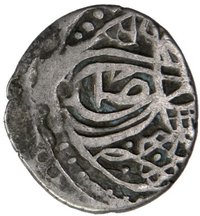
Obverse
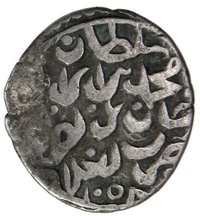
Reverse
Edge
Mintings
| Year | Mint Mark | Mintage | Quality | Collection |
|---|---|---|---|---|
| 1648 | — | — |
Historical background
In 1648, the currency situation in Baghdad Eyalet, a province of the Ottoman Empire, was characterized by instability and complexity, largely stemming from its position as a frontier region. The eyalet operated within a bimetallic system of silver akçe and gold sultani coins, but these official Ottoman currencies often circulated alongside a plethora of foreign and older coins. Most notably, the Persian silver abbasi, minted by the Safavid Empire, was widely used due to Baghdad's recent history of Persian occupation (1623-1638) and its ongoing trade links with the East. This created a dual monetary environment where market transactions were often dictated by the availability and perceived reliability of Persian coinage alongside Ottoman issues.
The primary challenge was a chronic shortage of high-quality, full-weight Ottoman specie in the province. This was exacerbated by the practice of "clipping" (shaving metal from coins) and the circulation of worn or debased issues, which drove good coin out of circulation—a classic example of Gresham's Law. Provincial authorities in Baghdad, often financially strained by the costs of garrisoning a volatile frontier, sometimes resorted to issuing low-quality copper mangır for small-scale transactions, which further eroded public trust in the currency. The central Ottoman mint in Istanbul struggled to maintain a consistent and adequate flow of sound coinage to such a distant province.
Consequently, daily commerce in Baghdad's bustling markets relied heavily on the assessment and negotiation of individual coins by money changers (sarrafs), who determined their real value based on metal content and weight rather than their face value. This fragmented system, while adaptable, created uncertainty for both trade and tax collection. The currency disarray of 1648 thus reflected broader imperial strains, highlighting the logistical and economic difficulties of maintaining integrated monetary control over a vast, diverse, and contested empire.
The primary challenge was a chronic shortage of high-quality, full-weight Ottoman specie in the province. This was exacerbated by the practice of "clipping" (shaving metal from coins) and the circulation of worn or debased issues, which drove good coin out of circulation—a classic example of Gresham's Law. Provincial authorities in Baghdad, often financially strained by the costs of garrisoning a volatile frontier, sometimes resorted to issuing low-quality copper mangır for small-scale transactions, which further eroded public trust in the currency. The central Ottoman mint in Istanbul struggled to maintain a consistent and adequate flow of sound coinage to such a distant province.
Consequently, daily commerce in Baghdad's bustling markets relied heavily on the assessment and negotiation of individual coins by money changers (sarrafs), who determined their real value based on metal content and weight rather than their face value. This fragmented system, while adaptable, created uncertainty for both trade and tax collection. The currency disarray of 1648 thus reflected broader imperial strains, highlighting the logistical and economic difficulties of maintaining integrated monetary control over a vast, diverse, and contested empire.

✨ Legendary