

Dirhem – Baghdad Eyalet
Iraq
Context
Year: 1688
Islamic (Hijri) Year: 1099
Country: Iraq 
Issuer: Baghdad Eyalet
Ruler: Suleiman II
Currency:
(1535—1688)
Demonetized: Yes
References
KM: #Click to copy to clipboard36
Numista: #142459
Value
Bullion value: $8.15
Obverse
Description:
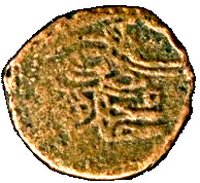
Toughra
Reverse
Description:
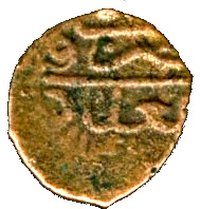
Four-line inscription.
Edge
Mintings
| Year | Mint Mark | Mintage | Quality | Collection |
|---|---|---|---|---|
| 1688 | — | — |
Historical background
In 1688, the currency situation in the Ottoman Empire's Baghdad Eyalet was characterized by severe instability and debasement, a direct consequence of the empire's prolonged financial and military crises. The central Ottoman treasury, drained by decades of war on multiple fronts—particularly against the Holy League in Europe—resorted to repeated devaluations of the central akçe coin. This policy, known as tağşiş, reduced the silver content of coins to generate short-term revenue, but it triggered rampant inflation and a loss of confidence in the imperial currency across the provinces, including distant Baghdad.
Within the eyalet itself, this imperial monetary decay intersected with local economic fragmentation. While official Ottoman coins circulated, their real value was volatile and often discounted. More significantly, a multitude of foreign silver coins, especially the Spanish real and Mexican peso (often called riyāl ghurūsh), circulated widely due to their reliable silver content. Furthermore, the powerful provincial governors (valis), who enjoyed considerable autonomy, likely minted their own local coins or issued debased versions in their own names to finance local administration and military forces, adding another layer of complexity to the monetary landscape.
Consequently, daily transactions in Baghdad's bustling markets were fraught with uncertainty. Merchants, artisans, and consumers had to constantly assess and haggle over the actual metallic worth of a bewildering array of coins, rather than relying on their face value. This monetary chaos stifled long-distance trade, encouraged hoarding of sound foreign currency, and placed a heavy burden on the local population, contributing to the general administrative and economic weakening of Ottoman authority in this strategically vital province during this period.
Within the eyalet itself, this imperial monetary decay intersected with local economic fragmentation. While official Ottoman coins circulated, their real value was volatile and often discounted. More significantly, a multitude of foreign silver coins, especially the Spanish real and Mexican peso (often called riyāl ghurūsh), circulated widely due to their reliable silver content. Furthermore, the powerful provincial governors (valis), who enjoyed considerable autonomy, likely minted their own local coins or issued debased versions in their own names to finance local administration and military forces, adding another layer of complexity to the monetary landscape.
Consequently, daily transactions in Baghdad's bustling markets were fraught with uncertainty. Merchants, artisans, and consumers had to constantly assess and haggle over the actual metallic worth of a bewildering array of coins, rather than relying on their face value. This monetary chaos stifled long-distance trade, encouraged hoarding of sound foreign currency, and placed a heavy burden on the local population, contributing to the general administrative and economic weakening of Ottoman authority in this strategically vital province during this period.

✨ Legendary