

1 Daler – Sweden
Sweden
Context

Material
References
KM: #Click to copy to clipboard3
Numista: #142260
Value
Bullion value: $73.01
Obverse
Description:
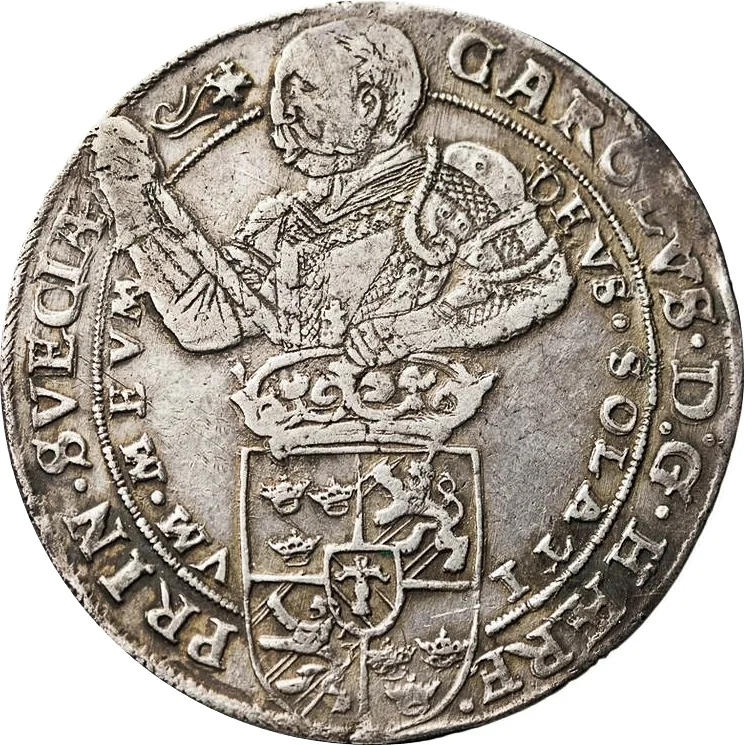
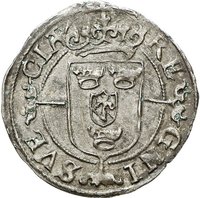
Bare-headed armored bust of Prince Karl holding a scepter, above the crowned Greater Arms of Sweden. The central shield and bust are encircled by legends.
Inscription:
CAROLVS · D:G · HÆRE · PRIN · SVECIÆ
DEVS · SOLATIV | M · MEVM
DEVS · SOLATIV | M · MEVM
Reverse
Description:
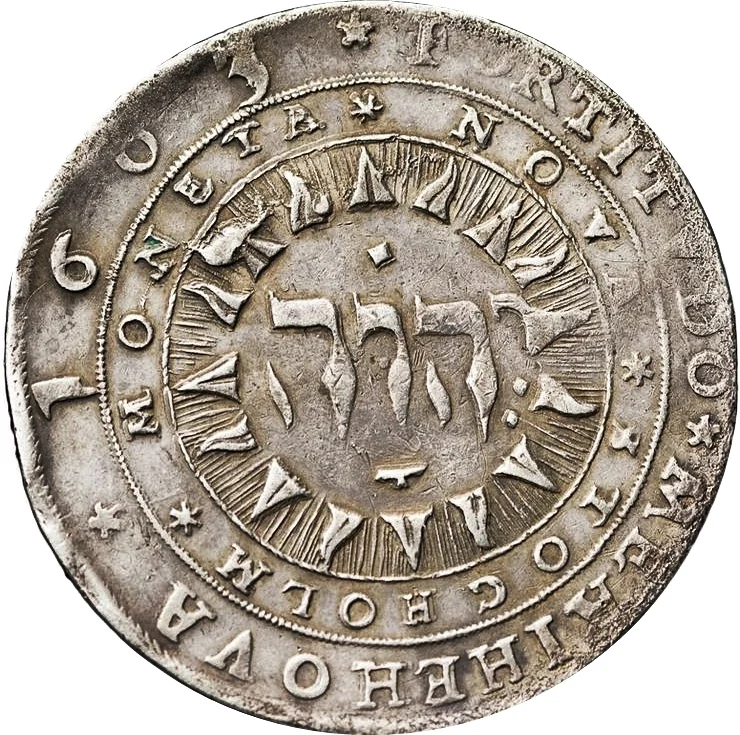
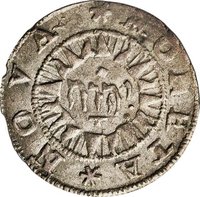
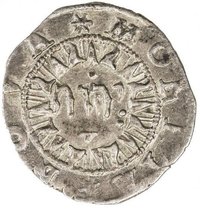
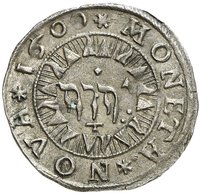
Radiant sun containing Hebrew "Jehovah" within a double circle and two legends.
Inscription:
יהוה
MONETA * NOVA * STOCHOLM *
1603 * FORTITVDO * MEA IEHOVA *
MONETA * NOVA * STOCHOLM *
1603 * FORTITVDO * MEA IEHOVA *
Edge
Mintings
| Year | Mint Mark | Mintage | Quality | Collection |
|---|---|---|---|---|
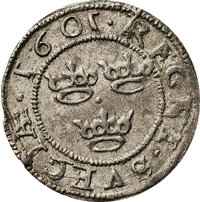
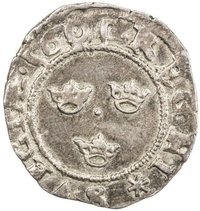
| 1601 | — | — | ||
| 1603 | — | — |
Historical background
In 1601, Sweden was grappling with a severe monetary crisis rooted in the preceding decades of the "Kipper und Wipper" period, a Europe-wide phenomenon of currency debasement. To finance near-constant warfare, especially against Poland and Russia, King Karl IX and his predecessor had significantly reduced the silver content in Sweden's coinage. This created a dual-currency chaos: older, high-value coins were hoarded or melted down, while the new, inferior coins flooded the market, causing rampant inflation and a collapse in public trust. The state's finances were strained, and international trade was hampered as foreign merchants demanded payment in full-weight silver.
The response was the Currency Regulation of 1604, already in planning by 1601. This reform, implemented under Chancellor Axel Oxenstierna, aimed to restore stability by recalling all debased coins and re-minting them according to a unified and higher silver standard. The riksdaler was established as the foundational monetary unit, intended to be a stable coin for foreign trade, while the öre and mark served for domestic use. This move was a critical step toward centralizing royal control over the mint and restoring credibility to the crown's finances.
However, the underlying pressure of war expenditure meant that financial stability remained fragile. The reform required significant short-term costs to recall the old currency, and the temptation to debase coinage for quick funds would resurface in later conflicts. Thus, in 1601, Sweden was at a pivotal point—emerging from a period of monetary anarchy and laying the administrative groundwork for a more stable system, yet still vulnerable to the fiscal demands of its ambitious foreign policy.
The response was the Currency Regulation of 1604, already in planning by 1601. This reform, implemented under Chancellor Axel Oxenstierna, aimed to restore stability by recalling all debased coins and re-minting them according to a unified and higher silver standard. The riksdaler was established as the foundational monetary unit, intended to be a stable coin for foreign trade, while the öre and mark served for domestic use. This move was a critical step toward centralizing royal control over the mint and restoring credibility to the crown's finances.
However, the underlying pressure of war expenditure meant that financial stability remained fragile. The reform required significant short-term costs to recall the old currency, and the temptation to debase coinage for quick funds would resurface in later conflicts. Thus, in 1601, Sweden was at a pivotal point—emerging from a period of monetary anarchy and laying the administrative groundwork for a more stable system, yet still vulnerable to the fiscal demands of its ambitious foreign policy.
✨ Legendary