

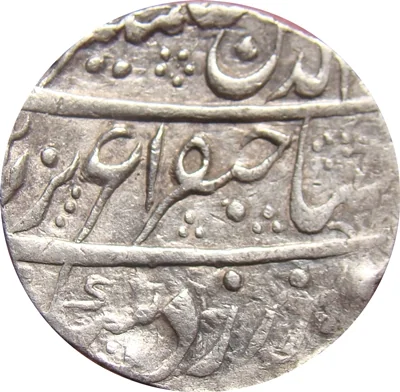

Obverse
Description:
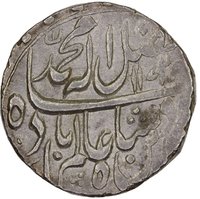
Inscription: Alamgir II, dated by Hijri year.
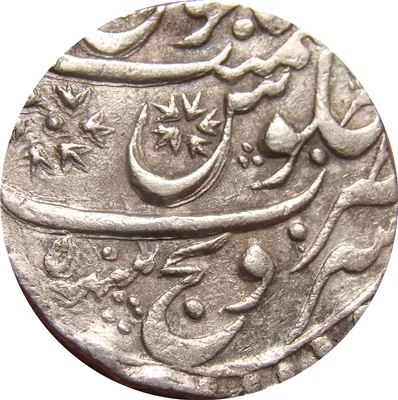
Reverse
Description:
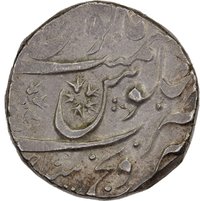
Mint and regnal year at bottom.
Edge
Mintings
| Year | Mint Mark | Mintage | Quality | Collection |
|---|---|---|---|---|
| 1754 | — | — | ||
| 1755 | — | — | ||
| 1756 | — | — | ||
| 1759 | — | — |
Historical background
In 1754, the currency situation in the Indore-Sironj Feudatory was complex and transitional, reflecting the broader political and economic fragmentation of the Maratha Confederacy following the death of the Peshwa Balaji Baji Rao. The region, under the control of Malhar Rao Holkar of Indore, was not a unified monetary zone. Sironj, a key mint town since Mughal times, continued to operate but its output and standards were increasingly influenced by Holkar's authority rather than centralized Mughal or Maratha control. The circulating medium was a mixture of older Mughal silver rupees (from mints like Sironj itself, Surat, or Delhi), local copper coinage for smaller transactions, and the new rupees struck in the name of the Holkar dynasty, which were beginning to assert regional sovereignty.
The primary currency for major transactions remained the silver rupee, but its weight, purity, and design varied. Sironj-minted rupees, historically respected for their consistent standard, now competed with rupees from other Maratha-controlled mints and those issued by Holkar's own emerging mint at Indore. This period saw the "Sironj rupee" transitioning from a Mughal imperial currency to a regional coinage under Maratha suzerainty, often still bearing the name of the Mughal emperor Alamgir II but effectively under Holkar's fiscal management. The simultaneous circulation of multiple coin types created a dynamic and sometimes chaotic marketplace where money-changers played a crucial role in assessing the value of individual coins based on their metal content and origin.
Furthermore, the monetary system was strained by the demands of ongoing warfare and tribute collection. Holkar's military campaigns required substantial liquidity, leading to ad-hoc minting, potential debasement, and the inflow of plunder melted down into new coin. The currency situation was thus characterized by both continuity of older systems and the birth of new regional coinage, all set against a backdrop of political ambition and economic competition. It was a system in flux, moving from Mughal standardization towards the fragmented and leader-centric coinage that would typify the 18th-century successor states in India.
The primary currency for major transactions remained the silver rupee, but its weight, purity, and design varied. Sironj-minted rupees, historically respected for their consistent standard, now competed with rupees from other Maratha-controlled mints and those issued by Holkar's own emerging mint at Indore. This period saw the "Sironj rupee" transitioning from a Mughal imperial currency to a regional coinage under Maratha suzerainty, often still bearing the name of the Mughal emperor Alamgir II but effectively under Holkar's fiscal management. The simultaneous circulation of multiple coin types created a dynamic and sometimes chaotic marketplace where money-changers played a crucial role in assessing the value of individual coins based on their metal content and origin.
Furthermore, the monetary system was strained by the demands of ongoing warfare and tribute collection. Holkar's military campaigns required substantial liquidity, leading to ad-hoc minting, potential debasement, and the inflow of plunder melted down into new coin. The currency situation was thus characterized by both continuity of older systems and the birth of new regional coinage, all set against a backdrop of political ambition and economic competition. It was a system in flux, moving from Mughal standardization towards the fragmented and leader-centric coinage that would typify the 18th-century successor states in India.
✨ Legendary