

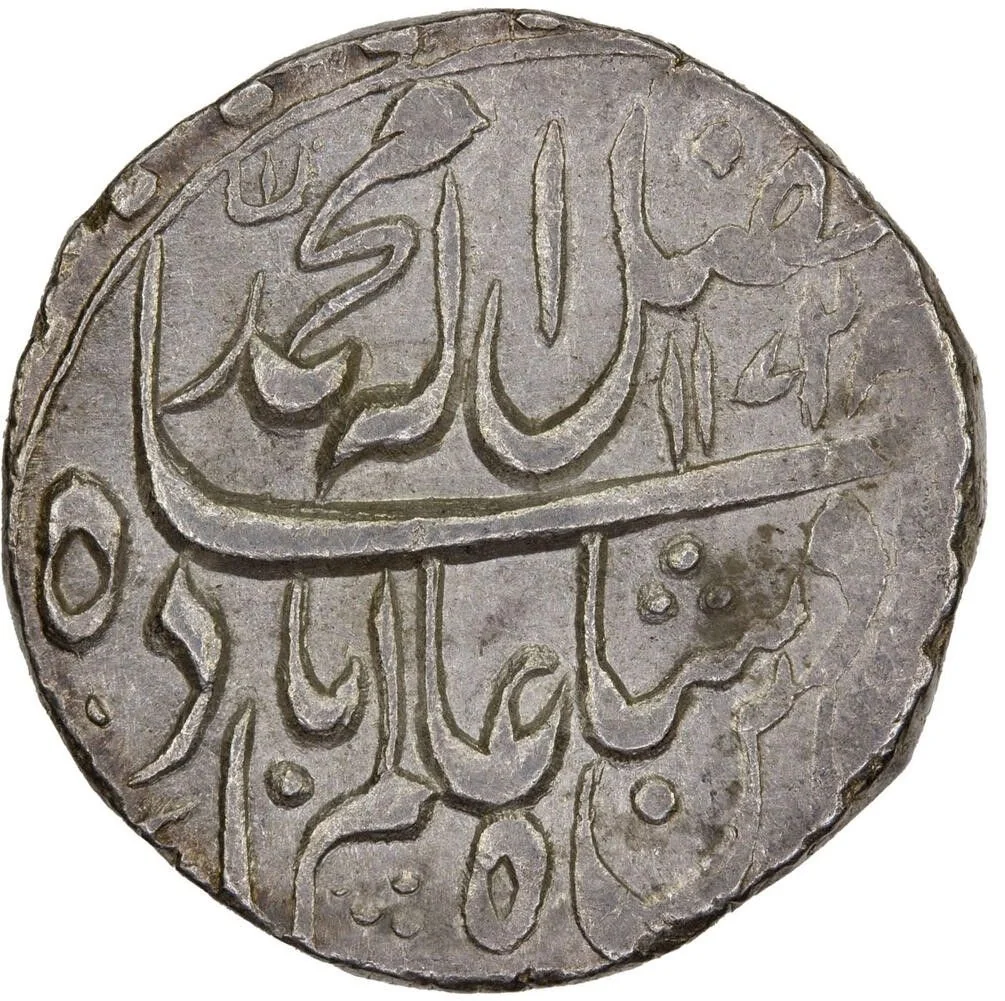
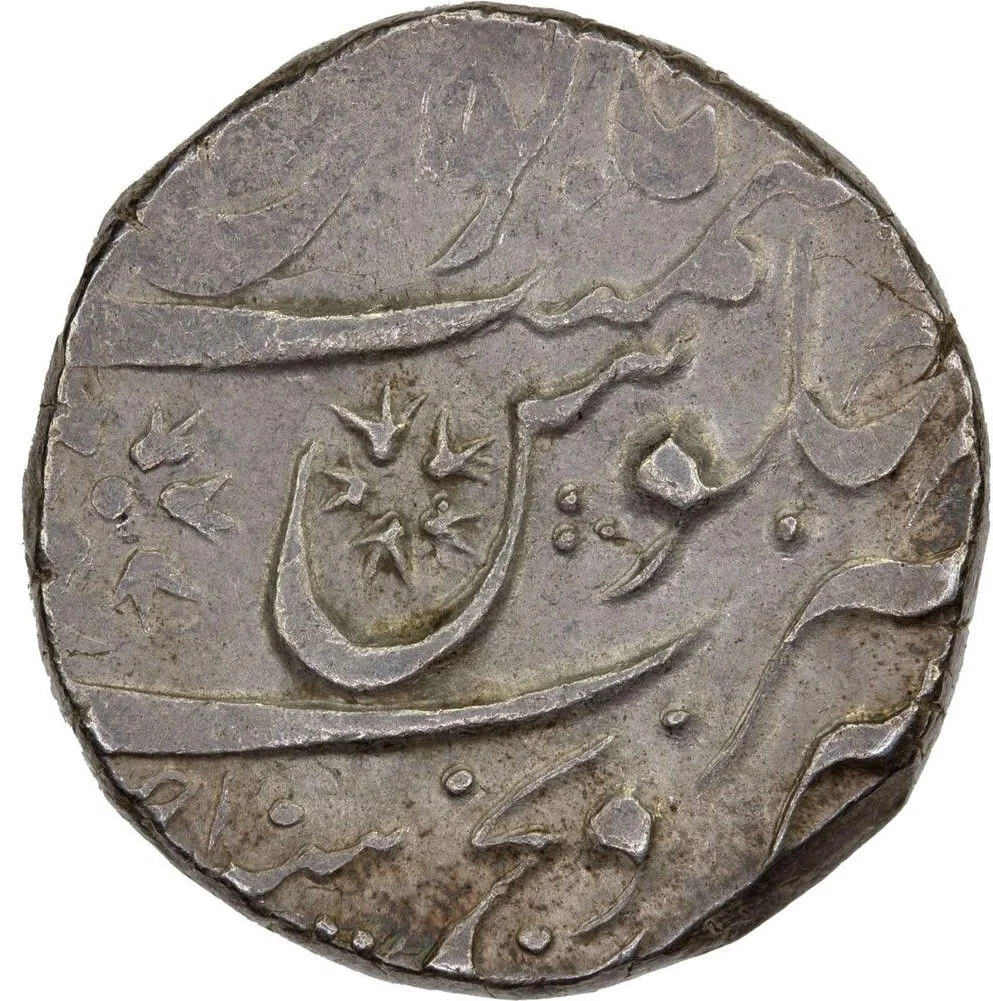
1 Rupee – Indore-Sironj Feudatory
India
Context
Year: 1759
Islamic (Hijri) Year: 1172
Country: India 
Issuer: Indore-Sironj Feudatory
Currency:
Demonetized: Yes
Material
References
KM: #Click to copy to clipboard101
Numista: #458916
Value
Bullion value: $32.84
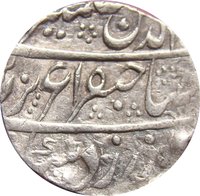
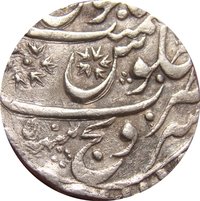
Obverse
Description:
Alamgir II, AH 1172
Script: Urdu
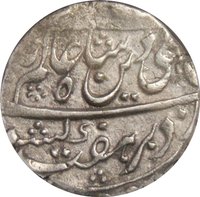
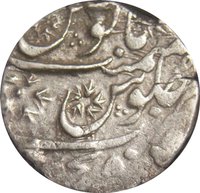
Reverse
Description:
Mint below, regnal year [Ahad].
Edge
Mintings
| Year | Mint Mark | Mintage | Quality | Collection |
|---|---|---|---|---|
| 1759 | — | — |
Historical background
In 1759, the Indore-Sironj feudatory was a contested region caught in the complex political and military struggles following the fragmentation of the Mughal Empire. The area was under the growing influence of the Maratha Confederacy, particularly the Holkar dynasty of Indore, but faced persistent challenges from the Rajput state of Kota and remnants of Mughal authority. This period was marked by instability, as control over Sironj and its surrounding territories shifted frequently due to military campaigns, making any unified monetary system difficult to establish or maintain.
The currency situation was consequently heterogeneous and fragmented. The primary circulating medium would have been the silver rupee, but its provenance and value depended heavily on who controlled the mint town at any given moment. Mughal rupees from Delhi or Agra, Maratha rupees struck at Indore or Ujjain, and possibly even rupees from regional powers like the Nawabs of Bhopal, would have all circulated concurrently. Alongside these, smaller fractional coins like dams and paisa, as well as local tankas, facilitated everyday trade. The value and acceptance of these coins fluctuated with the fortunes of war and the authority of the local commander or jagirdar.
This monetary fragmentation directly reflected the political reality. There was no single, sovereign authority in 1759 capable of imposing a uniform currency across the feudatory. Instead, the coinage in one's purse was a tangible index of the region's instability—a mix of older Mughal issues, newer Maratha strikes, and perhaps even locally issued emergency coins. This environment necessitated the constant assay of coins by merchants and heightened the role of money-changers (sarrafs), who were essential in navigating the uncertain and competitive currency landscape of the time.
The currency situation was consequently heterogeneous and fragmented. The primary circulating medium would have been the silver rupee, but its provenance and value depended heavily on who controlled the mint town at any given moment. Mughal rupees from Delhi or Agra, Maratha rupees struck at Indore or Ujjain, and possibly even rupees from regional powers like the Nawabs of Bhopal, would have all circulated concurrently. Alongside these, smaller fractional coins like dams and paisa, as well as local tankas, facilitated everyday trade. The value and acceptance of these coins fluctuated with the fortunes of war and the authority of the local commander or jagirdar.
This monetary fragmentation directly reflected the political reality. There was no single, sovereign authority in 1759 capable of imposing a uniform currency across the feudatory. Instead, the coinage in one's purse was a tangible index of the region's instability—a mix of older Mughal issues, newer Maratha strikes, and perhaps even locally issued emergency coins. This environment necessitated the constant assay of coins by merchants and heightened the role of money-changers (sarrafs), who were essential in navigating the uncertain and competitive currency landscape of the time.
✨ Legendary