

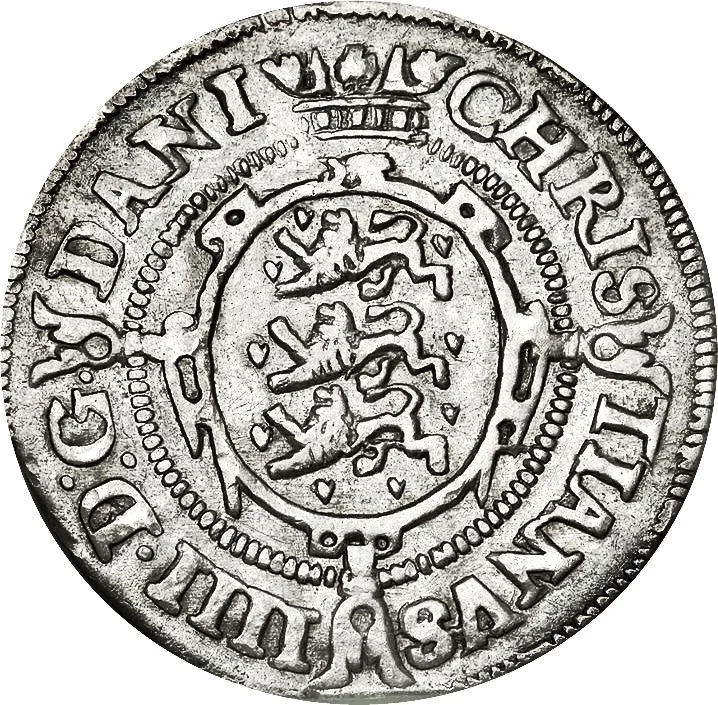
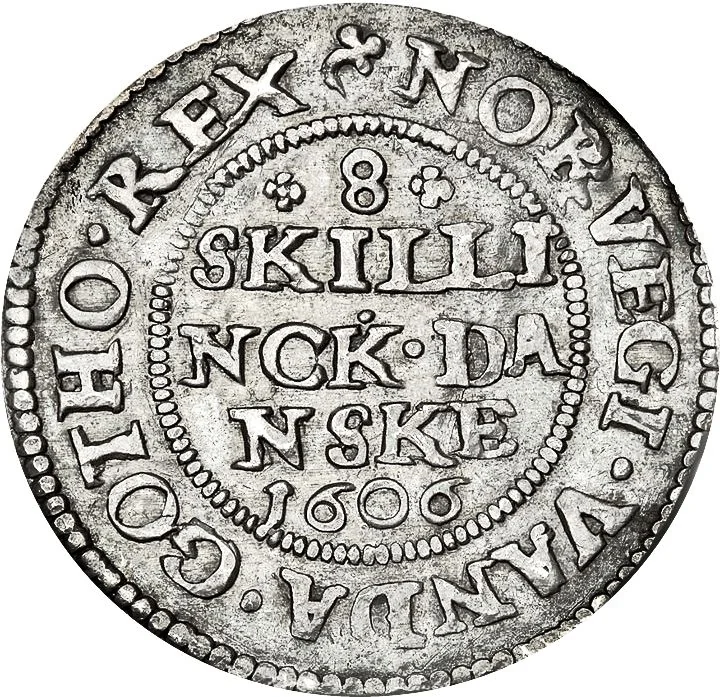
8 skilling – Denmark
Add to wishlist
Denmark
Context
Material
References
KM: #
Numista: #141998
Value
Bullion value: $6.50
Obverse
Description:
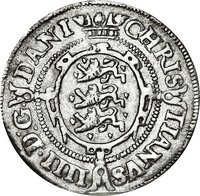
Crowned Danish arms over a long-arm cross within a rope circle. Legend outside, divided by the cross.
Inscription:
CHRIS | TIANVS | IIII · D: G | DANI
Script: Latin
Reverse
Description:
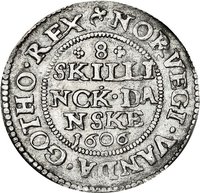
Value and date inside rope circle.
Legend outside, clover mintmark.
Legend outside, clover mintmark.
Inscription:
* 8 *
SKILLI
NCK. DA
NSKE
1606
NORWEGI · VANDA: GOTHO · REX (mm)
SKILLI
NCK. DA
NSKE
1606
NORWEGI · VANDA: GOTHO · REX (mm)
Script: Latin
Edge
Mints
| Name | Mark |
|---|---|
| Copenhagen | ☘ |
Historical background
In 1606, Denmark was part of the dual monarchy of Denmark-Norway, a significant regional power in Northern Europe. The monetary system was complex and strained, operating on a silver standard. The primary unit of account was the rigsdaler, divided into marks and skilling, but the actual circulating coinage was a chaotic mix of domestic and foreign coins. These included not only Danish issues but also a heavy influx of German, Dutch, and other European coins, leading to constant problems with valuation and exchange rates. The state's finances were under pressure from the ongoing Kalmar War with Sweden (1611-1613), which would soon erupt, demanding substantial resources for the military and navy.
The period was marked by significant currency debasement. Successive monarchs, including Christian IV who ruled at the time, had resorted to reducing the silver content in coins to generate short-term revenue for royal projects and wars. This practice, while filling the royal coffers, eroded public trust in the currency, caused price inflation, and disrupted both domestic trade and international commerce. Merchants and the public had to navigate a bewildering array of coins of uncertain intrinsic value, making transactions difficult and fostering a preference for older, full-weight coins, which were often hoarded.
Efforts to reform and control the currency were ongoing but met with limited success. The central authority sought to standardise the coinage and assert royal monopoly over minting, but the sheer volume of foreign coins and the practice of "clipping" precious metal from coin edges made enforcement challenging. Thus, in 1606, Denmark's currency situation was one of transitional instability—caught between medieval monetary chaos and the early modern state's attempt to centralise and standardise its financial system, all while fiscal demands for war and prestige building loomed large.
The period was marked by significant currency debasement. Successive monarchs, including Christian IV who ruled at the time, had resorted to reducing the silver content in coins to generate short-term revenue for royal projects and wars. This practice, while filling the royal coffers, eroded public trust in the currency, caused price inflation, and disrupted both domestic trade and international commerce. Merchants and the public had to navigate a bewildering array of coins of uncertain intrinsic value, making transactions difficult and fostering a preference for older, full-weight coins, which were often hoarded.
Efforts to reform and control the currency were ongoing but met with limited success. The central authority sought to standardise the coinage and assert royal monopoly over minting, but the sheer volume of foreign coins and the practice of "clipping" precious metal from coin edges made enforcement challenging. Thus, in 1606, Denmark's currency situation was one of transitional instability—caught between medieval monetary chaos and the early modern state's attempt to centralise and standardise its financial system, all while fiscal demands for war and prestige building loomed large.
Series: 1606 Denmark circulation coins
✨ Legendary