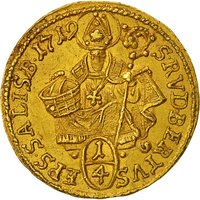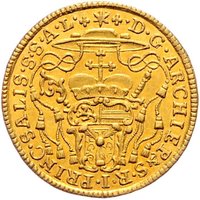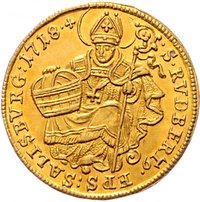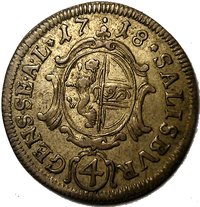
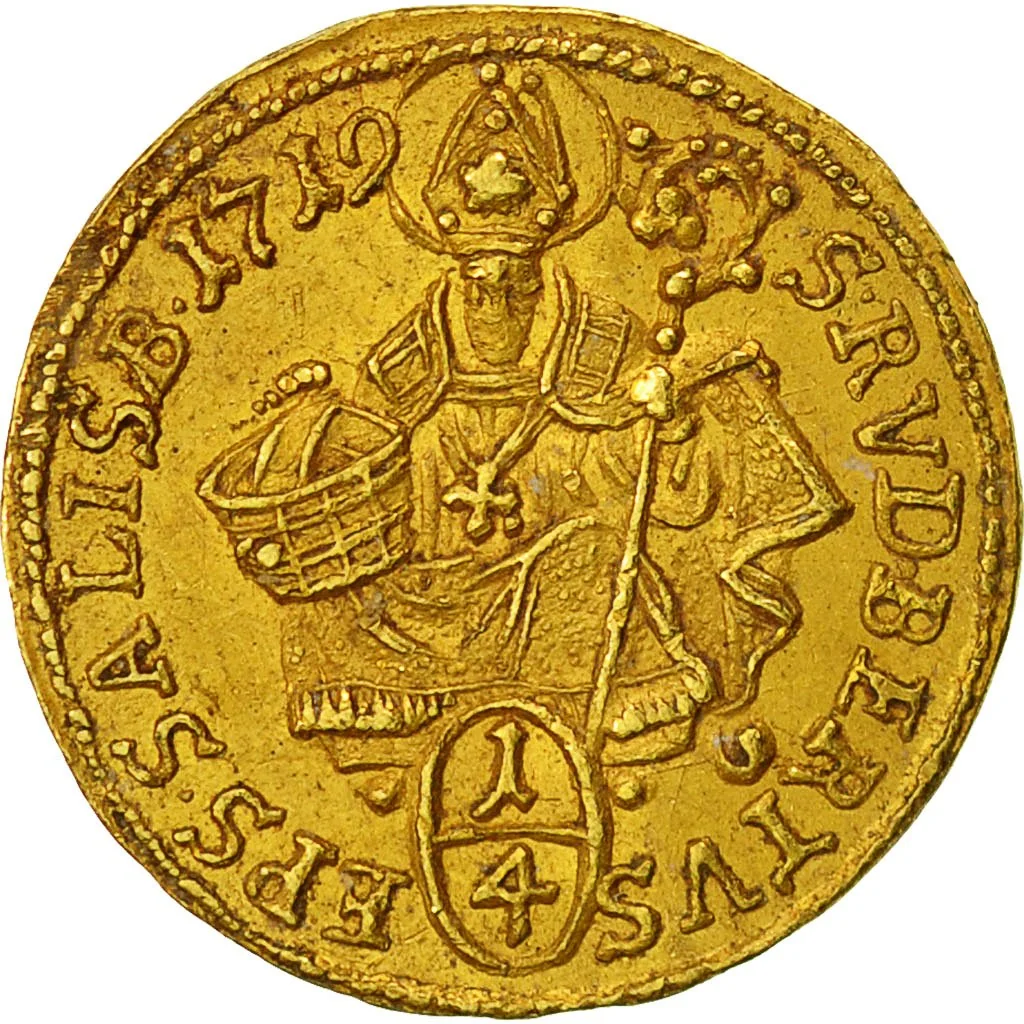
In 1718, the Prince-Archbishopric of Salzburg operated within the complex monetary landscape of the Holy Roman Empire. The region did not mint its own distinctive coins but instead relied heavily on the widespread circulation of coins from other German states, particularly the silver
Reichsthaler and its smaller division, the
Kreuzer. The value and acceptance of these coins were theoretically governed by the Imperial Minting Ordinance (
Reichsmünzordnung), which aimed to standardize currency across the empire. However, in practice, the system was fragmented, with numerous local mints producing coins of varying silver content, leading to chronic instability and frequent devaluations.
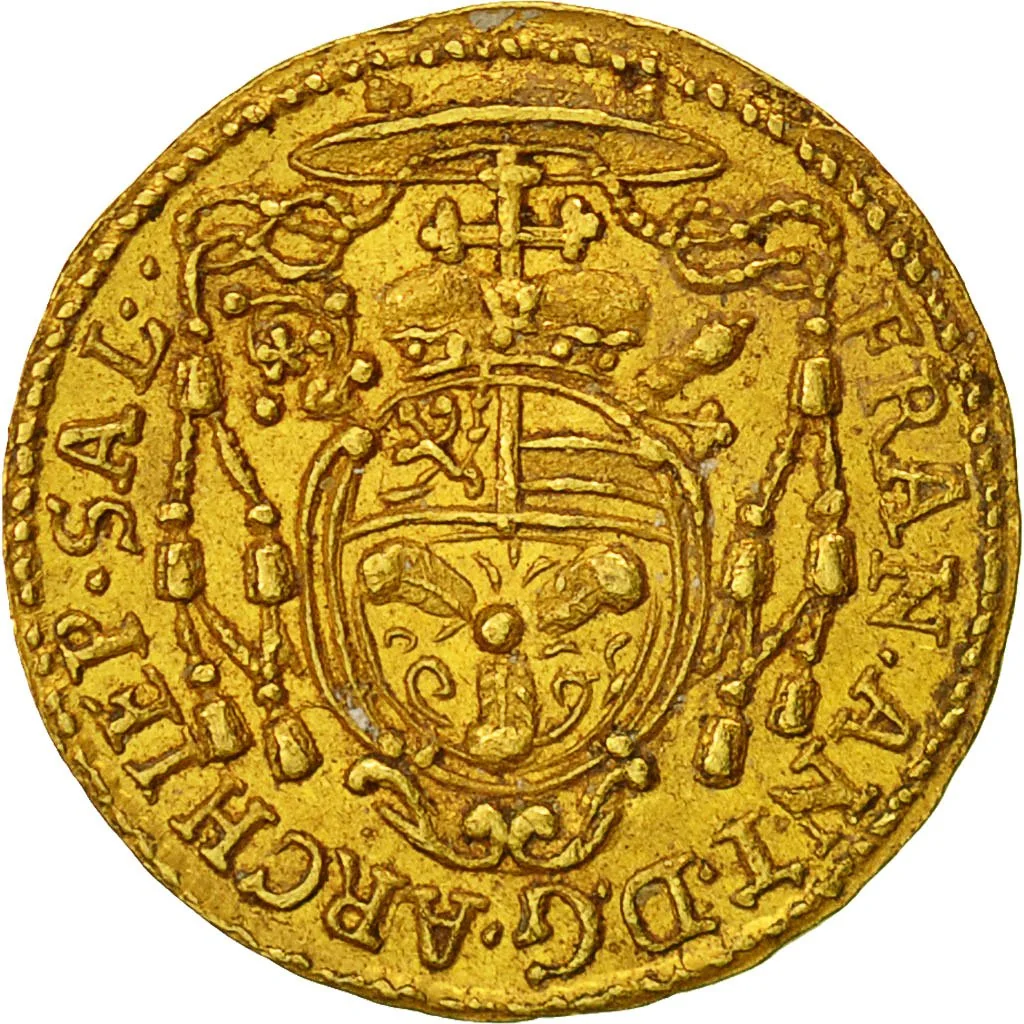
The economic context of 1718 was particularly strained under the rule of Prince-Archbishop Franz Anton von Harrach. Salzburg's finances were burdened by significant debt from extensive Baroque construction projects and the costs of maintaining courtly splendor. This fiscal pressure directly impacted the currency situation, as the government likely engaged in the common practice of "crying up" or "crying down" the official valuation of foreign coins within its territory—effectively manipulating exchange rates to generate seigniorage income or to control the outflow of full-weight silver. For merchants and citizens, this meant uncertainty in everyday transactions, as the actual value of coins in their pockets could be officially altered by decree.
Furthermore, 1718 fell within a tense period just a decade before the major expulsion of the Protestant population (the
Salzburger Exulanten) in 1731. While not a direct monetary event, this impending demographic and economic catastrophe cast a shadow over all fiscal matters. The loss of a productive segment of the populace would later exacerbate economic difficulties, but even in 1718, underlying religious and social tensions may have contributed to a climate of economic caution, potentially affecting hoarding behaviors and the velocity of money. Thus, the currency situation in Salzburg was one of dependence on external coinage, managed through ad-hoc fiscal manipulation to address state debt, all within a society nearing a profound crisis.