

1 Thaler – Brunswick-Lüneburg-Celle
Germany
Context
Years: 1644–1648
Country: Germany 
Issuer: Brunswick-Lüneburg-Celle
Ruler: Frederick IV
Currency:
Demonetized: Yes
Material
References
KM: #Click to copy to clipboard169
Numista: #140169
Value
Bullion value: $83.54
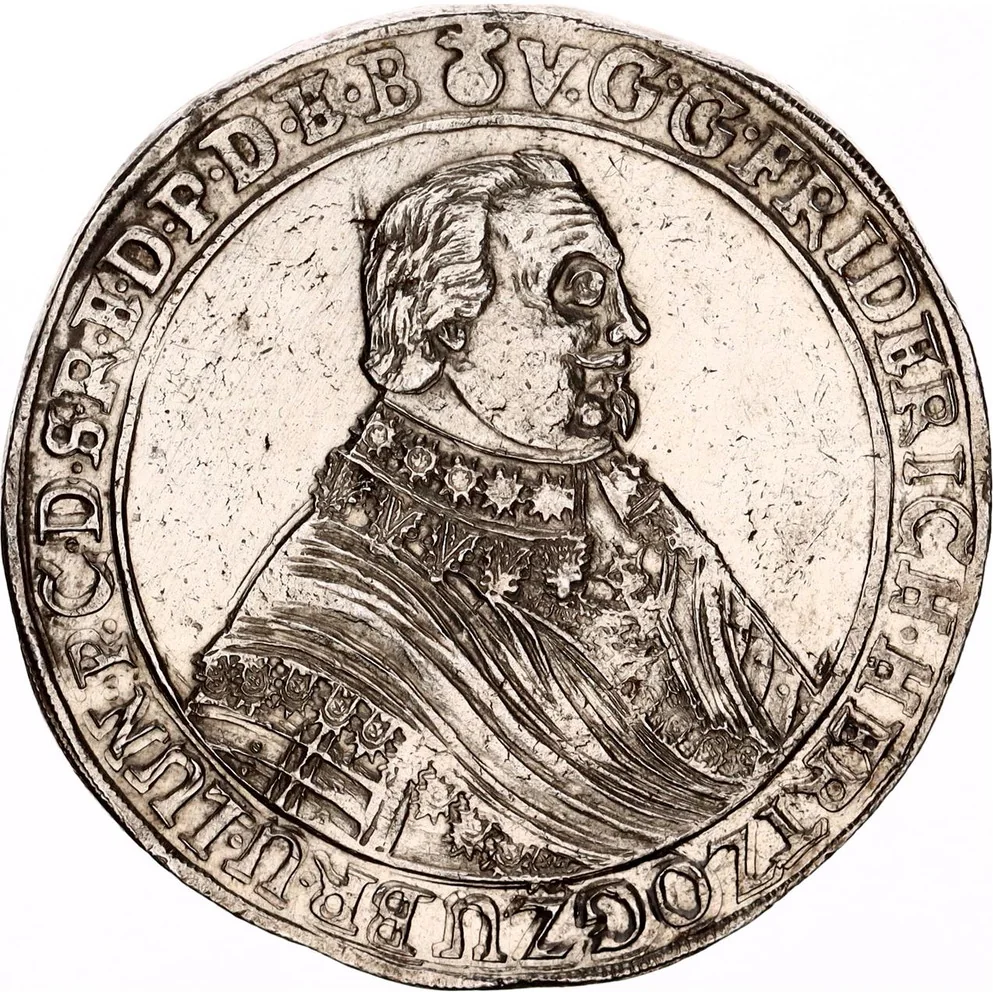
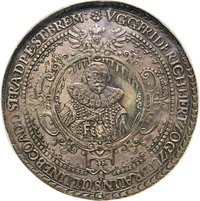
Obverse
Description:
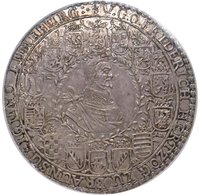
Portrait of Friedrich V. in profile.
Inscription:
V.G.G. FRIDERICH HERTZOG Z BR U LU P C D S R E D P D E B
Script: Latin
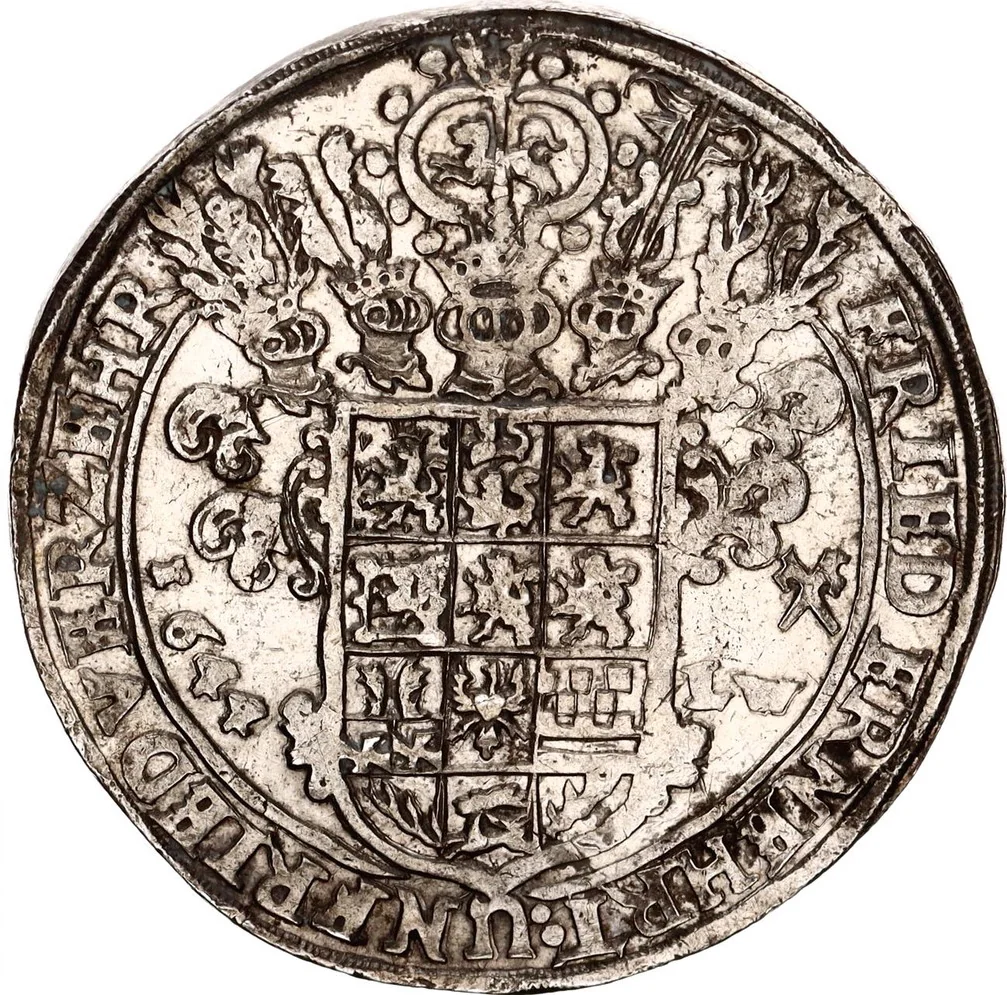
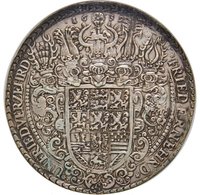
Reverse
Description:
Arms with crown and shield, date left.
Inscription:
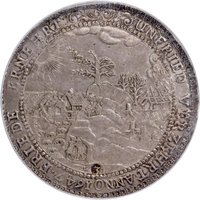
FRIED ERNEHRT UN FRIED VERZEHRT
Script: Latin
Edge
Plain
Mints
| Name | Mark |
|---|---|
| Clausthal | — |
Mintings
| Year | Mint Mark | Mintage | Quality | Collection |
|---|---|---|---|---|
| 1644 | — | — | ||
| 1645 | — | — | ||
| 1646 | — | — | ||
| 1647 | — | — | ||
| 1648 | — | — |
Historical background
In 1644, the Duchy of Brunswick-Lüneburg, specifically the Principality of Lüneburg-Celle under Duke Christian Louis, was deeply entangled in the final, devastating years of the Thirty Years' War. The region had been a battleground and transit route for decades, leading to severe economic dislocation, population decline, and the physical destruction of towns and farmland. This catastrophic context fundamentally undermined the territory's fiscal stability and the integrity of its coinage, as the ducal government struggled to meet immense wartime expenses, including the payment and provisioning of troops.
The currency situation was therefore one of profound disorder and inflation, characterized by the widespread circulation of debased coinage. Like many German states at the time, Celle resorted to Kipper- und Wipperzeit practices, clipping good coins and issuing vast quantities of inferior Kippermünze with low silver content to create short-term revenue. This led to a vicious cycle where trusted older coins were hoarded (Gresham's Law), while the new, poor-quality coins flooded the market, causing prices to soar and destroying public trust in the monetary system. The region was also awash with foreign and occupation currencies, further complicating trade.
Despite the 1623 Imperial Minting Ordinance (Reichsmünzordnung) designed to standardize the Holy Roman Empire's currency, its authority had collapsed during the war. In 1644, Duke Christian Louis's mint likely operated under this pressure, contributing to the chaotic monetary landscape. The situation began to stabilize only after the 1648 Peace of Westphalia, which allowed for a slow and difficult process of monetary reform and the restoration of a stable silver-based currency in the following decades.
The currency situation was therefore one of profound disorder and inflation, characterized by the widespread circulation of debased coinage. Like many German states at the time, Celle resorted to Kipper- und Wipperzeit practices, clipping good coins and issuing vast quantities of inferior Kippermünze with low silver content to create short-term revenue. This led to a vicious cycle where trusted older coins were hoarded (Gresham's Law), while the new, poor-quality coins flooded the market, causing prices to soar and destroying public trust in the monetary system. The region was also awash with foreign and occupation currencies, further complicating trade.
Despite the 1623 Imperial Minting Ordinance (Reichsmünzordnung) designed to standardize the Holy Roman Empire's currency, its authority had collapsed during the war. In 1644, Duke Christian Louis's mint likely operated under this pressure, contributing to the chaotic monetary landscape. The situation began to stabilize only after the 1648 Peace of Westphalia, which allowed for a slow and difficult process of monetary reform and the restoration of a stable silver-based currency in the following decades.
✨ Legendary