

4 Thalers – Brunswick-Lüneburg-Celle
Germany
Context
Year: 1639
Country: Germany 
Issuer: Brunswick-Lüneburg-Celle
Ruler: Frederick IV
Currency:
Demonetized: Yes
Material
Weight: 116 g
Silver weight: 116.00 g
Shape: Round
Composition: Silver
Magnetic: No
Technique: Countermarked
References
KM: #Click to copy to clipboard152
Numista: #292336
Value
Bullion value: $330.92
Obverse
Description:
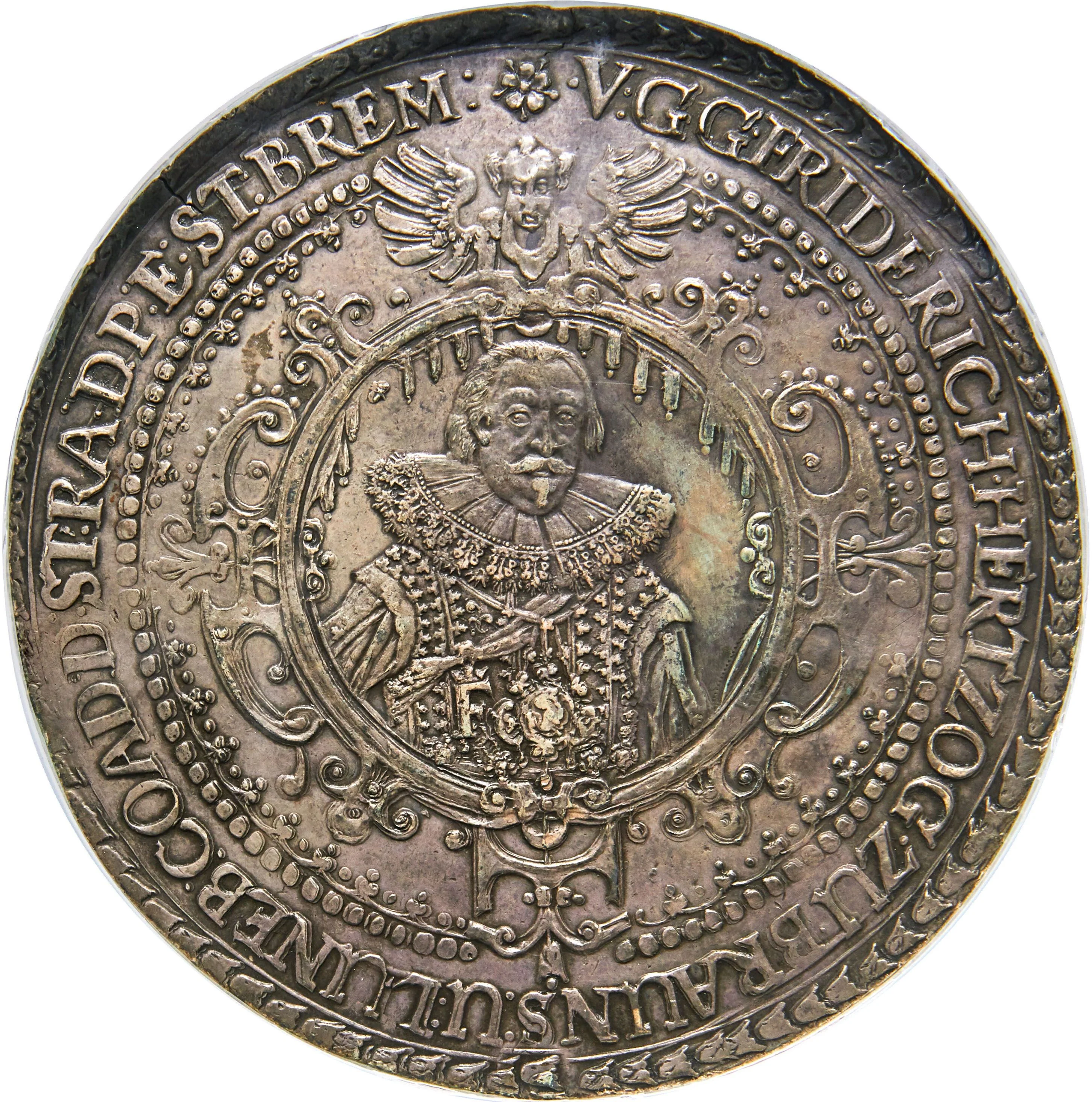
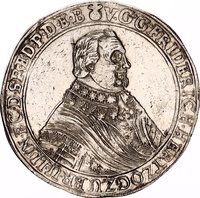
Half-length portrait of Duke Frederick IV in ornate robes, within a cartouche adorned with scrolls, fleurs-de-lis, and a winged cherub.
Inscription:
❀ V : G G · FRIDERICH · HERTZOG · ZU · BRAUNS : U : LUNEB : COAD : D · ST : RA : D . P : E : ST : BREM :
F
F
Script: Latin
Reverse
Description:
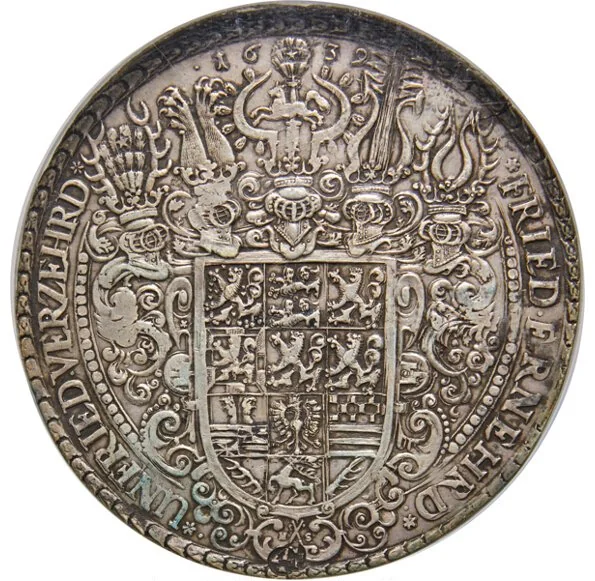
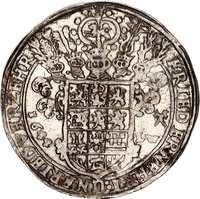
Duke Frederick IV of Brunswick-Lüneburg’s coat of arms: a square shield divided into twelve fields, topped by five crested helmets and surrounded by scrolls.
Inscription:
16 39
⁕ FRIED · ERNEHRD ⁕ · ⁕ UNFRIED . VERZEHRD ⁕
H S
4
⁕ FRIED · ERNEHRD ⁕ · ⁕ UNFRIED . VERZEHRD ⁕
H S
4
Script: Latin
Edge
Categories
| Person> Monarch |
| Symbols> Coat of Arms |
Mints
| Name | Mark |
|---|---|
| Clausthal | — |
Mintings
| Year | Mint Mark | Mintage | Quality | Collection |
|---|---|---|---|---|
| 1639 | — | — |
Historical background
In 1639, the Duchy of Brunswick-Lüneburg, specifically the Principality of Celle under Duke George William, was deeply entangled in the devastating economic and monetary chaos of the Thirty Years' War. The region was a frequent transit zone and battleground for marauding armies, which levied forced contributions, plundered resources, and disrupted trade and agricultural production. This systemic collapse severely damaged the underlying economy that gave currency its value, leading to rampant inflation and a crisis of confidence in coinage.
The currency situation was characterized by a severe debasement of the coinage, a problem plaguing the entire Holy Roman Empire. To finance war expenses and obligations, state mints (like the one in Celle) increasingly issued lightweight, low-quality coins, notably the ubiquitous Kipper- und Wipperzeit issues. These debased coins, often containing far less precious metal than their face value claimed, circulated alongside older, full-weight talers and foreign currencies, creating a complex and unstable monetary environment. Gresham's law was in full effect, as "good" full-weight coins were hoarded or melted down, leaving the debased money to dominate everyday transactions.
Duke George William’s government in Celle attempted to respond to the crisis through repeated minting ordinances and currency decrees aimed at regulating the value of the multitude of circulating coins and stabilizing exchange rates. However, these measures were largely reactive and often unsuccessful in the face of overwhelming fiscal pressures from the ongoing war and the fragmented political authority of the Empire. The monetary disarray in 1639 was thus a direct symptom of the war’s existential strain on state finances and the breakdown of the imperial monetary system, causing hardship for the population and complicating all economic activity in the principality.
The currency situation was characterized by a severe debasement of the coinage, a problem plaguing the entire Holy Roman Empire. To finance war expenses and obligations, state mints (like the one in Celle) increasingly issued lightweight, low-quality coins, notably the ubiquitous Kipper- und Wipperzeit issues. These debased coins, often containing far less precious metal than their face value claimed, circulated alongside older, full-weight talers and foreign currencies, creating a complex and unstable monetary environment. Gresham's law was in full effect, as "good" full-weight coins were hoarded or melted down, leaving the debased money to dominate everyday transactions.
Duke George William’s government in Celle attempted to respond to the crisis through repeated minting ordinances and currency decrees aimed at regulating the value of the multitude of circulating coins and stabilizing exchange rates. However, these measures were largely reactive and often unsuccessful in the face of overwhelming fiscal pressures from the ongoing war and the fragmented political authority of the Empire. The monetary disarray in 1639 was thus a direct symptom of the war’s existential strain on state finances and the breakdown of the imperial monetary system, causing hardship for the population and complicating all economic activity in the principality.
✨ Legendary