

1 Rupee – Awadh
India
Context
Years: 1759–1806
Country: India 
Issuer: Awadh
Ruler: Shah Alam II
Currency:
(1605—1857)
Demonetized: Yes
Material
References
KM: #Click to copy to clipboard16.3
Numista: #139907
Value
Bullion value: $31.10
Obverse
Description:
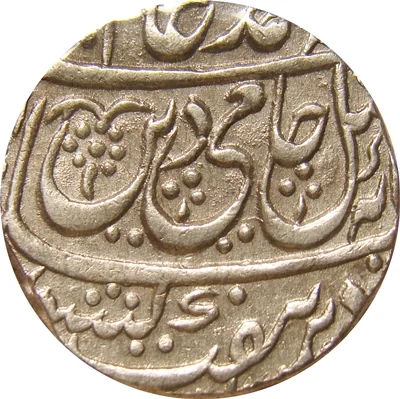
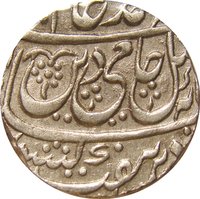
Shah Alam II, dated by Hijri year.
Reverse
Description:
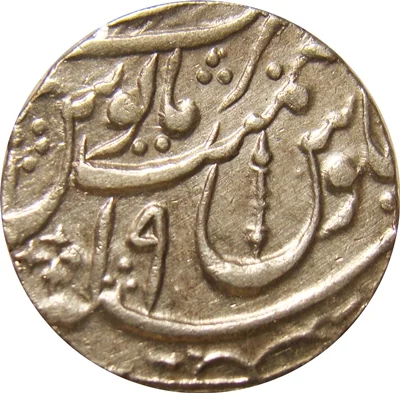
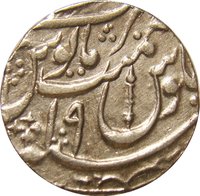
Danda mint, regnal year.
Edge
Mintings
| Year | Mint Mark | Mintage | Quality | Collection |
|---|---|---|---|---|
| — | — | — |
Historical background
In 1759, the currency situation in Awadh was characterized by significant instability and transition, reflecting the broader political upheaval in the region. Following the Battle of Plassey in 1757, the Mughal Empire's central authority had severely weakened, and its uniform currency system was fragmenting. The Nawab of Awadh, Shuja-ud-Daula, nominally owed allegiance to Delhi but was effectively autonomous. Consequently, while Mughal silver rupees—particularly those minted in Lucknow and other regional mints—remained the primary medium for large transactions and revenue collection, their purity and weight were no longer reliably standardized, leading to widespread confusion and distrust in trade.
This monetary uncertainty was exacerbated by the increasing presence and influence of the British East India Company. The Company, based in Bengal, was aggressively expanding its political and economic interests into Awadh, following its acquisition of the diwani (revenue rights) for Bengal in 1765. European trading companies and private merchants introduced a variety of foreign coins, including Spanish silver dollars and Arcot rupees, which circulated alongside local issues. The co-existence of multiple coinages without a fixed exchange rate created a complex and often chaotic bazaar economy, where money changers (sarrafs) held considerable power, and transactional friction was high.
Underlying this chaotic circulation was a deeper fiscal strain. Shuja-ud-Daula's military expenditures, particularly his preparations for the looming conflict that would culminate in the Battle of Buxar (1764), placed enormous pressure on the treasury. This often led to the debasement of coinage—reducing the silver content in rupees—to generate short-term revenue. Thus, the currency scene in 1759 was one of declining imperial standards, competing monetary authorities, and inflationary practices, mirroring Awadh's precarious position between a fading Mughal order and the rising force of the British East India Company.
This monetary uncertainty was exacerbated by the increasing presence and influence of the British East India Company. The Company, based in Bengal, was aggressively expanding its political and economic interests into Awadh, following its acquisition of the diwani (revenue rights) for Bengal in 1765. European trading companies and private merchants introduced a variety of foreign coins, including Spanish silver dollars and Arcot rupees, which circulated alongside local issues. The co-existence of multiple coinages without a fixed exchange rate created a complex and often chaotic bazaar economy, where money changers (sarrafs) held considerable power, and transactional friction was high.
Underlying this chaotic circulation was a deeper fiscal strain. Shuja-ud-Daula's military expenditures, particularly his preparations for the looming conflict that would culminate in the Battle of Buxar (1764), placed enormous pressure on the treasury. This often led to the debasement of coinage—reducing the silver content in rupees—to generate short-term revenue. Thus, the currency scene in 1759 was one of declining imperial standards, competing monetary authorities, and inflationary practices, mirroring Awadh's precarious position between a fading Mughal order and the rising force of the British East India Company.
✨ Legendary