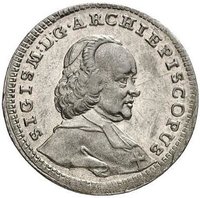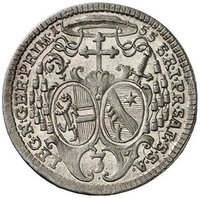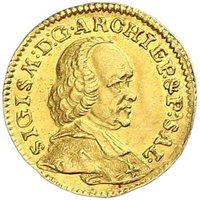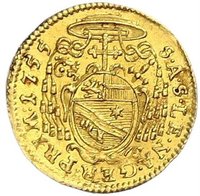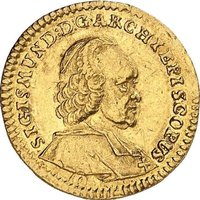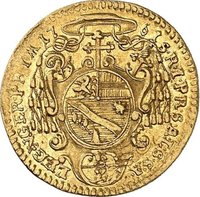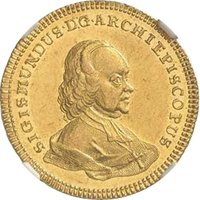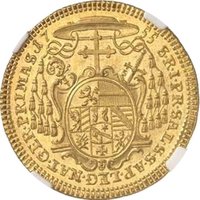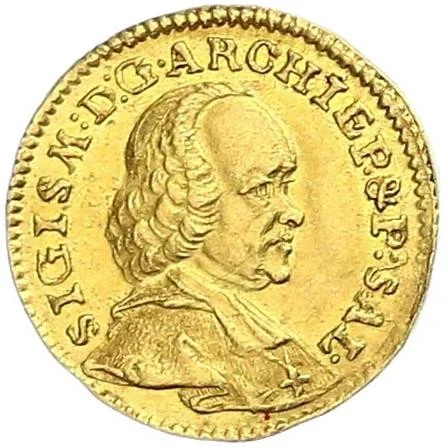
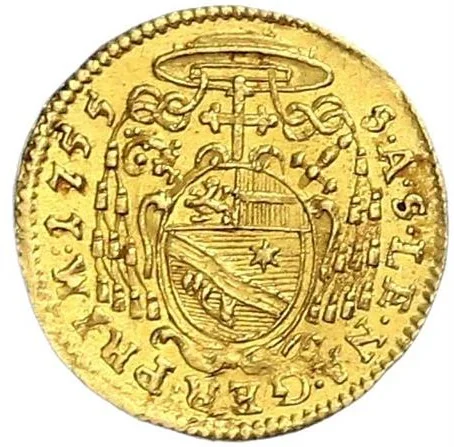
In 1755, the currency situation within the Prince-Archbishopric of Salzburg was complex and reflective of the fragmented monetary systems of the Holy Roman Empire. The principality did not possess its own exclusive minting right for large silver coins (like thalers), but it did regularly issue smaller denomination coins, such as kreuzers and pfennigs, from its own mint. These local coins circulated alongside a multitude of foreign currencies, primarily heavy silver thalers from neighboring states like Bavaria and Austria, as well as gold ducats. This created a system where trade and accounting required constant awareness of exchange rates and metal content.
The stability of these currencies was fundamentally tied to their precious metal content. Archbishop Sigismund III Christoph von Schrattenbach, who ruled from 1753 to 1771, generally maintained a policy of sound money, avoiding the severe debasement that plagued some contemporary territories. However, the system was inherently vulnerable. The value of the ubiquitous small change (the "black money" of kreuzers and pfennigs) was particularly susceptible to manipulation, and the inflow of underweight or debased foreign coins could disrupt local markets. The economy, heavily reliant on salt mining, trade, and pilgrimage, required a reliable medium of exchange to function smoothly.
Overall, while not in a state of acute crisis in 1755, Salzburg's monetary landscape was characterized by a cumbersome multiplicity of coins. This necessitated the frequent publication of official exchange rate tables (
Münzpatente) to fix the values of the various circulating currencies against each other. The situation demanded careful management by the episcopal treasury to maintain public confidence, control the money supply, and ensure the principality's revenues and trade were not eroded by monetary instability.