

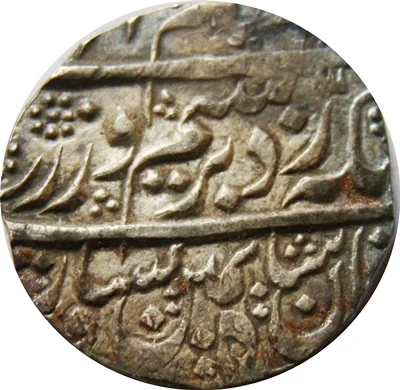
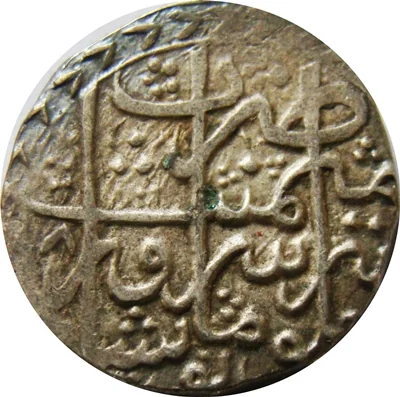
1 Rupee – Afghanistan
Afghanistan
Context
Material
Diameter: 23.27 mm
Weight: 10.5 g
Silver weight: 10.50 g
Shape: Irregular round
Composition: Silver
Magnetic: No
References
KM: #Click to copy to clipboardA713
Numista: #104962
Value
Bullion value: $30.04
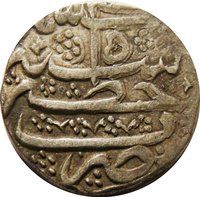
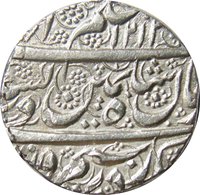
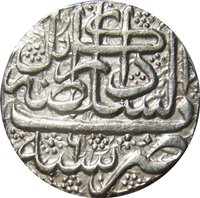
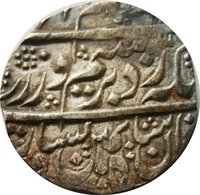
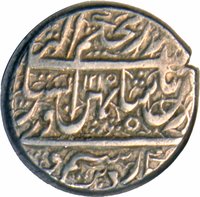
Obverse
Description:
Second couplet:
three lines.
three lines.
Script: Arabic
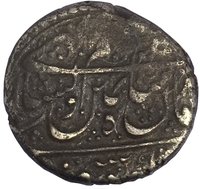
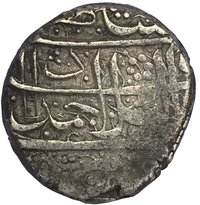
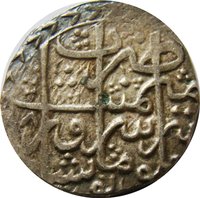
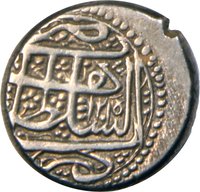
Reverse
Description:
Carved words.
Script: Arabic
Edge
Mints
| Name | Mark |
|---|---|
| Peshawar | — |
Mintings
| Year | Mint Mark | Mintage | Quality | Collection |
|---|---|---|---|---|
| 1797 | — | — | ||
| 1798 | — | — | ||
| 1799 | — | — | ||
| 1800 | — | — | ||
| 1801 | — | — |
Historical background
In 1797, Afghanistan existed not as a unified nation but as a fragmented collection of rival principalities and tribal confederations, most notably the Durrani Empire, which was in a state of severe decline following the death of its founder, Ahmad Shah Durrani, in 1772. The monetary system reflected this political fragmentation, with no single, standardized currency circulating throughout the region. The primary unit of account remained the silver rupee, but its weight, purity, and design varied significantly depending on the mint city and the local ruler in control of it. Key mints in cities like Kabul, Kandahar, and Peshawar produced coins, but their output and acceptance were largely regional.
The currency in circulation was a heterogeneous mix of older Durrani coins, remnants from the Mughal Empire, and a substantial influx of foreign silver. Most significant were Persian silver coins (qiran) and British Indian rupees, which entered through trade and military subsidies. This created a complex and often chaotic exchange environment where merchants and money-changers (sarraf) had to constantly assess the intrinsic silver value of each coin. The authority of the ruling Shah, Zaman Shah Durrani (r. 1793-1801), was contested, and his control over the minting process was inconsistent, leading to debasement in some areas as local khans sought to raise revenue.
Economically, the period was marked by instability due to ongoing civil wars, raids from neighboring powers, and the shifting Silk Road trade routes. The currency situation, therefore, was not a managed system but a practical, market-driven response to political weakness. Value was ultimately rooted in the weight of precious metal, and the most trusted coins were often older issues or foreign currencies. This monetary disarray underscored the broader collapse of central Durrani authority and foreshadowed the coming decades of internal strife and external intervention that would characterize 19th-century Afghanistan.
The currency in circulation was a heterogeneous mix of older Durrani coins, remnants from the Mughal Empire, and a substantial influx of foreign silver. Most significant were Persian silver coins (qiran) and British Indian rupees, which entered through trade and military subsidies. This created a complex and often chaotic exchange environment where merchants and money-changers (sarraf) had to constantly assess the intrinsic silver value of each coin. The authority of the ruling Shah, Zaman Shah Durrani (r. 1793-1801), was contested, and his control over the minting process was inconsistent, leading to debasement in some areas as local khans sought to raise revenue.
Economically, the period was marked by instability due to ongoing civil wars, raids from neighboring powers, and the shifting Silk Road trade routes. The currency situation, therefore, was not a managed system but a practical, market-driven response to political weakness. Value was ultimately rooted in the weight of precious metal, and the most trusted coins were often older issues or foreign currencies. This monetary disarray underscored the broader collapse of central Durrani authority and foreshadowed the coming decades of internal strife and external intervention that would characterize 19th-century Afghanistan.
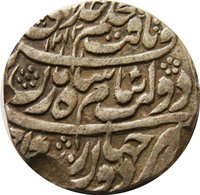
💎 Extremely Rare